




Thanksgiving Trips to Big Bear & Lake Arrowhead: Preparing Your VW’s Brakes and Tires for Mountain Elevation Changes
Key Takeaways
- The climb is short, but the descent is long: Going from the valley floor to more than 6,000 feet means a steady drop on the way home, and your brakes absorb most of that energy as heat.
- Cold air lowers tire pressure: Mountain mornings can be much colder than San Bernardino, and tire pressure falls as temperatures drop, so check it before and during the trip.
- Tread depth and condition matter more on grades: Worn tires lose grip first on wet, icy, or shaded pavement along Highway 18 and Highway 330.
- Inspect before you load the car: A brake and tire check in the valley is far easier and less costly than finding a problem halfway up a switchback.
Thanksgiving weekend pulls plenty of Inland Empire families toward the San Bernardino Mountains. The valley is mild and dry, then forty minutes later you are among pine trees with frost on the shoulder and snow in the forecast. A pre-trip brake and tire inspection costs a small fraction of what a glazed set of pads, a damaged rotor, or a blown tire on a mountain grade can cost you, along with the tow and the ruined holiday.
Why the Mountain Drive Is Different from Your Usual Commute
Around San Bernardino, most driving happens on flat or gently rolling pavement along Camino Real, the I-215, and the I-10. Your brakes get regular but manageable use, and your tires roll on warm, dry asphalt for most of the year.
The route to Big Bear or Lake Arrowhead changes that quickly. Highway 18, Highway 330, and Highway 38 climb thousands of feet in a short distance, with tight curves, steep grades, and shaded sections where moisture and ice linger long after the sun comes up. Big Bear Lake sits above 6,700 feet, while Lake Arrowhead is above 5,000 feet, so the temperature difference from the valley can be dramatic. A warm afternoon in town can become a below-freezing evening at the lake.
What Elevation Changes Do to Your Brakes
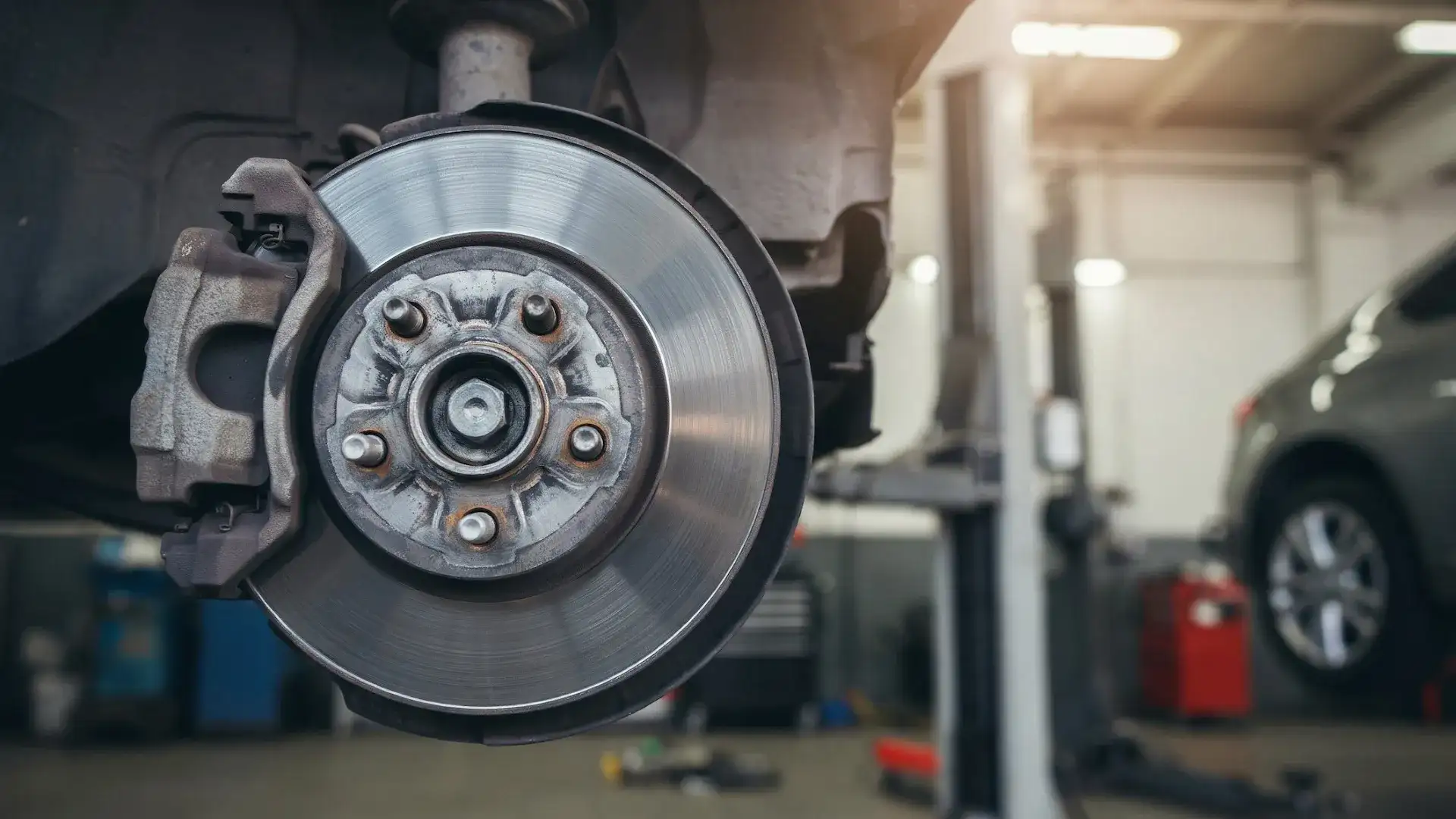
Climbing is easy on the brakes, since you are mostly using the throttle. The stress arrives on the way down. Every foot of elevation you gained becomes energy your vehicle must shed, and your brakes turn that energy into heat through friction between the pads and rotors.
On a long descent, heat builds faster than it can escape. Pads can glaze and lose their bite, rotors can develop hot spots that you feel as a pulsing pedal, and brake fluid can absorb enough heat to form vapor and make the pedal feel soft. This condition is known as brake fade, and it is the main reason mountain descents deserve extra preparation.
Weight makes it worse. Thanksgiving trips usually mean a full cabin, luggage, groceries, and sometimes a roof box. A loaded Atlas or Tiguan has far more momentum to control on a grade than the same vehicle on an empty commute, and a Taos or Jetta carrying a full family is not much different. Check your vehicle’s recommended service schedule on Volkswagen’s official site and your owner’s manual for the intervals that apply to your model year.
Signs Your Brakes Need Attention Before the Trip
Brakes usually give early warnings, and a mountain trip is the wrong place to discover them. Pay attention to the following during your daily drives:
- A squeal or chirp when braking, which often comes from the built-in pad wear indicator
- A grinding or scraping sound that suggests the pad material may be gone
- A pulsing or vibrating pedal, which can point to uneven rotor surfaces
- A pedal that feels soft, spongy, or sinks lower than normal
- The vehicle pulling to one side when you brake
- A brake warning light or pad wear message in the instrument cluster
If you notice any of these, schedule an inspection before the holiday rush. Our service center can check pad thickness, rotor condition, calipers, and fluid so you know where you stand before you leave the valley.
How to Brake Smarter Coming Down the Mountain
Good technique protects your brakes as much as good parts do. Before the descent begins, shift your automatic or DSG transmission into manual mode, and select a lower gear so the engine helps hold the vehicle back. This is known as engine braking, and it spreads the work between the powertrain and the brakes. Choose a gear that keeps your speed steady with only occasional pedal use.
When you do need to slow down, apply firm, deliberate pressure and then release, rather than dragging the pedal lightly the entire way down. Light, constant pressure creates continuous heat and gives the components no chance to cool. Leave extra following distance, especially behind trucks and slower traffic, so you can slow gradually. If you smell something hot or the pedal begins to feel different, pull into a turnout and let the brakes rest.
Why Cold Mountain Air Changes Your Tire Pressure
Tires are the only part of your Volkswagen that touches the road, and mountain conditions test them in several ways. As a general rule, tire pressure drops about one pound per square inch for every ten degrees Fahrenheit the temperature falls. If you set your pressure in a warm San Bernardino driveway and then arrive at a freezing lake town, your tires may be noticeably underinflated.
Underinflated tires wear faster, run hotter, and respond more slowly in turns, and they can reduce braking grip on a steep grade. Check the pressure when the tires are cold, using the recommended figure on the driver door jamb placard, not the maximum number printed on the tire sidewall. The National Highway Traffic Safety Administration offers helpful guidance on tire safety and maintenance, including how to read your tires and check tread depth.
Tread Depth, Tire Age, and Winter Conditions
Tread is what channels water and slush away from the contact patch. When it wears thin, grip drops quickly, especially on wet, cold pavement. Many drivers use the penny test, inserting a penny with Lincoln’s head down into the tread groove, and if the top of his head is fully visible, the tread is shallow and the tires are due for replacement.
Age matters as well. Rubber hardens over the years, even when the tread looks fine, and older tires grip less in cold weather. Look for cracks in the sidewall, bulges, or any damage from a curb or pothole, and check the four-digit date code on the sidewall if you are unsure how old your tires are.
Chain Controls and Preparing for Snow
The San Bernardino Mountains can see chain controls during winter storms, and Caltrans may require chains or traction devices on certain routes. Volkswagen’s 4MOTION all-wheel drive improves traction, but it does not help you stop any faster, and it does not replace chains when they are required. If snow is in the forecast, carry chains that are sized correctly for your tires, and practice installing them in your driveway before you need them on a dark roadside.
Check current road conditions and any chain requirements before you leave. The Caltrans QuickMap shows live closures, chain controls, and weather alerts along your route, and it is worth a look both before departure and before the drive home. Also keep the wipers, washer fluid, and defrosters in good shape, since fog and road spray can reduce visibility quickly in the mountains.
What to Expect for Costs
Pricing depends on your model, parts, and what the inspection finds, so the following describes how costs are typically structured rather than offering fixed quotes:
- Brake inspection: A modest, routine check that tells you the remaining life of your pads and rotors before the trip
- Pad replacement only: The lowest-cost repair, and the one you hope to catch the problem early enough to choose
- Pads and rotors together: Usually the right choice once rotors show wear, scoring, or heat damage, and priced higher because of the added parts and labor
- Brake fluid exchange: A routine service that protects the whole system and costs far less than component replacement
- Tire rotation, balance, and pressure check: A small expense that helps tires wear evenly and keeps handling predictable
- New tires: The largest expense, but far less costly than the consequences of driving on worn rubber up a snowy mountain road
You can also order any accessories you need, such as chains or cargo gear, through our parts center ahead of the holiday weekend.
Head Up the Mountain with Confidence
A Thanksgiving trip to Big Bear or Lake Arrowhead should be about cabin dinners, lake views, and time with family, not roadside problems. A little preparation in the valley makes the climb easier and the descent safer. If you want a professional set of eyes on your brakes and tires before you go, bring your Volkswagen to Volkswagen San Bernardino, located at 1600 Camino Real, San Bernardino, CA 92408, and make this holiday drive one you can enjoy from start to finish.
0 comment(s) so far on Thanksgiving Trips to Big Bear & Lake Arrowhead: Preparing Your VW’s Brakes and Tires for Mountain Elevation Changes