




Protecting Your VW Coolant System from High-Heat Breakdown
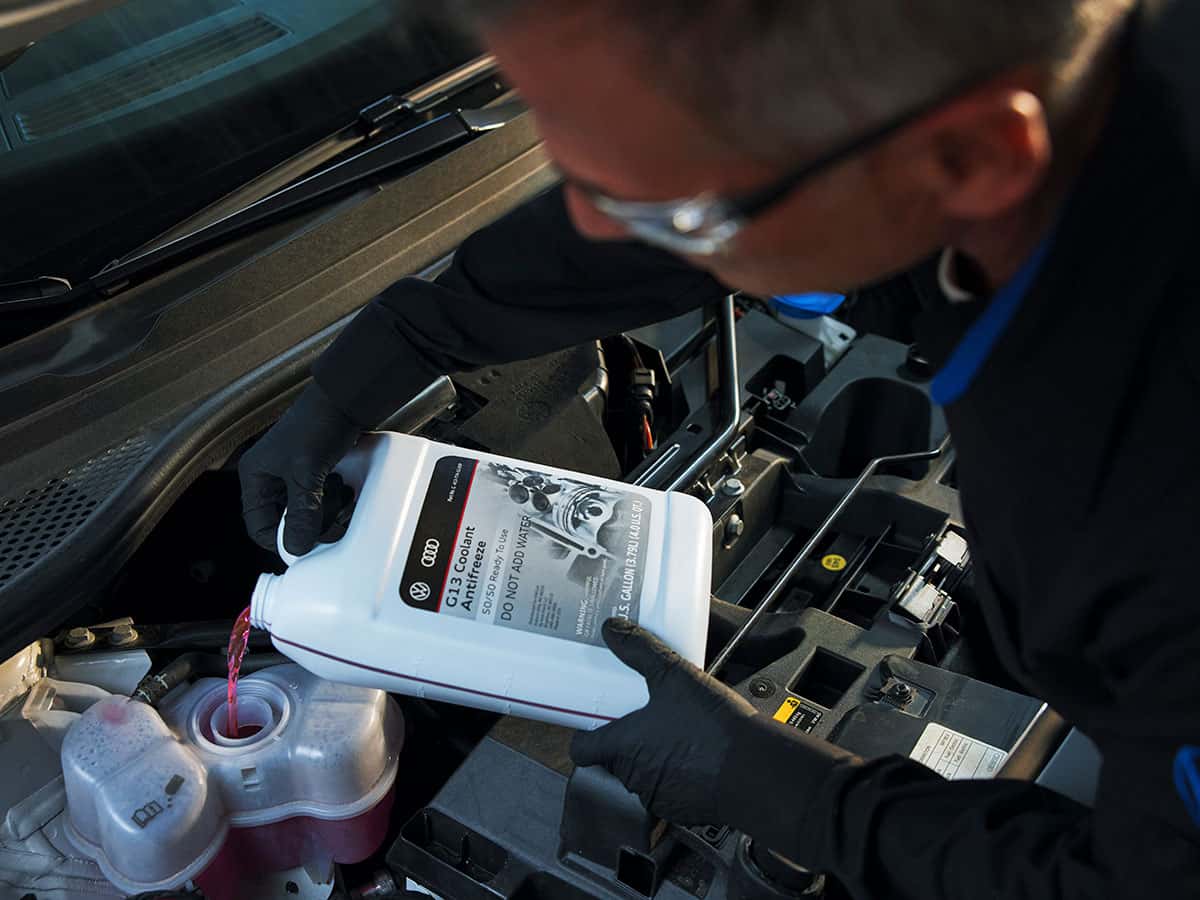
Key Takeaways
- Extreme heat accelerates coolant breakdown faster than mileage alone suggests. San Bernardino’s summer temperatures push the cooling system harder than most owner’s manuals account for.
- Coolant does more than prevent overheating. It also protects against corrosion inside the engine, and that protection degrades as the coolant ages.
- A failing cooling system often shows subtle signs before a dramatic overheat. Catching those signs early prevents a much larger repair.
- Stop and go traffic on hot days is uniquely hard on the system. Idling in heat gives the engine less airflow to help the radiator do its job.
Few parts of a Volkswagen work harder during a San Bernardino summer than the cooling system, and few get less attention until something goes wrong. Triple digit heat is common across the Inland Empire for months at a time, and every one of those days asks the coolant to do its job under conditions far more demanding than what a moderate climate ever produces. A coolant flush costs relatively little compared to the cost of repairing a head gasket or warped cylinder head from a system that failed under sustained heat.
Why Extreme Heat Breaks Down Coolant Faster
Coolant is formulated to handle a wide temperature range, but that range has limits, and repeated exposure to extreme heat accelerates the chemical breakdown of the fluid’s protective additives. Those additives are responsible for preventing corrosion inside the engine block, radiator, and hoses, and as they degrade, the coolant becomes less effective at doing that job even if it has not lost volume or changed color dramatically. In a climate like San Bernardino’s, where summer temperatures routinely climb well above what the coolant experiences in a milder region, that breakdown happens on an accelerated timeline compared to the mileage based interval printed in a generic maintenance schedule.
This matters because a coolant system does not fail all at once in most cases. It fails gradually, as degraded coolant loses its ability to protect against corrosion and its capacity to transfer heat efficiently, and that gradual decline is easy to miss until the vehicle is already running hotter than it should.
The Corrosion Protection Most Owners Don’t Think About
Most drivers understand coolant’s basic job is preventing the engine from overheating, but fewer think about its secondary role protecting the inside of the cooling system from rust and corrosion. Aluminum and other metals inside a modern engine’s cooling passages are vulnerable to corrosion without the protective additives coolant provides, and once that protection breaks down, the coolant itself can begin contributing to the very problem it was designed to prevent. Corrosion inside the system can clog narrow passages, reduce the radiator’s efficiency, and in more advanced cases, contribute to a water pump failure. Extreme and sustained heat, the kind San Bernardino sees for a good portion of the year, accelerates this breakdown faster than a driver might expect from a fluid that still looks fine at a glance.
Signs the System Needs Attention
- A temperature gauge that reads higher than usual, particularly during stretches of stop and go traffic on hot afternoons along the I-215 corridor
- A sweet smell inside or outside the vehicle, which often indicates a small coolant leak beginning to develop
- Visible coolant spots underneath the vehicle, especially after the car has been parked for a while on a hot day
- A coolant reservoir that needs topping off more frequently than it used to, suggesting a slow leak or increased evaporation from heat stress
None of these signs guarantees a major problem on its own, but San Bernardino’s climate means any of them deserves a closer look sooner rather than later, since a small issue in mild weather can escalate quickly once summer heat returns.
Why Stop and Go Traffic Makes Heat Worse
Highway driving actually helps a cooling system in one specific way: consistent airflow through the radiator as the vehicle moves. Stop and go traffic removes that advantage. Idling or crawling along Waterman Avenue or through congestion near the 10 and 215 interchange means the engine is producing heat without the benefit of steady airflow to help the radiator dissipate it, and the system has to lean more heavily on the fan and the coolant’s own properties to keep temperatures in check. On a triple digit day, this combination of stop and go traffic and already degraded coolant is one of the more common scenarios that leads to an overheating warning showing up on the dashboard.
What a Coolant Flush Involves
- Draining the old coolant from the radiator and engine block, rather than simply topping off the reservoir with fresh fluid
- Flushing the system with a cleaning solution to remove scale, rust, or contaminants that have built up inside the passages
- Refilling with manufacturer specified coolant, mixed to the correct ratio for the climate and vehicle
- A pressure test and visual inspection of hoses, the radiator cap, and the water pump to confirm nothing else in the system is showing early signs of wear
This is a more thorough service than a simple top off, and it benefits from being handled by a technician familiar with the specific coolant type Volkswagen vehicles require, since using an incompatible coolant can cause its own set of corrosion problems.
Staying Ahead of a Desert Summer
Because coolant breakdown happens gradually and the early signs are easy to dismiss, especially when the vehicle still seems to be running fine, it is easy for San Bernardino drivers to let a flush interval slip by unnoticed until a hot afternoon commute turns into a dashboard warning. Waiting until the temperature gauge climbs higher than it should means the coolant has likely already lost a meaningful amount of its protective capability. Staying ahead of the recommended interval, particularly heading into another Inland Empire summer, is the more reliable approach for keeping the engine protected through the hottest months of the year.
Volkswagen San Bernardino, located at 1600 Camino Real, San Bernardino, CA 92408, offers coolant system flushes and inspections for the full Volkswagen lineup, and current service scheduling is available for anyone noticing these signs or preparing their vehicle for the summer heat ahead.
0 comment(s) so far on Protecting Your VW Coolant System from High-Heat Breakdown