




Inland Empire Heat Prep: How to Protect Your VW ID.4 Battery and Atlas Peak Edition A/C System from 100°F+ Desert Commutes
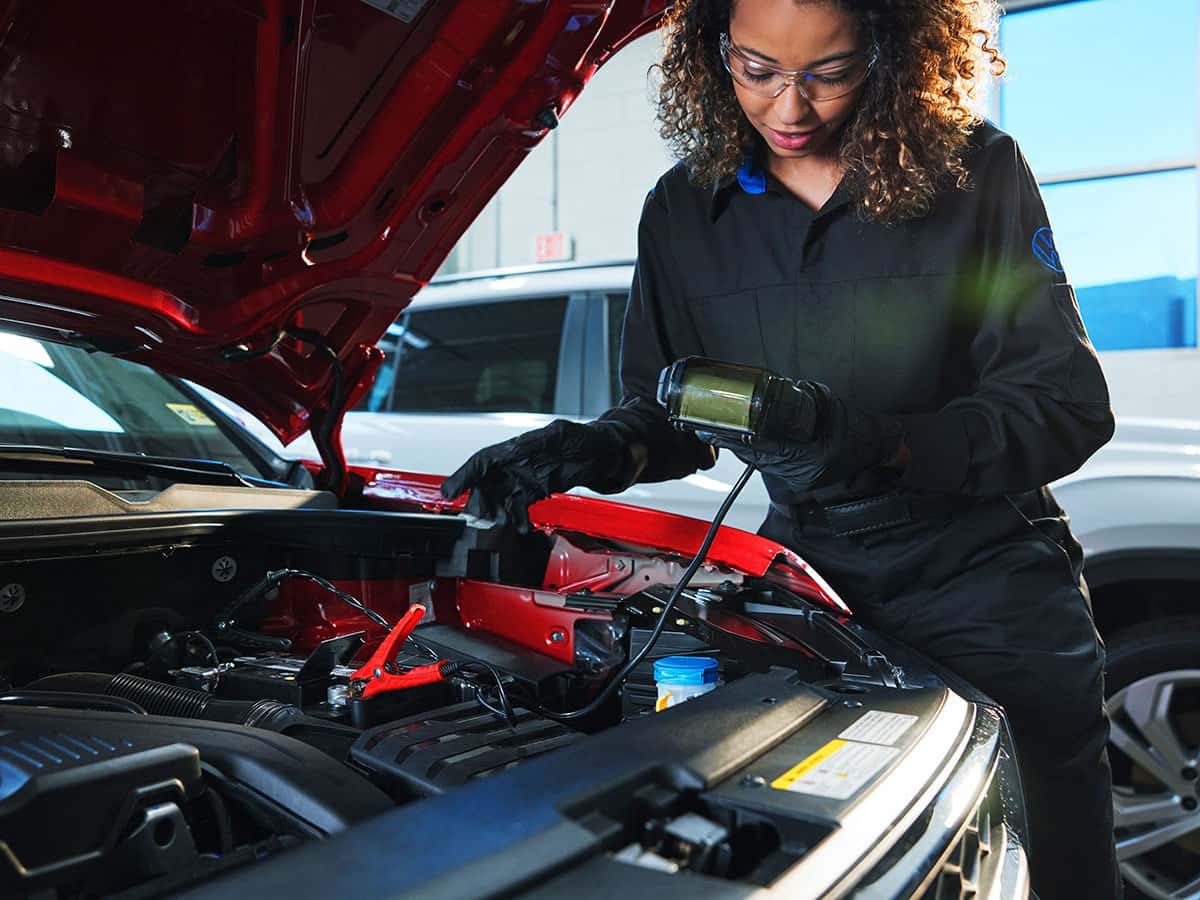
A San Bernardino summer doesn’t ease in gradually. Once the Inland Empire settles into its 100-plus-degree stretch, every vehicle in the driveway is dealing with heat exposure that goes well beyond what the cabin thermometer shows. For VW owners running an ID.4 or an Atlas Peak Edition through that heat daily, the way each vehicle experiences that stress is completely different. The ID.4’s battery chemistry has real limits on how much heat it can absorb without long-term consequences, while the Atlas’s A/C system is fighting a separate battle against dust, refrigerant sensitivity, and a cabin filter that clogs faster here than almost anywhere else in the state.
Understanding what’s actually happening inside each system gives San Bernardino VW owners a clear, practical way to protect both vehicles through the hottest months rather than just hoping everything holds up.
What Desert Heat Does to an ID.4’s Battery
Lithium-ion batteries have a temperature range where they age the slowest, and most research on EV battery chemistry puts that ideal range somewhere around 50 to 86 degrees Fahrenheit, with the sweet spot closer to 77 degrees. Every degree beyond that range accelerates a chemical aging process inside the cells, and San Bernardino’s summer routinely runs the battery well outside that comfortable zone, especially when the vehicle is sitting in direct sun in a parking lot for hours during the work day.
The ID.4 does have an active thermal management system that cools the battery using the same air conditioning unit that cools the cabin, and that system kicks in once battery temperature climbs high enough during driving or charging. It’s genuinely effective at protecting the pack while the vehicle is in motion. The limitation is what happens when the vehicle is parked and not actively cooling itself: a closed car sitting in 100-plus-degree heat for a full shift accumulates thermal stress on the battery that the system can’t fully offset without using energy it would rather save for driving.
The combination that does the most long-term damage isn’t heat alone, it’s heat paired with a high state of charge. A battery sitting at or near 100 percent for hours in extreme heat experiences more chemical stress than the same battery sitting at a more moderate charge level in the same conditions. That’s the single most useful piece of guidance for an Inland Empire ID.4 owner: charging to around 80 percent for daily use, and reserving a full charge for days when you actually need the extra range, meaningfully reduces the cumulative heat-and-charge stress the pack experiences over a typical San Bernardino summer.
A few habits make a real difference here:
- Charge to roughly 80 percent for routine daily driving, and save 100 percent charges for trips where you genuinely need the range
- Park in shade or a garage whenever possible, since direct sun exposure on a parked vehicle is one of the more avoidable sources of heat stress on the pack
- Avoid letting the vehicle sit at a very high state of charge for multiple days during the hottest stretches of summer
- Keep the vehicle’s software current, since VW periodically refines charging curves and thermal management behavior through updates
None of this will reverse degradation that’s already happened, and a small amount of capacity loss over time is normal and expected for any EV battery. What these habits do is keep that loss in the range VW’s engineering and warranty coverage anticipate, rather than accelerating past it.
What Desert Heat Does to an Atlas Peak Edition’s A/C System
The Atlas’s climate system faces a completely different set of pressures, and they start with something as simple as the cabin air filter. Every bit of air the Climatronic system circulates passes through that filter first, and in San Bernardino, the combination of windblown desert dust, particulate from I-10 and I-215 traffic, and the Inland Empire’s general air quality challenges means that filter loads up faster than the standard factory interval accounts for. A clogged filter restricts airflow, forces the blower motor to work harder than it should, and reduces how effectively the evaporator can cool the air passing through it. Checking the cabin filter every 10,000 to 12,000 miles, rather than waiting for the standard interval, is a reasonable adjustment for Peak Edition owners driving primarily in San Bernardino or the surrounding area.
The condenser, mounted at the front of the vehicle, faces its own heat-related challenge. It’s responsible for releasing heat from the refrigerant into the outside air, and over time, road grime, bugs, and fine debris build up in its mesh and reduce how much air can pass through. In a region where summer heat is already pushing the entire system to its limits, a dirty condenser is the difference between an A/C system that keeps up and one that struggles to cool the cabin even when everything else is working correctly.
Refrigerant matters here too. Newer VW models use R-1234yf refrigerant, which is more environmentally friendly than the older R-134a but also more sensitive to contamination and incorrect charge levels. A system that’s slightly low on refrigerant, whether from a small leak or natural loss over time, won’t necessarily fail outright, but it will perform noticeably worse during the exact stretch of summer when San Bernardino temperatures are at their highest and the A/C system has the least margin for error.
A practical pre-summer checklist for an Atlas in San Bernardino includes:
- Cabin air filter inspection and replacement on a shortened interval given the local dust and particulate load
- Condenser inspection and cleaning to make sure airflow through the front-mounted coil hasn’t been restricted by accumulated debris
- A refrigerant level check, since a system running low won’t always announce itself with an obvious symptom until the heat is already testing its limits
- Blower motor and blend door function check, since either component acting up can mimic a refrigerant problem and lead to misdiagnosis if not checked directly
Getting Both Vehicles Ready Before the Heat Peaks
The most effective approach for either vehicle is addressing these systems before the hottest weeks of summer arrive rather than after the first uncomfortable commute. An ID.4 owner who adjusts charging habits going into June is protecting battery health through the months that matter most. An Atlas owner who has the cabin filter, condenser, and refrigerant level checked in late spring avoids discovering an A/C problem on the one week it’s 108 degrees outside.
The factory-trained service team at Volkswagen San Bernardino, located at 1600 Camino Real, San Bernardino, CA 92408, can run a full battery health diagnostic on your ID.4 or a complete A/C system inspection on your Atlas Peak Edition before the Inland Empire’s heat hits its peak. Schedule your appointment and make sure both systems are ready for everything the desert summer brings.
0 comment(s) so far on Inland Empire Heat Prep: How to Protect Your VW ID.4 Battery and Atlas Peak Edition A/C System from 100°F+ Desert Commutes