




Cajon Pass Winds & Winter Fog: Upgrading Your Volkswagen’s Headlight Bulbs and Fog Lights for Holiday Commutes
Key Takeaways
- Darkness arrives early in winter: Many holiday commutes now start or end after sunset, so headlight performance matters on every drive along the I-215, I-10, and Highway 18.
- Bulb type must match the housing: A bulb designed for a reflector housing may scatter light badly in a projector housing, and the wrong choice can reduce visibility and dazzle other drivers.
- Fog lights are for low visibility, not every night: Mounted low on the bumper, they cut under fog and blowing dust when used correctly.
- Aim and clean lenses matter as much as bulbs: Foggy, yellowed lenses and misaligned beams can waste the benefit of even the best upgrade.
Anyone who has driven north through the Cajon Pass at dusk knows how quickly conditions can change. One moment the I-215 is clear, and the next, gusts push dust across the lanes, or a bank of fog settles into the lower elevations along the foothills. A bulb upgrade and a quick aim check cost a modest amount, while a missed hazard on a dark, windy stretch can cost far more in repairs, higher insurance, or worse.
Why Winter Lighting Is Different in the Inland Empire
Southern California may be known for sunshine, but winter commuting here comes with real visibility challenges. After daylight saving time ends, the sun sets before many people leave work, so a drive home along Camino Real, the I-10, or the 210 happens in full darkness. Holiday shopping adds extra evening trips, and travelers heading toward Big Bear, Las Vegas, or Barstow pass through some of the windiest terrain in the region.
The Cajon Pass is a natural funnel for strong winds, especially when Santa Ana conditions develop. Those gusts lift dust and debris into the air, which scatters headlight beams and shortens what you can see. At lower elevations and near the foothills, cool nights can bring tule fog and low clouds, particularly after rain. Good lighting does not remove those hazards, but it helps you see them sooner and gives you more time to react.
Understanding Your Volkswagen’s Headlight System
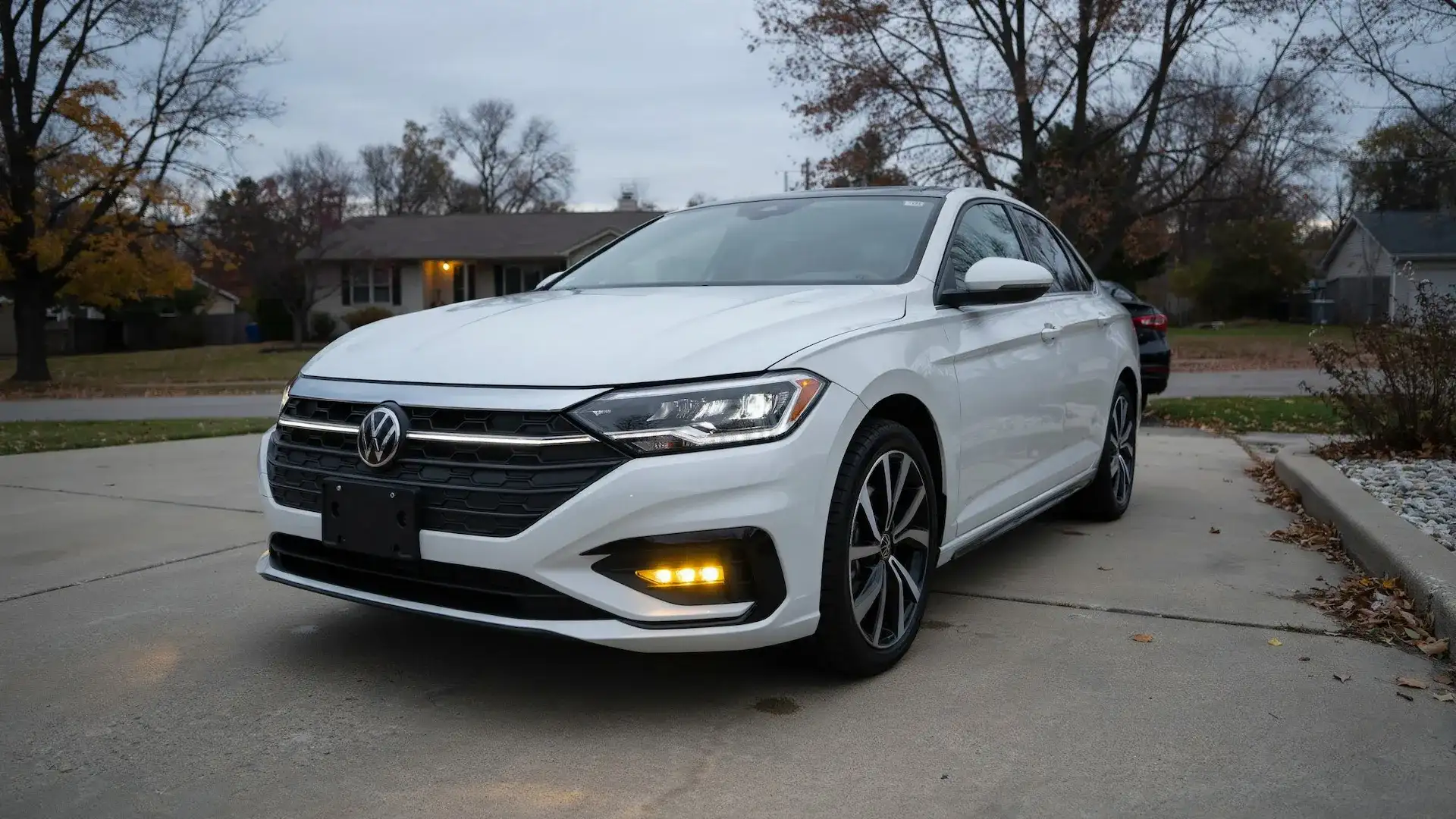
Volkswagen builds a range of lighting setups across its lineup. Depending on the model and trim, a Jetta, Tiguan, Atlas, Taos, or Golf may have halogen headlights, LED headlights, or a combination that varies between low beams, high beams, and daytime running lights. Some models also include adaptive systems that adjust the beam as you steer or change speed.
Before shopping for any upgrade, find out exactly what your vehicle has. Your owner’s manual lists the bulb types, and you can confirm general specifications on Volkswagen’s official site. This matters because headlight housings are engineered around a particular light source. A reflector housing uses a mirrored bowl to shape the beam, while a projector housing uses a lens and a cutoff shield to focus light and keep it out of oncoming drivers’ eyes. Replacing the bulb without regard to the housing can change the pattern dramatically.
Halogen, LED, and What Upgrading Really Means
Halogen bulbs have been the standard for decades. They are inexpensive and simple, but they produce a warmer, yellower light and use more power for the amount of light they deliver. Many drivers want something brighter and whiter, and that is where LED options come in.
A quality LED can offer a crisper light and a longer service life, but the details matter. A bulb that fits the socket is not automatically a good match for the housing. When an LED is placed in a housing designed for halogen, the light source may sit in a slightly different position, which can create dark spots, uneven patterns, and glare for other drivers. In the worst case, you end up with a headlight that looks bright to you but lights the road worse than the original bulb.
For many owners, the better upgrade is a higher quality halogen bulb from a trusted brand, or a factory approved lighting package for their specific vehicle. Genuine and approved parts are designed to work with your housing, and our parts center can help you identify the correct replacement for your model. If your vehicle is eligible for a complete LED headlight assembly, replacing the whole unit is generally safer than swapping individual bulbs.
Keep It Legal and Safe
Headlights are regulated for good reason. In California, lighting equipment must meet federal motor vehicle safety standards, and bulbs or assemblies that are not designed for on-road use can cause problems at inspection or a traffic stop. Look for products marked as compliant with DOT standards, and be cautious of inexpensive kits that promise extreme brightness at a bargain price.
The Insurance Institute for Highway Safety publishes independent headlight evaluations at iihs.org, and its research shows that real world performance varies widely between vehicles, even among models with the same headlight type. That is a useful reminder that brightness alone does not define quality. Beam pattern, reach, and glare control all contribute, and a well-designed beam can do more for safety than a brighter, poorly focused one.
Signs Your Headlights Need Attention
Headlights degrade slowly, so many drivers do not notice until the difference is obvious. Check your lights if you see any of the following:
- A dim, yellowish beam that does not reach as far down the road as it used to
- One headlight that looks noticeably brighter or a different color than the other
- Foggy, hazy, or yellowed plastic lenses that scatter light
- A beam that points too high, too low, or off to one side
- Flickering, or a bulb that burns out more often than expected
- A dashboard warning about a lighting fault
Bulbs lose brightness gradually long before they fail, so replacing them in pairs is good practice. Fresh bulbs on both sides keep the output balanced, and it avoids a repeat visit when the second bulb burns out soon after the first. Our service center can inspect your lights, replace bulbs, and check that everything is working properly.
Fog Lights: A Tool for Low Visibility
Fog lights are designed for a specific job. They sit low on the front bumper and project a wide, flat beam that stays beneath the fog layer, which reduces the glare you would get from bouncing high beams off the water droplets. They are meant to supplement your low beams in fog, heavy rain, or dust, not to replace them, and they are not intended to be left on during ordinary night driving.
Many drivers wonder about the color of the light. Selective yellow lenses were once popular because they reduce glare in some conditions, though the benefit varies, and modern white LED fog lamps work well when they are properly aimed. Whatever you choose, make sure the lamps meet applicable standards and that the aim is set correctly. A fog light aimed too high loses its advantage and can bother other drivers, while one aimed too low wastes its reach.
If your vehicle did not come with fog lights, some models offer factory accessory kits that integrate with the existing wiring and bumper. Using the right accessory keeps the fit clean and the operation reliable, and you can order parts in advance of the holiday travel season.
Aim, Lenses, and Other Overlooked Details
A new bulb will not fix a lens that has become cloudy. Over time, ultraviolet exposure and road grit oxidize the clear plastic protective coating on many headlight housings, and the lens turns hazy and yellow. That haze scatters light and can cut output substantially. Restoration or lens replacement may be the better fix than any bulb upgrade, and it is a common finding during a lighting inspection.
Aim is just as important. A load of holiday gifts and passengers can tilt the vehicle and raise the beam, and a past impact or suspension change can shift the alignment. Headlights that point too high blind oncoming drivers, while ones aimed too low shorten your view of the road. A technician can check and adjust the aim using proper equipment, and it is worth confirming after any bulb or assembly replacement.
Also look at the electrical side. Corroded connectors, a weak ground, or a failing battery can dim lights and cause flicker. When headlight trouble keeps coming back, the cause may not be the bulb at all.
Driving Smart in Wind and Fog
Equipment helps, but your habits matter too. In fog, slow down, use low beams and fog lights, and avoid high beams, which reflect off the moisture and reduce what you can see. Increase your following distance, since stopping distances and visibility both suffer. In strong winds near the Cajon Pass, keep both hands on the wheel, watch for blowing debris, and be ready for gusts when passing large trucks or crossing open stretches.
Check conditions before you leave. The Caltrans QuickMap shows live closures, chain controls, and weather related alerts along your route, which can help you time your trip or choose a different road. Keep your windshield, headlights, and mirrors clean as well, since road film and dust cut visibility more than most drivers expect.
What to Expect for Costs
Pricing depends on your model, the lighting type, and what an inspection finds, so the following describes how costs are typically structured rather than offering fixed quotes:
- Headlight bulb replacement: A low-cost service, usually best done in pairs so both sides have matching output
- Fog light bulb replacement: A small repair that restores performance when the original bulbs weaken or burn out
- Headlight aim adjustment: An inexpensive check that can make a noticeable difference in how well you see and how considerate you are to other drivers
- Lens restoration: A moderate service when haze or yellowing is limiting light output but the housing is otherwise sound
- Complete headlight assembly replacement: The largest lighting expense, appropriate when housings are cracked, moisture has entered, or a full LED upgrade is available for your model
The pattern is consistent. Addressing a problem at the beginning of that list is nearly always easier on your budget than waiting for it to reach the end.
Brighten Your Holiday Drives
The right lighting makes every winter commute calmer, from a dark evening on the I-215 to a windy afternoon at the base of the Cajon Pass. Start with the correct bulbs for your housing, keep the lenses clear, confirm the aim, and use your fog lights only when conditions call for them. If you would like a professional to inspect your headlights and fog lights before the busiest travel weeks, you can schedule service with Volkswagen San Bernardino, located at 1600 Camino Real, San Bernardino, CA 92408, United States, and head into the holidays with a clearer view of the road ahead.
0 comment(s) so far on Cajon Pass Winds & Winter Fog: Upgrading Your Volkswagen’s Headlight Bulbs and Fog Lights for Holiday Commutes