




Air Cabin Filter & HVAC Service: Clearing Santa Ana Wind Dust Before Turning On Your VW Heater
Key Takeaways
- Santa Ana winds load the filter fast: Dry, gusty offshore winds carry fine dust, ash, and pollen into the intake, so a filter that looked fine in summer can be clogged by December.
- A clogged filter weakens your heater: Restricted airflow means less warm air at the vents, slower defrosting, and a blower motor that works harder than it should.
- The first heater blast releases what has built up: Turning the heat on after months of disuse can push stale dust and musty odors straight into the cabin.
- A filter change is one of the cheapest services you can do: It protects the HVAC system, keeps the windshield clear, and improves the air you breathe on every drive.
Anyone who lives in the Inland Empire knows the feeling of a Santa Ana day, with a hot, dry wind howling down through the Cajon Pass and a fine layer of grit settling on every surface. Your Volkswagen is collecting that dust too, and most of it ends up in the cabin air filter. Replacing a cabin filter costs a small fraction of what it takes to repair a strained blower motor or a fogged-up windshield on a cold morning.
How Santa Ana Winds Load Up Your Cabin Air Filter
Santa Ana winds form when high pressure over the interior West pushes dry air toward the coast. As that air funnels through the mountain passes and canyons, it speeds up and sweeps loose soil, ash, and plant debris along with it. San Bernardino sits right at the mouth of one of those corridors, so the area gets some of the strongest gusts in the region, and the dust follows.
Your Volkswagen’s cabin air filter sits in the path of the outside air that enters through the HVAC system. In many models it is tucked behind the glove box, where it catches pollen, dust, soot, and other particles before they reach the cabin. That is a big job in a place where wind events can stretch across several days, and where traffic on I-215, I-10, and Highway 210 adds exhaust particles to the mix. You can check the latest air quality conditions for the area through the South Coast Air Quality Management District, which is a useful reminder of how much is floating around out there on a windy day.
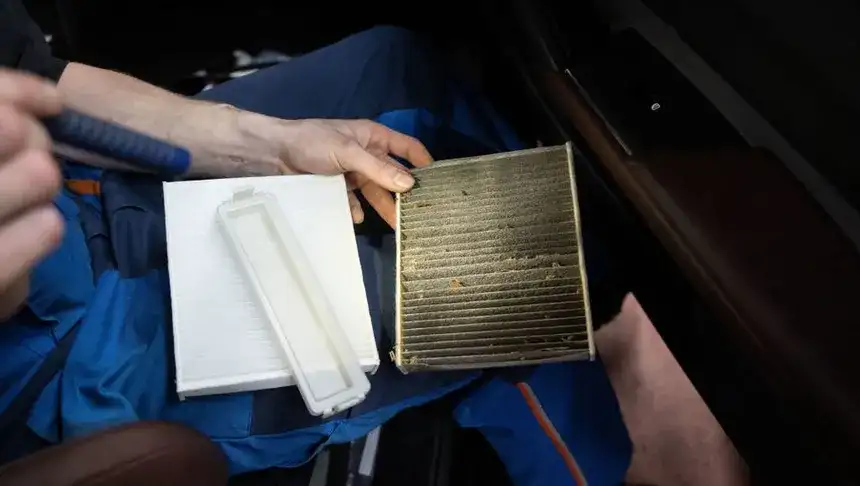
A filter works until it is full. Once the pleats are packed with dust, air has a harder time moving through, and the filter stops doing its job well.
Why Fall Is the Right Time to Check the Filter
In Southern California, many drivers go months without touching the heater. Summer air conditioning keeps the HVAC system busy, but a cold snap in late autumn is often the first time the heat comes on. By then the filter has been collecting dust through the dry summer months and the windiest part of the fall.
This is the moment the problem shows itself. You turn on the heater on a chilly morning, and a puff of dusty, stale-smelling air comes out of the vents. Moisture that built up inside the system from the air conditioner can also leave a musty smell once warm air starts moving through it. A fresh filter and a quick HVAC check before that first cold morning can prevent both problems.
Signs Your Cabin Filter Needs Replacing
A neglected filter usually announces itself. Pay attention to these symptoms, especially as temperatures start to drop:
- Weak airflow from the vents: Even with the fan on high, the air coming out feels thin or hard to detect.
- Musty or dusty smell: A stale odor when the system first starts is a sign of trapped debris and moisture.
- Foggy windows that take a long time to clear: Poor airflow slows the defrost cycle, which is a safety concern on cool, damp mornings.
- A noisy blower fan: Straining against a restricted filter can make the fan whistle, hum, or sound louder than usual.
- More dust on the dashboard: Visible grit on interior surfaces suggests the filter is no longer catching what it should.
- Allergy symptoms while driving: Sneezing or itchy eyes inside the car point to a filter that is saturated.
Any one of these is a good reason to look at the filter. If you cannot remember the last time it was changed, that alone is reason enough.
What a Dirty Filter Does to Your Heater and Blower
The HVAC system in your Volkswagen depends on steady airflow. The blower motor pulls air through the filter, across the heater core or evaporator, and out through the vents. When the filter is clogged, the motor has to work against resistance to move the same amount of air. Over time that extra strain can shorten the life of the blower and its resistor, and replacing those parts costs far more than the filter ever did.
Heat output suffers too. The heater core may be hot, but if too little air passes across it, the cabin warms up slowly and unevenly. Defrost and defog modes suffer the most, because they need a strong, dry stream of air to clear the glass. On a cool, damp morning along Camino Real or in the early commute toward downtown, a windshield that stays fogged is more than an annoyance. It is a visibility problem.
Dust can also reach parts of the system beyond the filter when the filter is saturated or poorly seated. Particles that slip past can coat the evaporator and vent passages, where they hold moisture and encourage odors that are harder to remove than a simple filter swap.
How Often to Replace the Filter
Replacement intervals depend on the model, the year, and especially where you drive. Many Volkswagen maintenance schedules call for a cabin filter change about once a year or at a set mileage, and your owner’s manual lists the exact interval for your vehicle. Drivers who spend time on dusty roads, in heavy traffic, or in windy areas like the Inland Empire often benefit from changing it more often than the schedule’s minimum.
A good rule is to check the filter at least once a year, and again after a prolonged stretch of strong wind or wildfire smoke. Cabin filters come in standard particulate versions and in activated carbon versions that also help reduce odors and some gases. For a region that deals with smog, wildfire smoke, and seasonal dust, a quality filter is a worthwhile choice, and Genuine Volkswagen parts are made to fit your model correctly. You can browse the parts center to see what is available for your vehicle.
What an HVAC Service Covers
A cabin filter replacement is a good start, and a fuller HVAC check helps make sure the whole system is ready for winter. A technician can inspect the filter housing for debris and proper sealing, test blower speeds across all settings, and confirm that air is reaching the correct vents in each mode. They can also check that the temperature blend and recirculation doors respond properly, and look for signs of moisture or odor in the system.
If a musty smell has already set in, an HVAC cleaning service can address the evaporator area and ducts where odor-causing buildup collects. It is also worth testing the defrost function while you are there, since that is the setting you will rely on most during damp winter mornings. Catching a weak blower or a stuck door now is far easier than discovering it on a cold day with a foggy windshield.
What Neglect Can Cost
Costs vary by model and by the extent of the work, but this overview shows how early care compares with waiting:
- Cabin air filter replacement: A quick, affordable service that restores airflow and protects the rest of the system.
- HVAC inspection and cleaning: A moderate service that clears odors and checks that every mode is working.
- Blower motor or resistor replacement: A larger repair that often follows a long period of restricted airflow.
- Evaporator or heater core service: Among the most labor-intensive HVAC repairs, and one that neglect can make more likely.
Seen together, the pattern is simple. A small, inexpensive filter change prevents the larger repairs that tend to follow when airflow problems are ignored. The service center can walk you through what your Volkswagen is due for.
Simple Habits for Cleaner Cabin Air
A few habits help between service visits. During a Santa Ana wind event, use the recirculation setting when driving through heavy dust or smoke so less outside air enters the cabin, and switch back to fresh air once conditions improve. Run the fan for a minute or two with the A/C off before parking, which helps dry the evaporator and discourages odors. Keep the area at the base of the windshield free of leaves and debris, since that is where outside air enters the system, and vacuum the interior regularly to keep settled dust from recirculating.
If you want to understand the air you are breathing on high wind days, the AirNow site offers current air quality readings for your zip code, which can help you decide when to rely on recirculation.
Get Your VW Ready for the Cold Mornings Ahead
Before you flip on the heater for the first time this season, make sure your cabin filter and HVAC system are ready for it. The service team at Volkswagen San Bernardino, located at 1600 Camino Real, San Bernardino, CA 92408, United States, can inspect and replace your cabin air filter, check your blower and airflow, and help you start the season with clean, warm air at every vent. You can schedule service online and be set well before the next wind event rolls through.
0 comment(s) so far on Air Cabin Filter & HVAC Service: Clearing Santa Ana Wind Dust Before Turning On Your VW Heater