




2026 VW ID.4: Servicing the Thermal Management Loop & Coolant Flushing
Key Takeaways
- Coolant Protects the Battery: The ID.4 uses liquid coolant to keep its high-voltage battery and power electronics within a healthy temperature range.
- Inland Empire Heat Raises the Stakes: Long summers, hot autumn spells, and frequent fast charging make cooling system health especially important in San Bernardino.
- Service Follows a Schedule: Coolant inspection and replacement should follow your maintenance schedule, or sooner after certain repairs or contamination.
- Flushing Is a Specialized Job: EV cooling systems need the correct coolant, careful air removal, and a diagnostic tool to run pumps and valves properly.
- Only Trained Technicians Should Do This Work: High-voltage components make this a service for a qualified team, not a driveway project.
Most people picture an electric vehicle as a battery and a motor, but a quiet network of coolant lines, pumps, and valves works just as hard behind the scenes. On an Inland Empire afternoon when the pavement radiates heat and the freeway is packed from the 215 to the 10, that system decides whether your ID.4 runs smoothly or throttles back to protect itself. A scheduled coolant service costs a small fraction of what it takes to repair a battery or power electronics component that has been run too hot. Knowing how the thermal loop works makes it easy to see why this service matters.
Why Heat Is the Big Test for an Inland Empire EV
San Bernardino sits at the base of the mountains, where summer highs can climb well past 100 degrees and warm spells continue into October. Heat is the enemy of high-voltage batteries, because lithium-ion cells perform best within a fairly narrow temperature window. Hot weather, stop and go traffic on the I-215 and I-10, and repeated DC fast charging all push the battery to produce more heat than it would on a mild day.
Because the weather and the power grid often go hand in hand during heat waves, a quick look at the National Weather Service forecast for our area helps you plan charging and long drives. During extreme heat, the state sometimes asks drivers to conserve energy, and Flex Alert is a useful resource for knowing when to shift charging to off-peak hours.
What the Thermal Management Loop Does
The thermal management system in your 2026 ID.4 is a network of liquid circuits, and it handles more than most drivers realize. Its main job is to keep the high-voltage battery within its ideal temperature range, cooling it in hot weather and warming it when needed. It also helps manage heat from the electric drive motor and the power electronics that convert and control electricity throughout the vehicle.
Pumps move the coolant, valves direct it to the parts that need it, and a radiator at the front of the vehicle releases heat into the air. The cabin climate system is connected to this network as well, which means a healthy thermal system supports comfort as well as battery life. When the system works properly, you never notice it. When it does not, you may see reduced charging speed, limited power, or a warning message.
Why Coolant Condition Matters
Coolant is not just water. It is a carefully formulated fluid that resists freezing and boiling and contains additives that protect metal parts and seals from corrosion. Over time, those additives wear out, and the fluid can become less effective at moving heat and protecting components. In an EV, coolant condition matters even more because the system is closely tied to the battery and electronics.
Using the wrong coolant is a real risk. Volkswagen specifies a particular type of coolant for the ID.4, and mixing incompatible fluids can cause chemical reactions, deposits, or damage to seals and pumps. That is why topping off with a generic product from a parts store is never a good idea, and why coolant work should be done with the correct approved fluid.
Warning Signs of a Thermal System Problem
Thermal issues often announce themselves with small clues before they become serious. Watch for the following:
- Reduced Fast Charging Speed: If your ID.4 charges much slower than usual on a warm day, the battery may not be cooling effectively.
- Coolant Warning Messages: A message about low coolant or a thermal fault should be taken seriously and checked promptly.
- Limited Power on Hot Days: If the vehicle seems to hold back on acceleration or climbing in high heat, the system may be protecting itself from excess temperatures.
- Visible Leaks or Low Reservoir Level: Colored fluid under the vehicle or a coolant level below the marked range calls for an inspection.
If you see any of these signs, avoid continuing a long drive in extreme heat, and have the vehicle looked at as soon as possible.
What a Coolant Service Involves
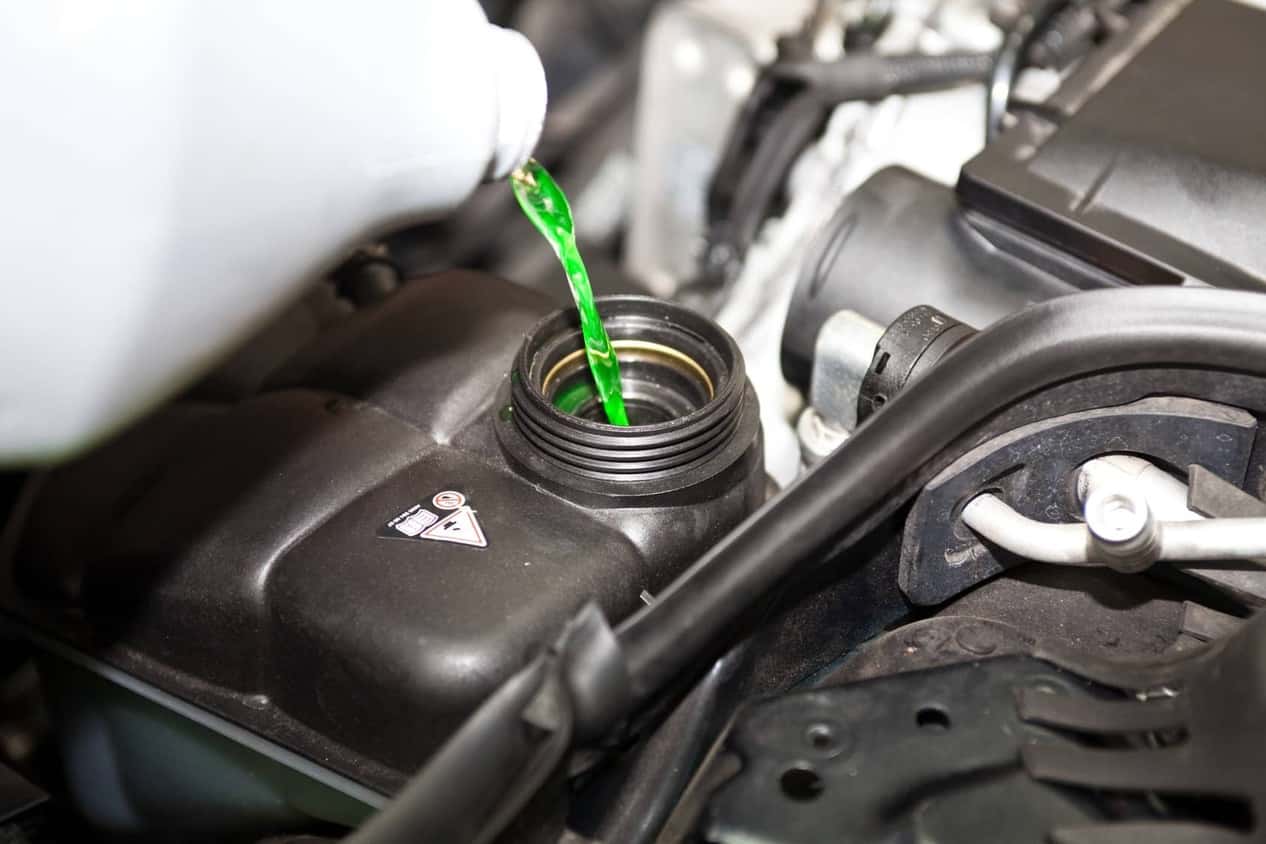
Coolant service on an EV is more involved than the traditional drain and fill many drivers imagine. A trained technician inspects the reservoir, hoses, and connections, tests the coolant condition, and checks for leaks. When replacement is called for, the old fluid is removed and the system is refilled with the approved coolant, then purged of trapped air.
Air in an EV cooling system can create hot spots and prevent proper circulation, so bleeding is a critical step. Many procedures call for a diagnostic tool that commands the pumps and valves to run in a set sequence, which pushes air out of the system and confirms that every branch of the loop is flowing. Vacuum filling equipment is often used to reduce air entering the system in the first place.
Safety and High-Voltage Considerations
The ID.4 contains a high-voltage battery and orange-sheathed cables that carry dangerous levels of electricity. Technicians who work near these components are trained in high-voltage safety procedures, which include powering down the system and verifying it is safe before beginning. This is one of the main reasons cooling work on an EV is best left to a qualified service team.
Even though coolant lines are not high-voltage components themselves, they run close to parts that are. Mistakes such as leaking fluid onto electrical components or leaving air in the system can cause problems that are costly to correct. A professional service keeps the work safe and the results reliable.
Habits That Help the Thermal System in the Heat
A few everyday habits help your ID.4 handle Inland Empire heat. Park in shade or a garage when you can, since a cooler starting temperature gives the battery a head start. Precondition the cabin while the vehicle is still plugged in, which cools the interior without drawing as much from the battery. Avoid back-to-back fast charging sessions on very hot afternoons if you can, since heat builds up during each one.
Keep the front of the vehicle clear of debris, because leaves, bugs, and road grime can block airflow to the radiator. Following the scheduled maintenance for your ID.4 and having the coolant level checked at routine visits makes it easier to catch small issues early.
What Thermal System Care Typically Costs
Pricing depends on trim, mileage, and the services needed, so treat this as a general picture and not a quote:
- Coolant Level and Condition Check: A minimal cost that is usually part of a routine inspection.
- Scheduled Coolant Service: A planned expense that includes the approved coolant, air removal, and system verification.
- Hose or Connection Repair: Needed only if a leak or wear is found, and far less expensive than repairing heat damage.
- Pump or Valve Repair: A larger expense that usually follows long-term neglect or contamination.
- Battery or Power Electronics Repair from Overheating: One of the most expensive outcomes, and the main reason to stay on schedule.
If you need parts or fluids for your ID.4, the parts center at Volkswagen San Bernardino can help you find the correct items for your vehicle.
Keep Your ID.4 Cool and Confident
Your 2026 ID.4 relies on its thermal management loop every time you drive, charge, or park in the sun, and that system works best when it is maintained on schedule with the right coolant. If you would like a trained team to inspect your cooling system and handle any coolant service your vehicle needs, the service center at Volkswagen San Bernardino, located at 1600 Camino Real, San Bernardino, CA 92408, United States is ready to help keep your ID.4 running cool through every Inland Empire summer.
0 comment(s) so far on 2026 VW ID.4: Servicing the Thermal Management Loop & Coolant Flushing