




Why Desert Driving Makes Regular VW Maintenance Even More Important
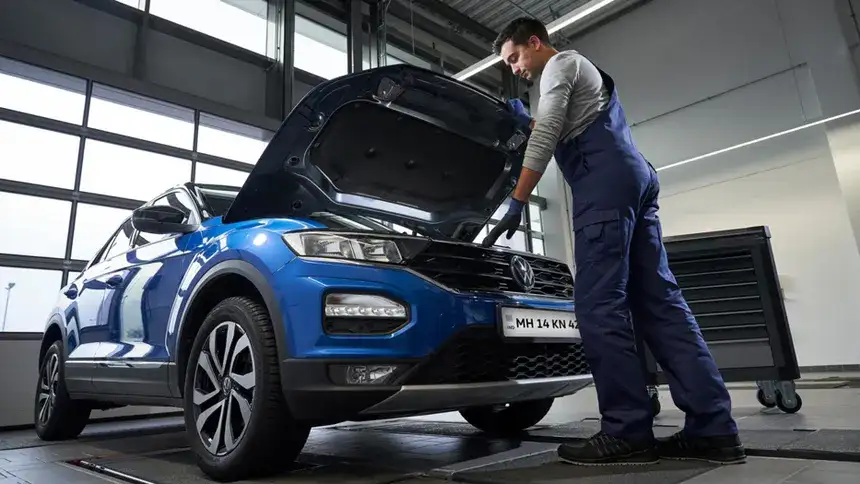
Last month, a 2022 Jetta came into our shop with a seized air conditioning compressor at just 28,000 miles. The owner commuted daily from San Bernardino to Palm Springs, exposing the vehicle to consistent triple-digit temperatures without following accelerated cooling system maintenance. The compressor replacement cost $1,450. The cooling system inspection and refrigerant service that would have caught declining performance early? $145. His assumption that “new cars don’t need service” in desert heat cost him exactly $1,305.
If you’re driving a Volkswagen in the San Bernardino area, you’re operating in one of the most demanding automotive environments in the United States. Summer temperatures regularly exceeding 105 degrees, dust storms sweeping through from the Mojave Desert, intense UV radiation at our elevation, and dramatic temperature swings between day and night all create stress that accelerates component wear beyond what most vehicle owners experience.
Many drivers treat manufacturer maintenance schedules as universal guidelines that apply equally everywhere. This is a dangerous assumption. Those schedules are baselines designed for moderate climates with average conditions. San Bernardino’s desert environment is anything but moderate or average. Following standard maintenance intervals here is like running a marathon in 110-degree heat and expecting your body to perform the same as in 70-degree weather.
Understanding how desert driving affects your VW and adjusting maintenance accordingly isn’t optional if you want reliable long-term performance. Let’s explore exactly why our climate demands more from your vehicle and what you need to do about it.
How Extreme Heat Affects Every VW System
Heat is the enemy of virtually every component in your Volkswagen, accelerating wear, degrading fluids, and stressing systems in ways that cooler climates never experience.
Engine oil breaks down faster in extreme heat. The oil’s molecular structure degrades when exposed to sustained high temperatures, losing viscosity and protective properties. Your VW’s engine operates at 195-220 degrees internally, but when ambient temperatures reach 110 degrees, the entire thermal management system works harder to dissipate heat. Oil that might last 10,000 miles in moderate climates degrades significantly faster when consistently operating in high heat.
We recommend reducing oil change intervals by 25-30% for desert driving. If VW’s maintenance system suggests 10,000-mile intervals, desert drivers should service at 7,000-7,500 miles. The $85-95 oil change costs approximately $12 more annually with shortened intervals, but it prevents the $8,000-12,000 engine damage that results from degraded oil protection.
Cooling system components face constant stress in desert conditions. Radiators work overtime dissipating heat when ambient temperatures approach engine operating temperatures. The smaller the temperature differential between coolant and outside air, the less efficiently the radiator transfers heat. On a 115-degree day, your radiator is trying to cool 210-degree coolant into 115-degree air, creating minimal temperature gradient for heat transfer.
Rubber components deteriorate rapidly under UV exposure and heat. Hoses, belts, seals, and weatherstripping all contain rubber compounds that dry out, crack, and fail when exposed to intense heat and UV radiation. San Bernardino’s elevation and clear skies mean UV intensity exceeds coastal areas by 20-30%. A serpentine belt that lasts 80,000 miles in Seattle might need replacement at 60,000 miles here.
Battery life drops dramatically in extreme heat. The chemical reactions inside batteries accelerate in heat, causing internal plate degradation and electrolyte evaporation. A battery rated for five years in moderate climates typically lasts 3-3.5 years in desert conditions. We see more battery failures between June and September than the rest of the year combined.
A customer from Highland drove his Atlas from Seattle to San Bernardino after relocating for work. Within six months, he needed battery replacement, multiple hoses showed cracking, and his air conditioning struggled to maintain temperature. “I had no idea the climate difference would affect the car this much,” he said. “In Seattle, I barely thought about maintenance beyond oil changes. Here, everything seems to wear faster.”
His observation is accurate. Desert conditions accelerate wear on every system. Accepting this reality and adjusting maintenance accordingly is essential for reliability.
Dust and Air Filtration Challenges
The Inland Empire’s dust, combined with our proximity to desert areas, creates air filtration demands that coastal California drivers never experience.
Engine air filters clog dramatically faster in dusty conditions. Dust from the Cajon Pass, Santa Ana winds carrying desert particulates, and construction dust from ongoing development all load your air filter with contaminants. A filter that might last 30,000 miles in San Francisco needs replacement at 15,000-20,000 miles in San Bernardino.
Clogged air filters reduce engine power, decrease fuel economy by 10-15%, and allow particle bypass that accelerates engine wear. The $45 air filter replacement prevents the $850 engine valve cleaning service that becomes necessary when dust reaches intake valves. Check your air filter at every oil change and replace it when you see visible contamination, regardless of mileage.
Cabin air filters face even greater challenges. These filters protect your HVAC system and interior air quality from the same dust affecting your engine. In desert conditions with frequent AC use, cabin filters work constantly. A severely clogged cabin filter reduces air conditioning efficiency by 25-30%, forces the blower motor to work harder (shortening its life), and allows dust into the cabin creating respiratory irritation.
Replace cabin air filters every 10,000-12,000 miles in the San Bernardino area versus the 20,000-30,000 mile intervals sufficient in cleaner environments. This $55 service maintains AC efficiency and protects the $450 blower motor replacement that premature wear causes.
Dust infiltration affects more than just filters. Fine desert dust works its way into door seals, trunk weatherstripping, and hood gaskets. This dust accumulation holds moisture against metal surfaces, accelerating corrosion in areas you can’t see. Annual detailing with thorough cleaning of door jambs, trunk areas, and under-hood spaces removes dust before it causes problems.
“Desert drivers don’t realize how much dust their vehicles ingest,” says Carlos Rodriguez, Master Technician at the Camino Real location. “We’ll inspect a vehicle with 20,000 miles and find an air filter that looks like it has 60,000 miles of use. The owner thinks we’re trying to upsell them until we show them the filter. Then they understand why we recommend much shorter replacement intervals here. Dust is invisible until it’s not, and by then it’s already causing damage.”
Air Conditioning: Your VW’s Hardest-Working System
In desert climates, your air conditioning isn’t a luxury feature, it’s essential equipment that operates under constant stress.
Your AC system works exponentially harder in extreme heat compared to moderate climates. Cooling 115-degree exterior air down to 60-degree cabin comfort requires massive energy and creates tremendous stress on every AC component. The compressor, condenser, evaporator, and refrigerant all operate at maximum capacity for extended periods.
AC compressor life in desert climates averages 80,000-100,000 miles versus 120,000-150,000 miles in moderate regions. The constant heavy workload accelerates compressor bearing wear and reduces component longevity. Compressor replacement costs $1,200-1,800 depending on model, making it one of the most expensive climate-related repairs desert drivers face.
Preventive AC maintenance extends system life significantly. Annual AC performance testing should include refrigerant level check, pressure testing, condenser inspection, and cabin temperature verification. This $95-125 service identifies declining performance before complete failure occurs. Catching low refrigerant early costs $145-185 to address. Waiting until the compressor seizes from lack of lubrication (carried in the refrigerant) costs $1,400-1,800.
The AC condenser faces unique desert challenges. Located in front of the radiator, it’s the first component to encounter airflow, making it vulnerable to rock damage, bug accumulation, and dust buildup. A condenser coated in dust and debris can’t dissipate heat efficiently, forcing the entire system to work harder. Annual condenser cleaning as part of cooling system service prevents efficiency loss and premature component failure.
Cabin temperature expectations need adjustment in extreme heat. Your VW’s AC system is designed to lower cabin temperature by approximately 50-55 degrees from ambient. On a 115-degree day, expecting 60-degree AC output is realistic. Expecting 50-degree output is not, and running the system at maximum trying to achieve impossible temperatures stresses components unnecessarily.
A customer from Redlands complained that her Tiguan’s AC “wasn’t working” because it wasn’t cold enough. Diagnostics showed the system functioning perfectly, producing 62-degree air with 113-degree ambient temperature. We explained that this 51-degree temperature drop represented proper operation. She’d been running the AC at maximum for months trying to get colder air, unnecessarily stressing the compressor. Understanding realistic performance expectations saved her from premature component failure.
Cooling System Maintenance in Triple-Digit Heat
Your VW’s engine cooling system performs one of the most critical functions in desert driving, and failure can be catastrophic.
The cooling system must maintain precise engine temperature regardless of outside conditions. When ambient temperature reaches 110-115 degrees, the temperature differential between coolant and outside air shrinks dramatically. The radiator struggles to transfer heat when there’s minimal temperature gradient, forcing cooling fans to run constantly and coolant to work harder.
Coolant degrades faster in desert heat through chemical breakdown and evaporation. The coolant should be tested annually for proper concentration and protective properties. Degraded coolant loses its ability to prevent corrosion, leading to internal rust and scale buildup that reduces cooling efficiency and clogs passages.
Radiator efficiency depends entirely on cleanliness. Bug debris, dust, and road grime accumulate on radiator fins, blocking airflow and reducing heat dissipation. External radiator cleaning should happen annually, either during service visits or through professional detail services. This $65-85 service can improve cooling efficiency by 15-20% when the radiator is heavily contaminated.
Cooling system hoses deteriorate faster in desert heat and UV exposure. Inspect hoses every 30,000 miles for soft spots, cracks, or bulging. Hose failure leads to coolant loss and engine overheating, potentially causing thousands in damage. A $45 hose replacement beats the $2,500-4,000 engine damage that overheating causes.
Water pumps, thermostats, and cooling fans all wear faster under constant high-load operation. Water pumps that might last 100,000 miles in moderate climates often need replacement at 75,000-85,000 miles in the desert. The $450-650 water pump replacement is predictable maintenance that prevents the catastrophic overheating damage that results when pumps fail.
A customer from Yucaipa ignored a small coolant leak visible as white crusty residue near his water pump. “It’s barely leaking,” he said when we pointed it out at his 65,000-mile service. At 71,000 miles, the water pump failed completely during a summer drive on the I-10. The engine overheated before he could safely pull over. Cylinder head warping and gasket failure cost $3,400 to repair. The water pump replacement we’d recommended? $520. His delay cost him $2,880 plus the inconvenience of a breakdown in 108-degree heat.
Tire Care in Extreme Heat and UV
Desert conditions create unique tire challenges that dramatically affect safety, performance, and longevity.
Tire rubber compounds deteriorate rapidly in heat and UV exposure. The same compounds that provide grip also make tires vulnerable to environmental degradation. Heat accelerates chemical aging while UV radiation breaks down rubber structure. Tires in San Bernardino age faster than their tread wears, creating situations where tires with adequate tread depth are actually unsafe due to age-related deterioration.
We recommend replacing tires at six years old regardless of tread depth for desert-driven vehicles. Tire manufacturers typically suggest 10 years as maximum age, but that’s for moderate climates. In consistent triple-digit heat with intense UV exposure, internal structural deterioration occurs much faster. The date code on your tire sidewall shows manufacturing week and year, making age verification simple.
Tire pressure monitoring becomes critical in desert heat. As temperature rises, air inside tires expands, increasing pressure. A tire properly inflated to 35 PSI in the morning might measure 40 PSI after sitting in 120-degree sun all afternoon. Over-inflated tires reduce contact patch area, decreasing grip and accelerating center tread wear. Under-inflated tires generate excessive heat through sidewall flexing, increasing blowout risk.
Check tire pressure weekly during summer months, always measuring when tires are cold (before driving or at least three hours after driving). Adjust pressure according to door jamb specifications, understanding that significant temperature fluctuations between morning and afternoon are normal.
Tire rotation intervals should shorten to 6,000-7,500 miles in desert conditions versus the typical 10,000-mile recommendation. The combination of heat, rough roads, and aggressive driving on highways creates faster wear. More frequent rotation distributes wear evenly across all four tires, maximizing tire life and preventing premature replacement.
Pavement temperatures exceed air temperature by 30-50 degrees. When air temperature hits 115 degrees, pavement can reach 165 degrees. Your tires are the only components in constant contact with these extreme surface temperatures. This heat transfers into tire structure, accelerating wear and increasing blowout risk, particularly on long highway drives.
A customer from Fontana experienced a tire blowout on the I-215 during August. The tire was five years old with 7/32-inch remaining tread—seemingly adequate. However, the tire had spent its entire life in desert conditions and showed internal structural damage from heat and age. The blowout damaged her wheel well and required towing. Total cost including new tire, towing, and body work: $950. A proactive tire replacement based on age rather than tread depth alone would have cost $220.
Battery Failure: The Desert’s Most Common Breakdown
Batteries represent the highest-failure-rate component in desert driving, and understanding why helps prevent breakdowns.
Heat accelerates the chemical reactions inside batteries, which sounds beneficial but actually causes premature internal degradation. Lead plates corrode faster, electrolyte evaporates more quickly, and internal shorts develop sooner. A battery’s chemical life is literally consumed faster in high heat.
Battery testing should happen annually in the fall before winter arrives. Batteries weakened by summer heat often fail during the first cold snap when increased cold-cranking demands exceed their diminished capacity. A battery showing marginal test results in October will likely fail in January. Proactive replacement costs $180-240. Emergency replacement after a breakdown costs the same plus towing fees and inconvenience.
Battery life in San Bernardino averages 3-3.5 years versus 4-5 years nationally. Don’t expect a battery to reach the manufacturer’s rated lifespan when operating in extreme heat. A four-year-old battery in our climate is living on borrowed time. Replace it proactively rather than gambling on being stranded.
Park in shade whenever possible to reduce battery heat exposure. Even 30 minutes in shade versus direct sun can reduce battery temperature by 15-20 degrees. Over time, this reduces heat exposure by hundreds of hours annually, extending battery life. While not always practical, choosing shaded parking when available provides free battery protection.
Corrosion on battery terminals accelerates in heat and reduces electrical conductivity. Annual terminal cleaning removes corrosion and ensures solid connections. This $25 service (often complimentary during other maintenance) prevents voltage drops and starting problems that corroded terminals cause.
A customer from Loma Linda called for a tow on a July afternoon when her Passat wouldn’t start after work. The battery was four years old, and she’d declined our replacement recommendation during her last service six months prior. The tow cost $135, and emergency battery replacement at a mobile service cost $280. The battery we’d recommended? $195 installed at her convenience. Her decision to delay cost an extra $220 plus several hours dealing with the breakdown in intense heat.
Fuel System Considerations in Heat
Extreme temperatures affect fuel systems in ways that many drivers never consider.
Gasoline evaporates more readily in heat, creating vapor lock potential and increasing evaporative emissions. Modern fuel systems are designed to handle this, but older VWs or vehicles with marginal fuel system components can experience vapor-related issues during extreme heat.
Fuel quality degrades in heat, particularly when stored in underground tanks during heat waves. While reputable stations manage their fuel properly, smaller independent stations sometimes have issues. Fill up at busy stations with high fuel turnover to ensure you’re getting fresh gasoline that hasn’t degraded from prolonged heat exposure.
Fuel pumps work harder in desert conditions because heat reduces their cooling efficiency. Gasoline flowing through fuel pumps provides cooling, but when that gasoline is already 100+ degrees from sitting in hot fuel tanks, cooling efficiency drops. This accelerated wear reduces fuel pump lifespan by 15-20% compared to moderate climates.
Fuel pump failures typically occur between 90,000-120,000 miles in desert conditions versus 120,000-150,000 miles nationally. Replacement costs $650-950 depending on model and pump location. While not preventable through maintenance, understanding the shortened lifespan helps you budget for this eventual replacement.
Evaporative emissions systems capture fuel vapors and route them to the engine for combustion. These systems work harder in desert heat when vapor generation increases. Charcoal canisters that capture vapors can become saturated more quickly, requiring more frequent replacement. Pay attention to check engine lights related to evaporative emissions and address them promptly.
Interior and Exterior Protection
Desert sun and heat attack your VW’s interior and paint with intensity that coastal drivers can’t imagine.
Interior temperatures in closed vehicles can exceed 170 degrees during summer. This extreme heat cracks dashboards, fades upholstery, warps plastic trim, and damages electronic screens. Sunshades, window tinting, and covered parking all reduce interior heat and UV exposure dramatically.
Dashboard cracks from heat and UV are nearly universal in older desert vehicles. These cracks don’t affect function but reduce resale value by hundreds of dollars. Dashboard covers or sunshades prevent or minimize cracking. Once cracks appear, they’re permanent unless you replace the dashboard at significant cost.
Paint degradation accelerates under intense UV at our elevation and latitude. Clear coat oxidizes, paint fades, and surfaces become dull. Regular washing removes dust and contaminants, while waxing or ceramic coating provides UV protection. Paint protection isn’t just cosmetic, it’s preservation that maintains vehicle value.
Rubber weatherstripping around doors and windows dries out and cracks in desert heat. Failed weatherstripping allows dust infiltration and wind noise. Annual inspection and treatment with silicone protectant maintains flexibility and extends lifespan. Replacing all weatherstripping on a vehicle costs $400-600, while preventive treatment costs $25 worth of protectant and 30 minutes of time.
A customer from San Bernardino bought a used Jetta from Seattle with pristine interior. After two years of desert driving without protection, the dashboard showed cracking, seats had faded noticeably, and the black exterior paint looked dull. A similar-age Jetta that had always been here and protected with window tinting, regular detailing, and covered parking looked significantly better. The difference in resale value? Approximately $1,500-2,000.
Your 30-Day Desert Maintenance Action Plan
Protecting your VW in desert conditions starts with three focused actions you can complete this month.
This week: Inspect all fluid levels and check for any signs of leaks or degradation. Pop the hood and check engine oil level and color, coolant level in the overflow reservoir, windshield washer fluid level, and brake fluid level. Look underneath for any wet spots indicating leaks. Desert heat evaporates leaks quickly, so what appears as a stain might be an active leak. Document anything concerning with photos and schedule professional inspection if needed. Also check tire pressure on all four tires plus spare when cold, adjusting to door jamb specifications.
Within two weeks: Evaluate your vehicle’s protection against heat and UV exposure. Inspect all rubber components under the hood for cracking or softness. Check weatherstripping around doors and windows for deterioration. Assess interior condition for early signs of heat damage. Purchase and install sunshades if you don’t already use them. Consider whether window tinting (within legal limits) would benefit your driving patterns. Research covered parking options at home, work, or frequently visited locations. Even reducing direct sun exposure by 3-4 hours daily provides significant protection.
By month’s end: Schedule a comprehensive desert-climate service inspection focusing on components most affected by heat. Request specific attention to cooling system condition, AC performance, battery health, hose and belt condition, and air filter contamination. Have technicians assess whether you’re following appropriate service intervals for our climate or if adjustments are needed. Many owners discover they’ve been following standard intervals when accelerated service would better protect their investment in desert conditions.
These three steps take approximately two hours total but provide comprehensive understanding of your VW’s condition and protection needs in San Bernardino’s demanding environment. 🌵
Real Stories: Desert Driving Success and Failure
Learning from other owners’ experiences provides valuable lessons without expensive tuition.
Success Story – Maria from Riverside: “I moved here from San Diego and immediately noticed how much hotter everything ran. I asked my service advisor what I should do differently, and they recommended shortening oil changes from 10,000 to 7,000 miles, replacing cabin filters twice as often, and checking coolant annually. My GTI now has 115,000 miles with zero heat-related failures. The extra maintenance costs maybe $200 more annually, but I’ve avoided the $3,000-4,000 in repairs I’ve seen friends deal with.”
Failure Story – James from Colton: “I followed the maintenance reminder system exactly like the manual said. At 68,000 miles during July, my engine overheated on the way to Las Vegas. Turned out the coolant was degraded and the water pump was failing. The overheating warped the cylinder head. Total repair: $3,800. My mechanic explained that desert driving needed more frequent coolant testing and earlier water pump replacement. That lesson cost me a small fortune and a ruined vacation.”
Success Story – David from Highland: “I park in my garage and use sunshades religiously. After seven years, my Tiguan’s interior looks nearly new while identical-age vehicles owned by coworkers show cracked dashes and faded seats. When I sold it, the pristine interior condition added $1,200 to what the dealer offered. Protecting it from heat paid back everything I invested in covered parking and sunshades.”
These real experiences illustrate that desert-appropriate maintenance costs more in the short term but saves dramatically in the long term through prevented failures and maintained value.
When to Choose Severe Service Schedules
Understanding whether your driving qualifies as “severe service” determines appropriate maintenance intervals.
All San Bernardino-area driving qualifies as severe service due to temperature extremes alone. Add in any of these factors and severe service is absolutely required:
- Regular driving when temperatures exceed 100 degrees (June-September)
- Frequent short trips under 10 miles where the engine never fully warms
- Extended idling in traffic on the I-10, I-215, or Route 66
- Towing trailers or carrying heavy loads
- Driving in dusty conditions near construction or desert areas
- Regular mountain driving to Big Bear or surrounding areas
Severe service schedules reduce oil change intervals by 30-50%, shorten fluid service intervals by 25-30%, and require more frequent filter replacements. Following severe service schedules costs approximately 25-35% more in maintenance annually but provides appropriate protection for the conditions your VW actually experiences.
Don’t let the term “severe service” make you think it’s unusual. In San Bernardino, severe service is normal service. The “normal” schedule is for ideal conditions that don’t exist here.
Need expert VW maintenance tailored to Southern California’s desert climate? Our service department specializes in heat and dust protection strategies that keep your Volkswagen running reliably in extreme conditions.
Schedule Your Desert-Climate Service Today
Remember that Jetta owner from the beginning who destroyed his AC compressor by ignoring desert-specific maintenance? He now follows aggressive service intervals we developed for his driving pattern and hasn’t had a single heat-related failure in two years. “I thought I was saving money by following standard maintenance intervals,” he told us recently. “That $1,450 compressor replacement taught me that desert driving isn’t normal driving. Now I spend an extra $150 annually on preventive maintenance and sleep better knowing my car won’t strand me in 115-degree heat.”
Your Volkswagen can deliver exceptional reliability in San Bernardino’s desert climate with maintenance adjusted for the conditions you actually face. Our certified VW technicians at the Camino Real location understand the specific challenges desert driving creates and can tailor service intervals to your vehicle and driving patterns.
Schedule your desert-climate VW service today by calling our service department or booking online. Visit us at 1600 Camino Real, San Bernardino, CA 92408, conveniently located with easy access from the I-10 and I-215.
Proper desert-climate maintenance protects your investment, prevents heat-related breakdowns, and ensures your VW delivers the reliability you expect despite extreme conditions. That’s the confidence climate-appropriate service delivers.
0 comment(s) so far on Why Desert Driving Makes Regular VW Maintenance Even More Important