




VW Tire Wear Patterns Explained: What They’re Telling You
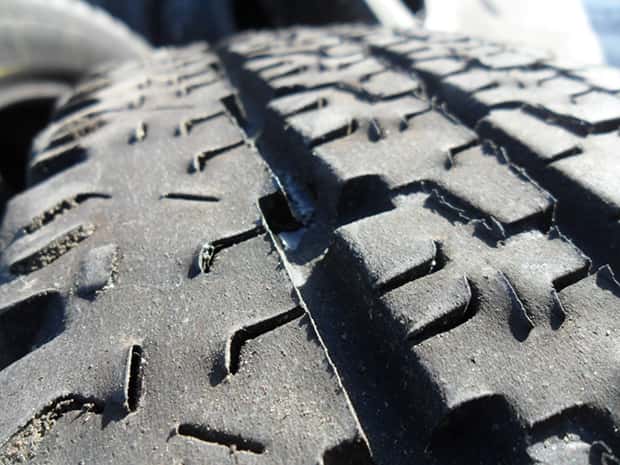
Tires don’t wear unevenly by accident. Every unusual wear pattern on your VW’s tires is the result of something specific, whether it’s a pressure issue, an alignment problem, a suspension component that’s worn past its useful life, or a combination of all three. Ignoring what your tires are trying to tell you doesn’t just shorten their lifespan, it can turn a $75 alignment correction into a $600 to $900 tire replacement bill when the underlying problem keeps wearing rubber that didn’t need to go yet. Learning to read wear patterns is one of the more useful things a VW owner can do, and it doesn’t require any mechanical expertise to get right.
Tire wear is one of the most honest indicators of what’s actually happening with your vehicle’s suspension and alignment. Unlike an engine issue that might not produce a symptom for thousands of miles, tires leave a visible record of every alignment problem, pressure imbalance, and worn suspension component they’ve been asked to compensate for. In San Bernardino, where summer heat accelerates wear and the mix of freeway miles on the 10 and 215 with stop and go surface street driving creates varied stress on tires, catching wear patterns early is especially worthwhile.
What Center Wear, Edge Wear, and One-Sided Wear Are Telling You
The location of wear on your tire’s surface tells a very specific story about what’s causing it, and each pattern points to a different root cause:
- Wear concentrated in the center of the tread typically means the tire has been running overinflated. When pressure is too high, the tire bulges in the middle and the center of the tread carries more of the load than the edges. In San Bernardino’s summer heat, this is especially common since air inside the tire expands as temperatures climb, and a tire that was correctly inflated on a cool morning can be running several PSI over by midday on a hot freeway. Center wear is the most straightforward pattern to address since it’s usually resolved by correcting pressure and monitoring it more consistently through the hotter months.
- Wear on both outer edges with the center relatively intact points to chronic underinflation. When pressure is too low, the tire flattens out and the outer edges carry most of the load. This pattern generates more heat through sidewall flexing, accelerates wear on both edges simultaneously, and significantly increases the risk of a blowout under sustained highway speeds. A tire showing this pattern has often been underinflated for long enough that the wear is already significant by the time it’s noticed.
- Wear concentrated on one edge only, either the inner or outer shoulder, is almost always an alignment issue. Excessive camber, the angle at which the tire sits relative to the road, causes one edge to carry a disproportionate share of the load. Negative camber wears the inner edge; positive camber wears the outer edge. This kind of wear develops gradually and is easy to miss until one edge is significantly more worn than the rest of the tire, at which point the tire often needs replacement even though the rest of the tread still looks acceptable.
What Cupping, Feathering, and Patchy Wear Are Telling You
Beyond the basic edge and center patterns, a few more specific wear types point to suspension and alignment issues that pressure adjustments alone won’t fix:
- Cupping, also called scalloping, appears as a series of dips or high and low spots around the circumference of the tire and almost always points to worn or failing shock absorbers or struts. When a strut is worn, the tire bounces slightly rather than maintaining consistent contact with the road, and each bounce creates a small worn patch. Cupped tires often produce a noticeable rumbling or vibrating sensation at highway speeds, and the wear pattern tends to appear on all four tires when struts are worn across the vehicle rather than just one corner. Strut replacement typically runs $150 to $300 per corner, while a full set of tires worn out prematurely by cupping runs $400 to $800 depending on the model and tire chosen.
- Feathering appears as tread blocks that are rounded on one side and sharp on the other, and points to a toe alignment issue. Toe refers to whether the fronts of the tires point slightly inward or outward relative to each other, and when it’s out of spec, each tire scrubs slightly sideways with every rotation rather than rolling cleanly forward. Feathering is harder to see than edge wear but easy to feel by running your hand across the tread. A toe correction is one of the simpler and less expensive alignment adjustments, typically included in a full four-wheel alignment that runs $75 to $120.
- Patchy or flat-spotted wear in isolated areas can point to a few different causes. A single flat spot is often the result of a hard braking event that locked a wheel briefly, while multiple irregular patches across the tire surface suggest an out-of-balance tire or a brake caliper that’s sticking and dragging on the rotor. Brake-related flat spotting will often come with other symptoms like pulling to one side or a burning smell after driving, while balance-related patchiness tends to show up as vibration at certain speeds.
What San Bernardino VW Owners Should Do When They Spot Unusual Wear
Catching a wear pattern early gives you real options. Catching it late usually means replacing tires that could have lasted significantly longer with a straightforward correction:
- Check all four tires regularly, not just the fronts. Rear tires on front-wheel-drive VW models like the Jetta and Golf can develop alignment-related wear patterns that are easy to miss since they’re not the driven wheels and don’t get as much casual attention.
- Run your hand across the tread surface rather than just looking at it. Feathering and early cupping are much easier to feel than to see, and a quick tactile check takes about thirty seconds per tire.
- Address the root cause before replacing tires. Putting new tires on a car with an uncorrected alignment problem or worn struts will reproduce the same wear pattern on the new set within a fraction of their expected lifespan. New tires without fixing the underlying issue is one of the more expensive mistakes a driver can make.
- Use wear patterns to time multiple repairs efficiently. If your tires are showing cupping and your struts are due for replacement anyway, doing both at the same time rather than replacing tires now and struts later avoids paying for a second alignment on the new tires.
The real cost difference between catching a wear pattern early and ignoring it tells the story clearly:
Caught early with an alignment issue causing inner edge wear:
- Four-wheel alignment to correct camber: $75 to $120
- Tires completing their full lifespan with corrected alignment: $0 additional cost
- Total with early correction: $75 to $120
Ignored until tires need replacement:
- Two front tires replaced prematurely due to inner edge wear: $300 to $450
- Four-wheel alignment still needed to prevent the same wear on new tires: $75 to $120
- Potential control arm or camber adjustment if alignment issue had a mechanical root cause: $200 to $500
- Total after ignoring the pattern: $575 to $1,070
That gap exists entirely because a wear pattern that was visible and diagnosable early went unaddressed long enough to consume tires that had plenty of life left in them. San Bernardino’s summer heat makes this more consequential than it would be in a cooler climate, since heat accelerates wear on a tire that’s already running with an uncorrected problem underneath it.
If your VW’s tires are showing any unusual wear pattern, or it’s been a while since your alignment and suspension were checked, stop by and let us take a look. The team at Volkswagen San Bernardino, located at 1600 Camino Real, San Bernardino, CA 92408, can inspect your tires, diagnose what the wear pattern is pointing to, and correct the underlying issue before it works through another set of tires.
0 comment(s) so far on VW Tire Wear Patterns Explained: What They’re Telling You