




VW Suspension & Steering Care for Rough SoCal Freeways
Key Takeaways
- SoCal freeways are harder on suspension than most drivers realize: Expansion joints, patched pavement, and heavy commuter traffic on routes like the 10, 215, and 210 create constant low-level stress on suspension components.
- Steering and suspension wear often shows up gradually: Symptoms like uneven tire wear, a wandering feel at speed, or clunking over bumps tend to develop slowly, making routine inspection important.
- Extreme heat affects rubber components faster than owners expect: Bushings, mounts, and seals degrade more quickly in the Inland Empire’s sustained summer heat than in milder climates.
- Alignment and suspension health are directly connected: Worn components throw off alignment even after a proper alignment service, so addressing the underlying part matters as much as the adjustment itself.
Most drivers don’t think about their suspension until the car starts telling them something is wrong. A worn control arm bushing or strut mount typically costs far less to replace proactively than the tire wear and alignment issues it eventually causes. For Volkswagen owners navigating San Bernardino’s freeways daily, understanding how local road conditions affect these components can save both money and a rougher ride than necessary.
Why San Bernardino’s Roads Are Tougher on Suspension
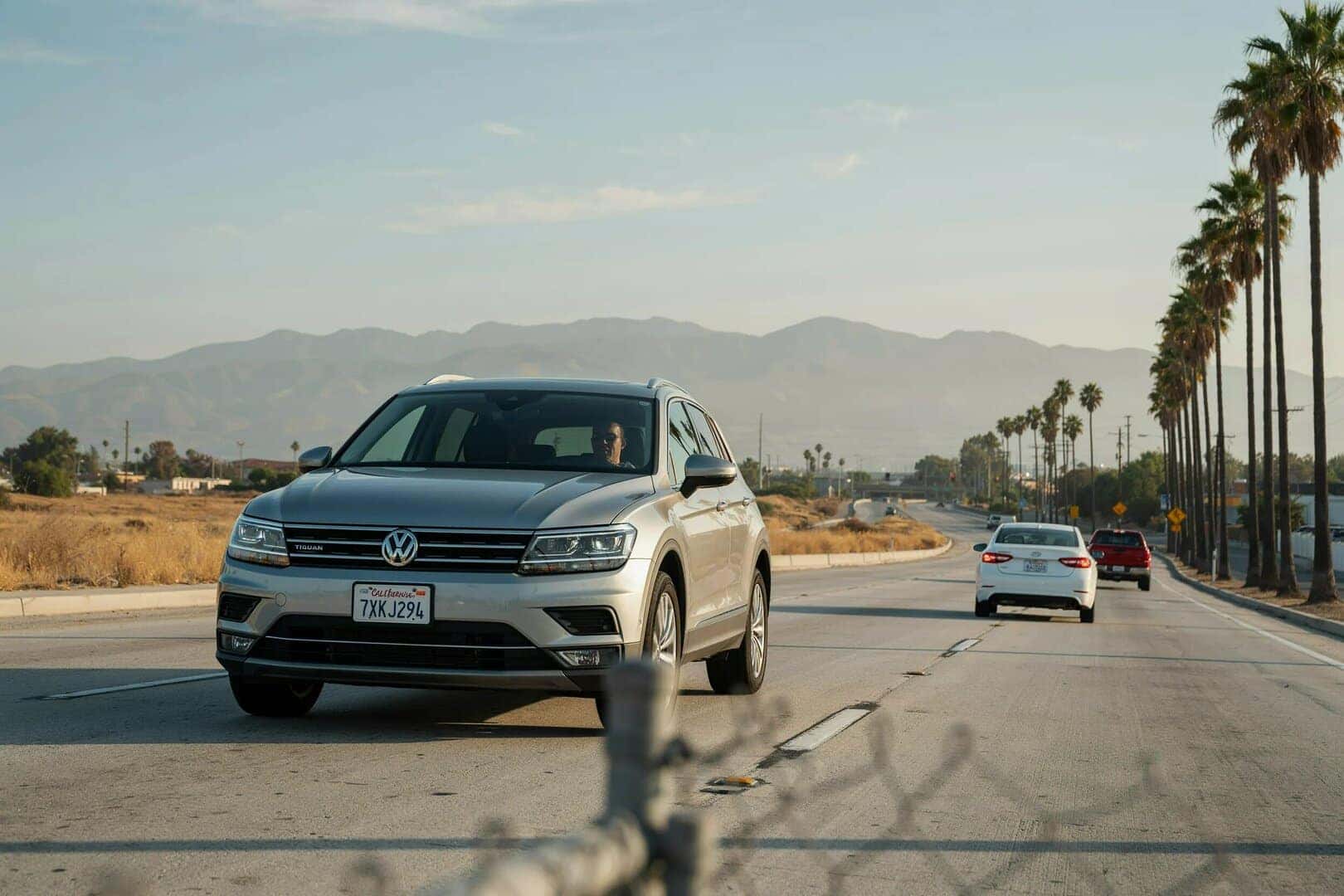
The freeways running through San Bernardino, including stretches of the 10, the 215, and the 210, carry some of the heaviest commuter and freight traffic in the Inland Empire. That volume, combined with California’s freeze-thaw-free but heat-heavy climate, produces a specific kind of wear pattern. Pavement here tends to develop expansion joint gaps, transition seams, and patched repair sections rather than the potholes more common in colder climates, but the cumulative effect on suspension components is similar: repeated small impacts that add up over tens of thousands of miles.
Heavy freight traffic on these corridors also degrades pavement surfaces faster than passenger vehicle traffic alone would, creating uneven surfaces and subtle dips that a driver may not consciously notice but that a suspension system absorbs with every pass. Over time, this steady low-level impact accelerates wear on bushings, ball joints, and strut components well before more obvious damage would prompt an owner to seek service.
Key Suspension Components and What They Do
Control arm bushings connect the suspension’s control arms to the vehicle’s frame, allowing controlled movement while isolating road vibration from the cabin. These rubber or polyurethane bushings are among the first components to show wear from repeated impacts, often resulting in clunking noises or a looser, less precise steering feel.
Struts and shock absorbers manage how the suspension compresses and rebounds after hitting a bump or expansion joint. Worn struts allow the vehicle to bounce excessively after impacts rather than settling quickly, which not only affects ride comfort but can reduce tire contact with the road during hard braking.
Sway bar links and bushings help keep the vehicle stable during cornering and lane changes, which matters considerably on freeways where merging and lane changes happen at higher speeds. Worn sway bar components often produce a knocking noise over uneven pavement and can make the vehicle feel less planted during quick maneuvers.
Ball joints allow the steering knuckle to pivot while supporting the vehicle’s weight, and they endure significant stress with every impact from rough pavement. Excessive play in a ball joint is a safety-relevant issue, since it directly affects steering control and wheel alignment.
How Heat Accelerates Component Wear
Southern California’s summer heat, particularly in the Inland Empire where temperatures regularly climb well above the coastal average, takes a toll on rubber and polyurethane suspension components that isn’t always top of mind for drivers. Sustained heat causes rubber bushings and mounts to dry out and crack over time, a process that happens faster under prolonged high-temperature exposure than in more temperate regions.
Pavement surface temperatures during San Bernardino summers can also run significantly hotter than ambient air temperature, meaning suspension components near the road surface experience even more thermal stress than the outside temperature alone would suggest. This accelerated aging is one of the reasons a suspension component that might last considerably longer in a cooler climate can wear out sooner here, even with otherwise normal driving habits.
Steering System Considerations
Power steering fluid condition matters more than many owners realize, since degraded fluid can lead to increased steering effort, noise from the steering rack, or premature wear on internal steering components. Regular inspection as part of routine service helps catch fluid degradation before it affects steering feel.
Tie rod ends connect the steering rack to the wheels and are subject to the same repeated-impact wear as other suspension components. Excess play in a tie rod end typically shows up as vague or imprecise steering, along with uneven tire wear concentrated on the inner or outer edge of the tread.
Steering rack mounts can loosen over time from repeated vibration and impact, sometimes producing clunks during turns or a subtle looseness in steering response that owners may attribute to normal wear rather than a specific component issue.
Signs Your Suspension or Steering Needs Attention
- Uneven or rapid tire wear: Often the first visible clue that a suspension or alignment issue is developing, since worn components change how the tire contacts the road.
- Clunking or knocking over bumps: Frequently points to worn bushings, sway bar links, or strut mounts rather than a normal road noise.
- Vehicle pulling to one side: Can indicate alignment issues, uneven tire pressure, or a worn suspension component affecting how the vehicle tracks.
- Excessive bouncing after a bump: A sign that struts or shocks are no longer effectively controlling suspension movement.
- Vague or loose steering feel: Worth having inspected promptly, since it often points to tie rod or steering rack wear that affects vehicle control.
Recommended Inspection and Service Intervals
- Suspension inspection: Generally recommended every 12,000 to 15,000 miles as part of routine service, allowing a technician to check bushings, ball joints, and strut condition before wear becomes noticeable to the driver.
- Alignment check: Recommended annually or whenever new tires are installed, and sooner if a driver notices pulling, uneven wear, or has recently hit a significant road impact.
- Power steering fluid service: Typically checked at routine service intervals, with fluid replacement recommended if contamination or degradation is present.
Addressing worn suspension components proactively tends to cost considerably less than the combined expense of premature tire replacement, repeated alignment services that don’t hold, and the eventual failure of a more critical component like a ball joint or strut mount.
Keeping Your Volkswagen Ready for the Freeway
San Bernardino’s freeway network isn’t going to get gentler, and the combination of heavy traffic, aging pavement, and sustained heat means suspension and steering components here work harder than they would in many other parts of the country. Staying attentive to routine inspection, alignment health, and the subtle signs of component wear helps keep a Volkswagen’s ride quality and handling closer to how it was designed to feel.
For owners who want the reassurance of a shop familiar with how local driving conditions affect suspension components, working with a team that understands both Volkswagen’s specifications and Inland Empire road realities makes a meaningful difference over time. Volkswagen of San Bernardino, located at 1600 Camino Real, San Bernardino, CA 92408, United States, offers suspension and steering inspections built around exactly these conditions, giving local drivers a clear way to stay ahead of wear before it becomes a bigger repair.
0 comment(s) so far on VW Suspension & Steering Care for Rough SoCal Freeways