




Spring Tire Pressure Tips for Volkswagen Drivers
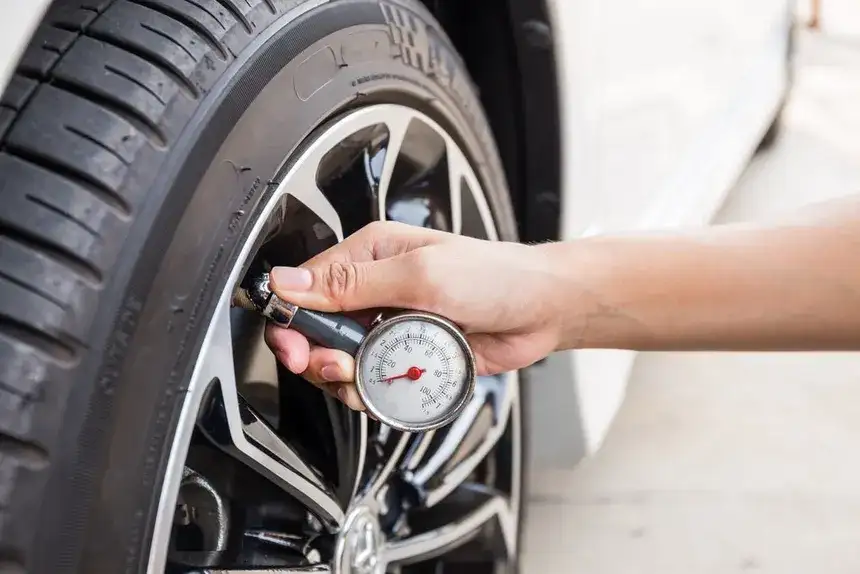
Last month, a Tiguan came in from Fontana after its owner had been dismissing a tire pressure warning light for six weeks, assuming it was a sensor glitch left over from winter. He had been driving his daily commute on the 210 and through the Ontario Mills corridor with two tires running eight PSI below specification. When our technician inspected the vehicle, the inner shoulders of both front tires showed accelerated wear from sustained underinflation that had been compressing the sidewall on every corner and highway mile since January. The tire pressure correction and rotation that would have resolved the issue in December? $60. The two front tires he needed to replace immediately because the inner shoulder wear was beyond safe limits? $520.
That six-week gap between a warning light and a service appointment is one of the most consistently preventable situations we see at Volkswagen San Bernardino every spring. The tire pressure monitoring system on every modern VW is not a suggestion. It’s a precision instrument communicating a condition that is actively affecting your tire life, your fuel economy, and your handling every mile it goes unaddressed.
Inland Empire drivers face a tire pressure management challenge that differs from most of California. The temperature swings between a January night in San Bernardino and a July afternoon on the 10 freeway can exceed 80 degrees across a single year, and each 10-degree temperature change moves tire pressure by approximately one PSI in the same direction. Tires set correctly in October are underinflated by spring. Tires corrected in spring are overinflated by August if nobody checks them again. That cycle, left unmanaged, costs Inland Empire VW owners in tire wear, fuel economy, and handling precision every year.
This post covers what tire pressure actually does for your Volkswagen, why San Bernardino’s specific climate makes seasonal management more important here than in moderate coastal markets, and what a proper spring tire pressure service involves for your Jetta, Tiguan, Golf, or Atlas.
What Tire Pressure Actually Does for Your VW
Most drivers understand tire pressure in a general way: too low is bad, too high is bad, somewhere in the middle is right. That understanding is correct but incomplete, and the gap between the general concept and the specifics is where tire wear and fuel economy losses accumulate quietly across months of Inland Empire driving.
Your VW’s specified tire pressure, listed on the placard inside the driver’s door jamb and in the owner’s manual, is the number at which the tire’s contact patch with the road matches exactly what Volkswagen’s engineers designed for. That contact patch geometry determines how evenly the tread wears across its full width, how the tire responds to steering inputs, and how effectively the tire dissipates the heat generated by highway driving on the 215 and I-10.
When pressure drops below specification, the tire’s sidewalls flex more than designed on every rotation. That additional flex generates heat, accelerates sidewall fatigue, and shifts the contact patch toward the outer shoulders of the tread, wearing them faster than the center. Eight PSI below specification, which is not an unusual finding on a vehicle that hasn’t had pressure checked since the previous winter, represents a meaningful departure from the engineered contact patch geometry that affects every aspect of the tire’s performance.
What Overinflation Does That Most Drivers Don’t Expect
Underinflation gets most of the attention in tire pressure conversations, but overinflation creates its own specific problems for San Bernardino drivers heading into summer. A tire inflated above specification develops a contact patch that is narrowed and centered, wearing the center tread faster than the shoulders and reducing the tire’s ability to conform to road surface irregularities. On the rough pavement sections of the 215 through the Devore interchange and the expansion joint transitions on the 10, an overinflated tire transmits more road impact energy into the suspension rather than absorbing it through appropriate sidewall compliance.
Summer overinflation in the Inland Empire is a real phenomenon. Tires set to the correct pressure on a 65-degree March morning will read approximately three to four PSI higher on a 105-degree August afternoon as the air inside the tire expands with ambient heat. This is why pressure management isn’t a once-a-year event in San Bernardino. It’s a seasonal habit that requires a spring correction and a summer check.
Why the Inland Empire Creates a Unique Tire Pressure Challenge
The temperature differential between Inland Empire winters and summers is more pronounced than what coastal California drivers experience, and that differential is the core reason that tire pressure management matters more here than in markets with more moderate year-round climates.
San Bernardino County winter nights regularly drop into the upper 30s and low 40s, particularly from December through February. Summer afternoons consistently reach 100 to 108 degrees through July and August, with the asphalt surface temperature running 20 to 30 degrees above ambient air temperature. That total thermal range, from a cold January night in Redlands to a hot August afternoon on the 10 near Colton, spans enough temperature variation to move tire pressure by eight to ten PSI across the calendar year in a vehicle that is never checked.
The Santa Ana wind events that sweep through the Cajon Pass and across the San Bernardino Valley from fall through spring add another dimension. The dry, warm air that accompanies Santa Ana conditions can cause rapid daytime temperature swings that affect tire pressure within the same day, particularly for vehicles parked outside in Fontana or Rancho Cucamonga where the wind exposure is direct.
The Stop-and-Go Heat Factor on the 215 and 10
Sustained stop-and-go driving in warm weather generates heat in tire sidewalls that inflates pressure temporarily beyond the cold inflation reading. The stretch of the 215 through San Bernardino, the I-10 and I-215 interchange backup that Inland Empire commuters navigate daily, and the surface street congestion around the Hospitality Lane corridor all create conditions where tires are absorbing repeated load cycling at elevated ambient temperatures.
A Jetta owner from Rialto came in last June after her fuel economy had dropped noticeably over the spring and she had been feeling a vague, imprecise quality to the steering on the 210. Inspection found all four tires underinflated by six to nine PSI, a condition that had developed gradually since her tires were last checked the previous October. Correcting the pressure to specification restored the steering precision immediately and, over the following month, her fuel economy returned to its normal range. The pressure correction cost nothing beyond the service visit. The fuel economy loss she had absorbed over five months of underinflation represented approximately $80 to $100 in additional fuel costs that proper pressure management would have prevented.
Warning Signs Your VW’s Tire Pressure Needs Attention
The tire pressure monitoring system on every modern Volkswagen illuminates at approximately 25 percent below the recommended cold inflation pressure, which on a typical VW specification of 35 PSI means the light activates around 26 PSI. That threshold is important context: the TPMS light is not an early warning system. It’s a late warning system that indicates pressure has already dropped to a level where handling and tire integrity are genuinely affected.
A TPMS warning light that has been on for more than 24 hours after temperatures have stabilized means at least one tire is at or below 25 percent of specification and needs immediate attention, not a deferred appointment.
A steering wheel that feels less precise or requires more correction on familiar stretches of road is one of the subjective early signs of pressure that has dropped enough to affect the tire’s contact patch geometry without yet triggering the TPMS threshold.
Fuel economy that has decreased gradually without a clear cause, the kind of slow drift that shows up as more frequent fill-ups rather than a dramatic change, is consistently associated with underinflation across all four tires. The rolling resistance increase from underinflated tires is invisible to the driver but measurable at the pump over a full tank.
Visible tire sidewall bulging when the vehicle is parked and loaded, where the sidewall appears to bow outward more than seems normal, indicates significant underinflation and warrants same-day attention.
Uneven wear across the tread width visible on inspection, where the outer or inner shoulders show more wear than the center tread, is the physical record of pressure that has been out of specification long enough to leave a permanent mark on the tire. 🔧
A ride quality that feels harsher than it did previously on the same roads can indicate overinflation, a less commonly recognized symptom that becomes relevant for San Bernardino drivers heading into summer after a spring inflation correction.
The Complete Spring Tire Service for Inland Empire VW Owners
A proper spring tire service at our Camino Real location covers four items that work together rather than in isolation. Pressure correction to the cold inflation specification establishes the baseline for everything else. A tire rotation moves tires to equalize the wear differential that has developed across the winter and early spring driving pattern. A tread depth measurement on all four corners gives you an accurate picture of remaining tire life and whether any tire is approaching the replacement threshold before summer driving season adds additional miles. And a visual inspection of sidewall condition checks for any impact damage, cracking, or bulging from the road debris and pothole conditions that San Bernardino County roads develop through winter.
Cost comparison for proactive spring tire management versus reactive replacement:
Proactive spring tire service:
- Pressure correction and inspection: complimentary with service visit
- Tire rotation: $60 to $75
- Tread depth and condition assessment: included
- Smart proactive total: $60 to $75
Reactive approach after sustained underinflation causes unrecoverable shoulder wear:
- Two tire replacement after inner shoulder wear: $400 to $600
- Alignment check to confirm pressure-related wear hasn’t masked an alignment issue: $99 to $130
- Total reactive cost: $499 to $730
Your savings from a proactive spring appointment: $424 to $655. Those are real numbers from real service records at our Camino Real location, not projections.
“The inland Empire is one of the hardest environments on tires in the state, and it’s not because the roads are uniquely bad,” says Carlos Menendez, Lead VW Service Technician at the Camino Real location. “It’s the temperature range. We go from cold winter nights to 105-degree summers and the tires are just along for the ride. The drivers who check pressure twice a year, once in spring and once before summer heat peaks, consistently get more life from their tires than the ones who rely on the TPMS light to tell them something is wrong. By the time that light comes on, the damage is often already done.”
Your 30-Day Spring Tire Pressure Plan
This week: Check all four tire pressures using a quality gauge before your first drive of the morning, when the tires are cold and haven’t been warmed by driving. Compare the reading on each tire to the specification on the driver’s door jamb placard, which lists the correct pressure for your specific VW model and tire size. If any tire reads more than two PSI below specification, correct it before your next drive. If the readings are consistently low across all four tires, that pattern points to gradual winter pressure loss rather than a leak and is resolved with a simple inflation correction.
Within two weeks: Inspect the tread wear pattern across the full width of each tire by crouching down at eye level with the tread surface. A tire wearing evenly across its full width is running at or near correct pressure. A tire showing more wear at the inner or outer shoulder than at the center has been running underinflated or has an alignment issue contributing to the pattern. Either finding warrants a service appointment at our Camino Real location for a professional assessment.
By month’s end: Schedule a spring tire service that includes rotation, pressure calibration, tread depth measurement, and a sidewall condition inspection. For Inland Empire VW owners heading into summer, this appointment is the highest-leverage tire investment of the year. The tires that go into San Bernardino summer correctly inflated, properly rotated, and assessed for remaining life deliver better fuel economy, more precise handling on the 210 and I-10, and a longer service life than tires that enter summer on whatever pressure they happened to carry out of winter.
These three steps take less than 45 minutes of your actual time across the month and can extend your tire life by thousands of miles while improving the fuel economy and handling precision your VW delivers every day on Inland Empire roads.
Tire pressure is the maintenance item that costs nothing to manage correctly and consistently more than it should when it’s ignored. In San Bernardino’s temperature environment, the gap between managed and unmanaged pressure is wider than in almost any other Southern California market, and the consequences show up in fuel costs, tire wear, and handling quality before most drivers realize the connection.
Schedule Your Spring Tire Service Today
The Fontana Tiguan owner from the opening replaced his two front tires, had his remaining tires rotated and pressures corrected, and left with a reminder set on his phone for a midsummer pressure check in July. He came back eight months later for a routine rotation with even wear across all four corners and no TPMS warnings since his spring appointment. One proactive service visit, one full season of properly managed tires.
At Volkswagen San Bernardino, our certified technicians perform spring tire services with the attention to Inland Empire conditions and VW-specific specifications that your Jetta, Tiguan, Golf, Atlas, or ID.4 deserves. Whether your TPMS light is on, your tires haven’t been rotated since last fall, or you simply want the confidence of a professional pressure check and tread assessment heading into summer, we’ll give you a clear picture and an honest recommendation.
Schedule your spring tire service today by contacting our service department or booking online. You’ll find us at 1600 Camino Real, San Bernardino, CA 92408.
Proper tire pressure management protects your tire investment, preserves the fuel economy and handling precision your Volkswagen was engineered to deliver, and ensures every mile on Inland Empire roads this summer is backed by tires that are performing exactly as they should. That is what a well-managed spring tire service delivers.
0 comment(s) so far on Spring Tire Pressure Tips for Volkswagen Drivers