




SoCal Santa Ana Winds: Checking Intake Air Filters & Mass Air Flow (MAF) Sensors
Key Takeaways
- Santa Ana winds load the air with debris: Dust, sand, pollen, and wildfire ash get pulled toward your engine, so the air filter can clog much faster than the calendar suggests.
- The MAF sensor depends on clean air: It measures the air entering the engine, and contamination can skew its readings and throw off the fuel mixture.
- Symptoms are easy to miss at first: Mild hesitation, a rough idle, or a small drop in mileage often appear before a check engine light does.
- Inspection is quick and affordable: Checking the filter and sensor takes little time and costs far less than diagnosing a drivability problem later.
Every fall and winter, hot, dry gusts roll down from the high desert and sweep across the Inland Empire, rattling palm fronds, coating windshields in a fine film of grit, and sending a haze of dust through the valley. A quick air filter and sensor check costs a small fraction of what a drivability repair and a lost afternoon at the shop will run you, and it protects the efficiency your Volkswagen was designed to deliver. Your engine breathes in thousands of gallons of air every minute, and when that air is full of debris, two small components take the brunt of it: the intake air filter and the mass air flow sensor.
How Santa Ana Winds Affect Your Engine
Santa Ana winds form when high pressure over the Great Basin pushes air toward the coast, and that air funnels through mountain passes like Cajon Pass before spilling into the San Bernardino Valley. As the air descends, it warms and dries, and it picks up whatever is loose along the way: fine desert dust, dried plant material, and in many seasons the ash and particulates from regional wildfires. The Southern California air quality agency, South Coast AQMD, regularly issues advisories when wind and smoke push particulate levels higher, and those same particles are heading toward your vehicle’s intake.
Your VW’s engine needs a precise balance of air and fuel to run efficiently. Every bit of that air passes through the air filter first, so a filter packed with dust restricts airflow, forces the engine to work harder, and lets finer particles slip past if the media is overloaded. On days when the wind is blowing along I-215, SR-210, and the surrounding surface streets, your filter is catching far more debris than it would during a calm week. Following the guidance in your owner’s manual is the starting point, but severe or dusty conditions often call for earlier inspection and replacement.
What the Air Filter Does
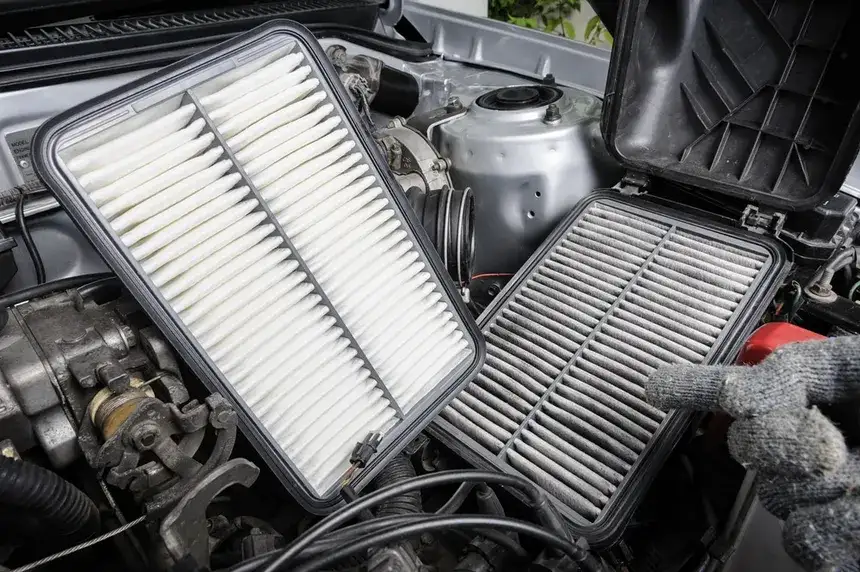
The air filter is a pleated panel of paper or synthetic media that traps particles before they reach the engine’s internals. Clean air protects the cylinder walls, pistons, and turbocharger on many modern VW engines from abrasive wear, and it keeps the sensors downstream working accurately. A fresh filter allows air to flow freely, while a clogged one acts like a partially closed door.
When airflow is restricted, the engine may not get the volume of air the computer expects. On a turbocharged engine, a heavily loaded filter can also make the turbo work harder to deliver the same boost. The result can be a flatter feel under acceleration, lower fuel economy, and in more severe cases, poor combustion that leaves deposits behind. You can see how filters fit into routine care by reviewing the maintenance recommendations at the Volkswagen San Bernardino service center.
Where the MAF Sensor Fits In
The mass air flow sensor sits in the intake tract, between the air filter housing and the throttle body, and it measures how much air is entering the engine. Most use a thin heated element, and the amount of electrical power needed to keep that element at temperature tells the computer exactly how much air is passing by. The engine control unit uses that reading, along with data from other sensors, to calculate how much fuel to inject so the mixture stays balanced.
Because the sensing element is extremely delicate and exposed to the incoming air stream, it is vulnerable to contamination. Fine dust that gets past a worn filter, oil vapor, or sticky residue can coat the element and insulate it from the airflow. A coated sensor reads inaccurately, usually reporting less air than is actually entering. The computer then adjusts the fuel mixture based on bad information, and the engine begins to run less smoothly and less efficiently.
Symptoms of a Clogged Filter or Dirty MAF Sensor
Problems in this part of the system tend to develop gradually, which is why they are easy to overlook. Since the two components affect each other, the symptoms often overlap. Pay attention to how your VW feels on cold starts and during everyday driving around town, and watch for any of these signs:
- Rough or unstable idle: The engine shakes slightly or the rpm drifts up and down when you are stopped at a light.
- Hesitation or stumbling on acceleration: A brief lag when you press the pedal, especially when merging onto I-10.
- Lower fuel economy: You are filling up more often without any change in your routine.
- Check engine light: The computer detects readings that do not match expectations and stores a trouble code.
- Hard starting or stalling: The engine cranks longer than usual or dies shortly after starting.
Any one of these symptoms can have other causes, so a proper diagnosis matters. A technician can read stored codes, view live sensor data, and confirm whether the filter, the sensor, or something else entirely is behind the problem.
Why Cleaning and Care Require a Careful Hand
It is tempting to grab a can of spray cleaner and take care of a dirty MAF sensor at home, but this is a task that demands care. The sensing element is fragile, and touching it with a brush, cloth, or fingers can damage it permanently. Using the wrong chemical can leave a residue that makes things worse, and spraying the wrong product can ruin the sensor outright. Manufacturers generally recommend only a cleaner made specifically for MAF sensors, and many technicians prefer to inspect first and replace the sensor if cleaning is not enough.
The same caution applies to the air filter. Tapping a dusty filter against a surface or blowing it out with compressed air can force particles deeper into the media or tear the pleats, reducing its ability to protect the engine. Paper filters are designed to be replaced, not washed. If you are unsure whether your filter has reached the end of its life, a quick visual check by a professional, such as holding the filter up to a bright light to see how much shines through, tells you right away. When it is time for a replacement, genuine components that match your engine’s specification are available through the Volkswagen San Bernardino parts center.
The Connection to Fuel Economy and Emissions
A healthy intake system does more than keep the engine smooth. When airflow measurement is accurate and the filter is clean, the engine runs closer to its ideal air and fuel ratio, which supports good fuel economy and lower emissions. The federal fuel economy maintenance guide explains that keeping your engine properly maintained helps preserve efficiency, and an inaccurate MAF sensor is one of the issues that can quietly reduce it.
California also takes vehicle emissions seriously, and an illuminated check engine light can complicate smog check requirements. Since a dirty sensor or restricted intake can trigger fault codes, addressing the problem before your smog test avoids last-minute surprises. Over time, running with a faulty mixture can also stress the catalytic converter, which is one of the more expensive components in the exhaust system. Preventing that damage with simple, inexpensive intake maintenance makes good financial sense.
Cabin Air Quality Matters Too
While you are thinking about air filtration, remember that your VW also has a cabin air filter that cleans the air you breathe inside the vehicle. Santa Ana conditions and wildfire smoke can load this filter quickly, leading to weaker airflow from the vents, musty odors, and foggy windows. Replacing it on schedule, or sooner during smoky or dusty stretches, keeps the cabin fresher and helps the climate system work efficiently. It is a small, inexpensive item that is easy to check at the same visit as the engine air filter.
Habits That Protect Your Intake System
You can help your VW cope with the valley’s windy season with a few simple habits. Keep an eye on the weather and air quality reports, and consider an earlier filter check after a stretch of strong wind or a nearby wildfire. Park in a garage or covered space when possible, since long exposure to blowing dust coats the engine bay as well as the paint. Wash the vehicle regularly to keep grit from building up around the hood and cowl area where air enters.
Consistent routine maintenance is the best defense, and a short checklist keeps the important items on your radar:
- Inspect the engine air filter: Check it more often during windy or smoky periods, and replace it when it looks dark or clogged.
- Replace the cabin air filter: Swap it on schedule or sooner if airflow weakens or odors appear.
- Address warning lights promptly: Do not ignore a check engine light, since early diagnosis keeps repairs simple.
- Follow your maintenance schedule: Stay current on spark plugs, oil, and other services that affect combustion and sensor cleanliness.
Get Your VW Ready for Windy Season
Your Volkswagen is engineered to handle Southern California driving, from the commute along Waterman Avenue to weekend runs up toward the mountains. A little attention to the intake system keeps that engineering working the way it should, even when the wind is howling down the pass. If you have noticed rough idling, hesitation, or a dip in mileage, an inspection of the filter and MAF sensor is a smart first step. You can schedule service at a time that fits your week. For a complete intake system check before the next round of strong winds, visit Volkswagen San Bernardino, located at 1600 Camino Real, San Bernardino, CA 92408, and let the service team keep your engine breathing clean and running strong.
0 comment(s) so far on SoCal Santa Ana Winds: Checking Intake Air Filters & Mass Air Flow (MAF) Sensors