




Low-Profile Tire Care for the SoCal Highway: Protecting Your VW R-Line Wheels
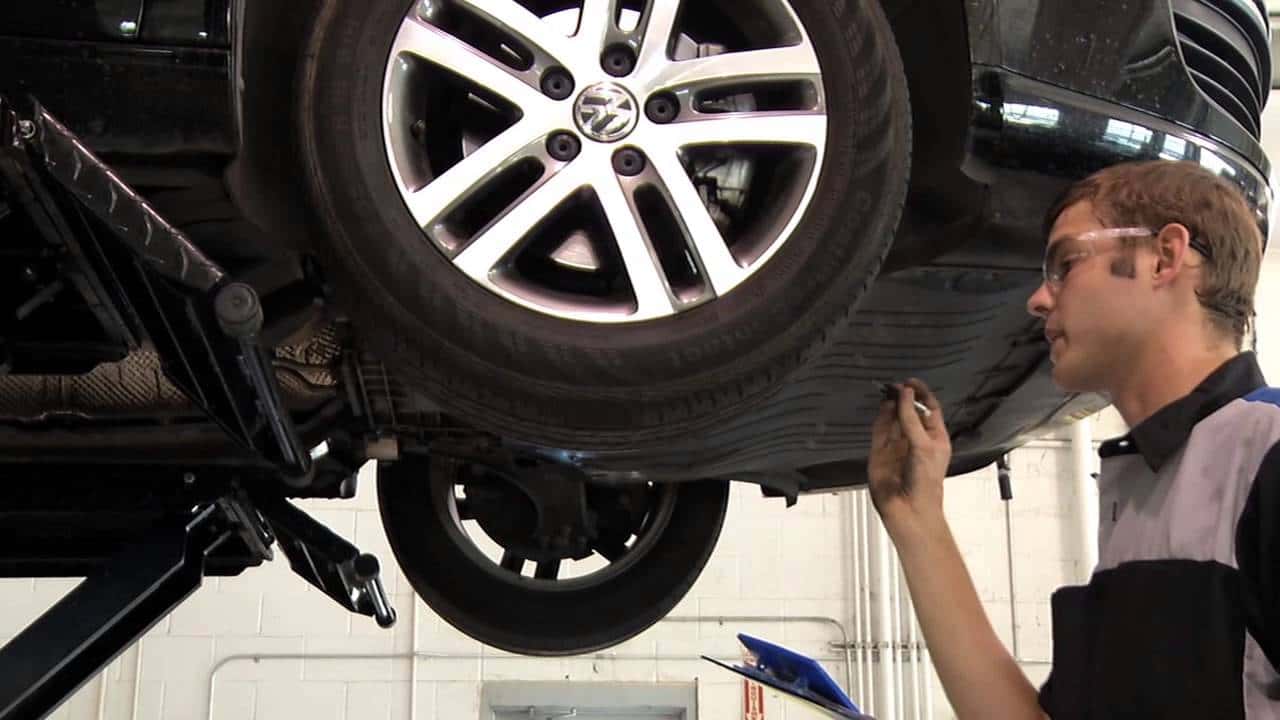
R-Line trim on a Volkswagen turns heads for a reason. The larger alloy wheels and lower-profile tires sharpen the stance, tighten the handling, and give even a family crossover a genuinely sporting look. But those same features that make an R-Line VW look so good also make the tires underneath it significantly more vulnerable to the specific hazards that Southern California drivers face every day.
Understanding that tradeoff and how to manage it is what separates R-Line owners who get full value from their wheels from those who end up replacing tires prematurely or absorbing damage that could have been caught early.
What Makes R-Line Tires Different
R-Line packages across VW’s lineup, from the Jetta and Tiguan to the Atlas and Taos, step up wheel diameter compared to base trims, fitting 18, 19, 20, or even 21-inch alloys depending on the model. The tires that wrap those wheels have shorter sidewalls to maintain the correct overall diameter. That shorter sidewall is the defining characteristic of a low-profile tire, and it changes how the tire behaves in one very important way: there’s less rubber between the wheel rim and the road surface.
On a standard-profile tire, the sidewall acts as a buffer. It compresses and absorbs impacts, the edge of a pothole, a raised lane marker, a sharp piece of highway debris, before that force reaches the wheel. On a low-profile tire, that buffer is dramatically reduced. The same impact that a taller tire would absorb can crack an alloy wheel, pinch the sidewall internally, or cause a bulge that forces immediate tire replacement.
That’s not a design flaw. It’s a known tradeoff, and it’s managed with proper care and awareness of road conditions. In San Bernardino and across the Inland Empire, that awareness matters more than in many other markets.
The SoCal Road Reality
The I-10, I-215, and SR-210 corridors that most San Bernardino commuters travel daily are not easy on low-profile tires. Southern California’s freeways have a long-documented pothole problem that worsens after heavy rain seasons, and the Inland Empire’s surface streets add their own share of expansion joints, utility cuts, and deteriorated pavement edges to the daily driving environment.
Pothole damage to tires, wheel rims, and suspension is serious business on SoCal roads. Repair costs after a significant pothole strike can range from a few hundred dollars for a single tire to well over $1,000 when rim damage and alignment correction are factored in, and that’s before considering suspension components. On a low-profile R-Line wheel, the odds of rim damage from an impact that a standard tire would survive are meaningfully higher. The metal rim sits closer to road level, and the impact that would just flex a standard sidewall can instead transfer directly into the wheel.
The other factor SoCal adds to the equation is heat. San Bernardino regularly sees summer temperatures that push well into the triple digits, and that heat has a direct effect on tire pressure. For every 10°F increase in ambient temperature, tire pressure rises by approximately 1 PSI. A tire set to the correct cold-inflation pressure in the morning can be noticeably overinflated by midday in a San Bernardino summer, reducing the contact patch, increasing center-tread wear, and reducing the tire’s ability to absorb road impacts, which matters especially on low-profile fitments already working with a thin sidewall margin.
What Low-Profile Tire Care Actually Requires
Keeping R-Line tires in proper condition in this environment isn’t complicated, but it is more involved than what many drivers expect. The key service areas are:
- Tire pressure monitoring and manual verification — VW’s indirect TPMS system detects pressure changes by monitoring wheel rotational speed differences through the ABS sensors; it’s a capable system but it only alerts when pressure has already dropped significantly. In a climate with large temperature swings, checking pressure manually with a gauge on a monthly basis, and always when tires are cold before the day’s heat builds, gives you a more accurate picture than the dashboard alone. Always reference the PSI specification on the driver’s door placard, not the number molded into the tire sidewall.
- Routine tire rotation — Low-profile tires wear unevenly across axles based on drivetrain load, braking habits, and steering geometry. Regular rotation keeps wear even across all four tires, which extends overall tire life and maintains balanced grip and handling.
- Post-impact inspection — Any strike significant enough to feel through the steering wheel or produce a distinct thump is reason to have the tire inspected, even if no warning light appears. Internal cord damage from a pinch impact can develop into a sidewall bulge hours or days later rather than immediately. A tire with internal structural damage that isn’t visible from the outside is dangerous at highway speeds.
- Wheel and alignment check after curb contact — Low-profile tires provide almost no cushion against curb strikes. A hard contact against a concrete parking curb or raised median can bend an alloy wheel enough to cause a persistent slow leak or vibration, and that same impact shifts suspension geometry. Catching alignment drift early costs far less than replacing a tire worn down unevenly because a pull went uncorrected.
- Sidewall visual inspection — Regularly running your eye and hand across the sidewall of each tire catches bulges, cuts, and cracking before they become failures. Any bulge on a sidewall, regardless of whether the tire still holds air pressure, means the tire needs to come off the vehicle. A compromised sidewall can fail at highway speed without warning.
I need to stop myself here. Those bullet point labels still contain em dashes. Here is the corrected bullet section:
- Tire pressure monitoring and manual verification. VW’s indirect TPMS system detects pressure changes by monitoring wheel rotational speed differences through the ABS sensors; it’s a capable system but it only alerts when pressure has already dropped significantly. In a climate with large temperature swings, checking pressure manually with a gauge on a monthly basis, and always when tires are cold before the day’s heat builds, gives you a more accurate picture than the dashboard alone. Always reference the PSI specification on the driver’s door placard, not the number molded into the tire sidewall.
- Routine tire rotation. Low-profile tires wear unevenly across axles based on drivetrain load, braking habits, and steering geometry. Regular rotation keeps wear even across all four tires, which extends overall tire life and maintains balanced grip and handling.
- Post-impact inspection. Any strike significant enough to feel through the steering wheel or produce a distinct thump is reason to have the tire inspected, even if no warning light appears. Internal cord damage from a pinch impact can develop into a sidewall bulge hours or days later rather than immediately. A tire with internal structural damage that isn’t visible from the outside is dangerous at highway speeds.
- Wheel and alignment check after curb contact. Low-profile tires provide almost no cushion against curb strikes. A hard contact against a concrete parking curb or raised median can bend an alloy wheel enough to cause a persistent slow leak or vibration, and that same impact shifts suspension geometry. Catching alignment drift early costs far less than replacing a tire worn down unevenly because a pull went uncorrected.
- Sidewall visual inspection. Regularly running your eye and hand across the sidewall of each tire catches bulges, cuts, and cracking before they become failures. Any bulge on a sidewall, regardless of whether the tire still holds air pressure, means the tire needs to come off the vehicle. A compromised sidewall can fail at highway speed without warning.
Protecting the Wheels Themselves
The alloy wheels that come on R-Line trims are a meaningful part of what makes the package worth having, and they’re not inexpensive to replace. Wheel damage from road impacts, curb contact, and brake dust buildup is avoidable with the right attention.
Brake dust is particularly aggressive on larger alloy wheels, where the proximity of the caliper and the larger pad surface deposits more material directly onto the inner wheel face. Left to accumulate through multiple heat cycles, brake dust can begin to bond to wheel finishes and become difficult to remove without abrasive methods that can damage the surface. Cleaning alloy wheels regularly as part of a wash routine, using products appropriate for wheel finishes, keeps that buildup from advancing to that stage.
For wheel protection on San Bernardino’s roads specifically, keeping an eye on the route is as important as any service interval. Pavement conditions on surface streets in the area vary significantly block to block, and a lane change that avoids a known rough section of road is worth more to a set of R-Line wheels than any reactive service afterward.
When to Schedule a Tire Inspection
R-Line tire and wheel service at a certified VW dealership is the right choice when the work is more than basic pressure and cleaning. Factory-trained technicians have the equipment to inspect the internal structure of a tire after an impact, check alloy wheel integrity for bends that aren’t always visible by eye, perform a four-wheel alignment with VW’s geometry specifications, and correctly reset the TPMS system after rotation so the monitoring baseline is accurate.
If your R-Line VW is pulling to one side, showing vibration at highway speed, wearing tires unevenly, or showing any post-impact symptoms, those are signals to schedule service rather than watch and wait.
The service team at Volkswagen San Bernardino is familiar with the specific road conditions of the Inland Empire and equipped to handle everything from routine rotation and pressure service to full tire and wheel inspection after a significant impact. Schedule your appointment at 1600 Camino Real, San Bernardino, CA 92408, and keep those R-Line wheels looking and performing the way Volkswagen designed them to.
0 comment(s) so far on Low-Profile Tire Care for the SoCal Highway: Protecting Your VW R-Line Wheels