




Dust and Valves: Why Carbon Cleaning is Essential for Direct-Injection VW Engines in Southern CA
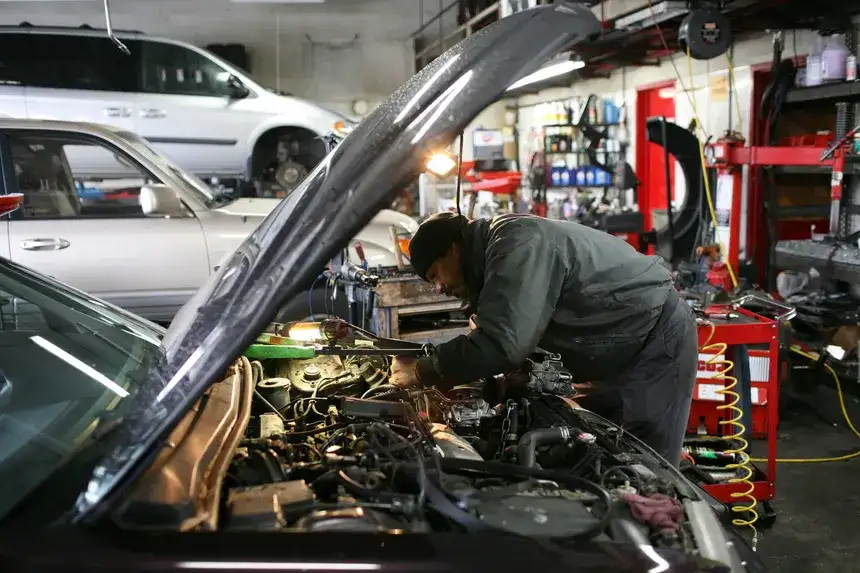
Last month, a Tiguan came in from Redlands with a rough idle and a hesitation on the 215 that its owner had been living with for almost two years. He had assumed it was a fuel quality issue and had been running premium gas hoping it would resolve on its own. After 34,000 miles without an intake cleaning service, the intake valves were coated with carbon deposits thick enough to significantly restrict airflow into the combustion chamber. The walnut blasting service he had avoided? $350. The throttle body replacement and coil pack repairs caused by the prolonged misfiring? $1,140.
That pattern is one of the most preventable and most commonly deferred maintenance situations we see at Volkswagen San Bernardino. And it’s more urgent here in the Inland Empire than almost anywhere else in the country.
Direct-injection engines are now standard across nearly the entire modern VW lineup, from the Jetta and Golf to the Atlas and Tiguan. They’re more efficient and more powerful than older port-injection designs, but they come with a specific maintenance requirement that most owners were never told about at delivery. In the San Bernardino area, where air quality, heat, and driving patterns combine in ways that accelerate the problem, understanding carbon buildup isn’t optional knowledge. It’s the difference between a VW that drives the way it should and one that quietly degrades until the repair bill forces the conversation.
This post explains how carbon buildup happens, why Southern California conditions make it worse, what it costs to address versus ignore, and what Inland Empire VW drivers should do about it right now.
How Direct Injection Creates a Carbon Buildup Problem
To understand why carbon cleaning matters, you first need to understand what makes direct injection different from the fuel delivery systems VW used in earlier generations.
In a traditional port-injection engine, fuel is sprayed into the intake port just before the intake valve. That fuel spray acts as a solvent, continuously washing the back of the intake valve clean with every combustion cycle. It’s not a perfect system, but the constant fuel washing keeps carbon deposits from accumulating to any meaningful degree.
Direct-injection engines spray fuel directly into the combustion chamber, bypassing the intake valve entirely. This is what makes them more efficient. But it also means the back of the intake valve never sees fuel. What it does see, every single combustion cycle, is a fine mist of oil vapor from the positive crankcase ventilation system and recirculated exhaust gases from the EGR system. That oil vapor coats the valve surface, and without fuel to wash it away, it cooks into hard carbon deposits over time.
What Those Deposits Actually Do to Your Engine
Carbon deposits on intake valves are not a cosmetic issue. As they accumulate, they narrow the opening through which your engine draws air, disrupting the precise airflow geometry that the engine management system was calibrated to expect. The result is uneven air distribution across cylinders, rough idle, hesitation under load, reduced power output, and eventually misfires. 🔧
On the TSI and TFSI engines found in the Jetta GLI, Golf GTI, Tiguan, and Atlas Cross Sport, significant carbon buildup typically begins showing symptoms somewhere between 30,000 and 50,000 miles depending on driving habits and environmental conditions. In San Bernardino, that window compresses.
Why the Camshaft and Valve Timing Are Also Affected
Heavy carbon deposits don’t stay neatly on the valve face. As they build, they can extend onto the valve stem and interfere with the valve’s ability to seat fully and open cleanly. In severe cases, this affects the variable valve timing system that VW’s EA888 engine family relies on for its efficiency and power characteristics. What started as a fuel economy and drivability issue can progress into a timing system concern if left long enough.
Why Southern California Makes This Worse
Carbon buildup is a universal reality for direct-injection engines regardless of geography. But San Bernardino and the broader Inland Empire accelerate the process in several specific ways that VW owners in this region need to understand.
The Santa Ana wind events that sweep through the Cajon Pass and across the San Bernardino Valley deposit a consistent load of fine particulate matter into the air. That particulate matter gets drawn through your engine’s air intake and contributes to the abrasive, adhesive layer that oil vapor carbon deposits form on. The combination is more aggressive than what a VW in a coastal or northern climate typically experiences.
Heat compounds everything. When ambient temperatures regularly climb into the high 90s and past 100 degrees along the I-10 and I-215 corridors in summer, your engine runs hotter between cold starts, oil vapor production in the PCV system increases, and deposits bake onto valve surfaces faster and harder than in moderate climates. Carbon that might stay soft and removable longer in San Diego becomes calcified faster in San Bernardino.
The Stop-and-Go Factor on the 215 and 10 Freeway
Consistent low-speed, high-load driving is the driving pattern most conducive to carbon accumulation. Short trips on Hospitality Lane, the Tippecanoe Avenue connector, and the daily crawl through the I-10 and I-215 interchange mean your engine spends significant time at low RPM with high EGR activity, exactly the conditions that maximize oil vapor recirculation across the intake valves without the high-RPM combustion events that partially self-clean the system.
A GTI owner from Fontana came in last summer after noticing his fuel economy had dropped noticeably over the previous year of commuting on the 210. He had 41,000 miles on a fastidiously maintained vehicle with clean oil change records. The intake valves told a different story. The carbon layer on cylinders two and three was thick enough to require two walnut blasting passes to fully clear. Post-cleaning, his fuel economy improved measurably and the flat spot on acceleration he had normalized completely disappeared.
Warning Signs Your VW Needs an Intake Valve Cleaning
Recognizing the symptoms early keeps the service straightforward and affordable. Waiting until the symptoms are severe means addressing secondary damage alongside the cleaning.
Rough idle at a stoplight that wasn’t present when the car was newer is one of the earliest and most consistent symptoms of carbon buildup restricting airflow unevenly across cylinders.
A hesitation or stumble on initial acceleration from a stop, particularly noticeable when merging onto the 215 from surface streets, points to cylinder-specific airflow restriction affecting combustion consistency.
Reduced fuel economy that has developed gradually over 10,000 to 20,000 miles without a clear cause is a common secondary symptom as the engine management system compensates for restricted airflow by enriching the fuel mixture.
A cold-start roughness that smooths out after a minute or two of running can indicate carbon deposits affecting valve seating behavior before the metal expands to operating temperature.
A misfire code, particularly P0300 through P0304 on a four-cylinder TSI engine, that returns after the ignition system has been ruled out often points directly to carbon-related airflow disruption.
Increased oil consumption between changes, beyond what is typical for your engine, can indicate carbon deposits are beginning to affect valve stem sealing behavior.
If two or more of these symptoms are present together, don’t delay the diagnostic appointment. The service itself is straightforward. The repairs that follow a prolonged misfire situation are not.
What Walnut Blasting Actually Is and Why It Works
The industry-standard service for intake valve carbon removal in direct-injection engines is walnut blasting, sometimes called walnut shell media blasting or intake valve cleaning. The name describes the process accurately.
With the intake manifold removed, a technician introduces crushed walnut shell media under pressure directly onto the intake valve surfaces. Walnut shell is hard enough to break up and dislodge carbon deposits but soft enough not to damage the precision-machined valve metal or valve seat surfaces. The carbon and spent media are simultaneously vacuumed away, leaving the valve surfaces clean and the airflow geometry restored to factory specification.
The entire service on a four-cylinder VW TSI engine typically takes two to three hours. On a six-cylinder application like the Atlas V6, budget for slightly longer. At Volkswagen San Bernardino on Camino Real, our technicians perform this service regularly and have the tooling and familiarity with VW’s EA888 engine family to do it efficiently and correctly.
Cost comparison for a typical 45,000-mile Inland Empire VW owner:
- Walnut blast intake cleaning at the right interval: $300 to $400
- Ignoring carbon buildup through 60,000 miles and addressing compounded damage:
- Intake cleaning (now more labor-intensive): $400
- Coil pack replacements from prolonged misfiring: $320 to $480
- Possible throttle body service: $180 to $260
- Total reactive cost: $900 to $1,140
Your savings from proactive service: $500 to $740. Those are real numbers from real repair orders, not projections.
“The biggest misconception I hear is that walnut blasting is only for high-mileage vehicles with obvious symptoms,” says Teresa Maldonado, Lead VW Diagnostic Technician at the Camino Real location. “By the time symptoms are obvious, you’ve usually got secondary issues developing. We recommend the first cleaning around 30,000 to 35,000 miles for Inland Empire drivers specifically, because the dust and heat here accelerate the timeline compared to what VW’s general guidance was written around.” 🔧
Your 30-Day Carbon Cleaning Action Plan
This week: Check your mileage and pull your service history. If your direct-injection VW has more than 30,000 miles on it and there’s no record of an intake valve cleaning service, you’re in the window where a proactive cleaning delivers the most value. You don’t need to wait for symptoms to appear. In San Bernardino’s driving environment, the deposits are building whether you feel them yet or not.
Within two weeks: Pay attention to your idle quality and cold-start behavior during your normal commute on the 215 or I-10. Note whether the idle is smooth and consistent or has a subtle roughness at a stoplight. Note whether acceleration from a stop feels crisp or has a brief hesitation before the engine pulls cleanly. These are the earliest subjective signs of meaningful carbon accumulation, and documenting what you observe makes for a more useful service conversation.
By month’s end: Schedule a diagnostic inspection that includes a borescope evaluation of your intake valves. Our service team at the Camino Real location can visually confirm the degree of carbon accumulation and give you a clear recommendation on timing. If the deposits are light, you may have another 5,000 to 8,000 miles before cleaning is critical. If they’re moderate to heavy, you’ll know exactly what to address and why, with no guesswork involved.
These three steps take less than 45 minutes of your actual time but can prevent the kind of compounding repair situation that turns a $350 service into a $1,100 repair event.
Southern California VW ownership is genuinely rewarding when these vehicles are maintained with the conditions they actually operate in. The Inland Empire isn’t a moderate-climate, low-particulate environment, and maintaining your VW as if it were means accepting a gap between what your engine needs and what it’s getting.
Schedule Your Intake Valve Cleaning Today
The Redlands Tiguan owner from the opening of this post eventually got the walnut blast service done alongside the repairs his deferral had made necessary. He left with a clean bill of health, a smooth idle, and a firm understanding of why this particular service interval exists. He’s now booked for his next cleaning at 65,000 miles, well before symptoms have any reason to return.
At Volkswagen San Bernardino, our certified technicians perform intake valve cleaning services with the tooling and VW-specific expertise that this job requires. Whether you’re already noticing symptoms, approaching the 30,000-mile threshold for the first time, or simply want a borescope inspection to know where your engine stands, we’re equipped to give you a clear and honest assessment. 🚗
Schedule your intake valve cleaning or diagnostic inspection today by contacting our service department or booking online. You’ll find us at 1600 Camino Real, San Bernardino, CA 92408.
Proper carbon maintenance protects your direct-injection engine’s efficiency, prevents the misfire and throttle response issues that degraded valves cause, and ensures your VW performs the way it was engineered to across every mile of Inland Empire driving ahead. That’s the reliability that consistent, condition-appropriate service delivers.
0 comment(s) so far on Dust and Valves: Why Carbon Cleaning is Essential for Direct-Injection VW Engines in Southern CA