




Direct Injection & Carbon Buildup: Why Your High-Mileage VW Might Need an Intake Cleaning
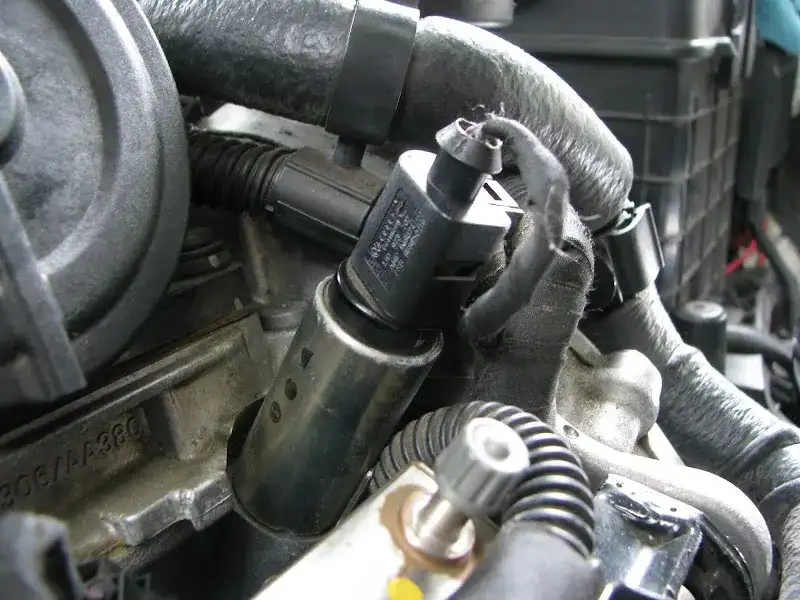
A Volkswagen Tiguan owner came into our service bay last month after noticing a gradual but persistent loss of power on his daily commute on the 215 between San Bernardino and Murrieta. The vehicle had 74,000 miles on it and had been maintained on a consistent oil change schedule, so the owner assumed the engine was in good health. When our technician performed a borescope inspection of the intake ports, the valves showed significant carbon deposit buildup that was restricting airflow by an estimated 30 percent on two of the four cylinders. An intake valve cleaning service restored full airflow and power for $480. A second opinion at a shop on Baseline Street that attributed the issue to spark plugs had cost the owner $210 and changed nothing about the power loss.
Direct injection is one of the most significant engineering advances in modern gasoline engine design, and it is the technology that allows Volkswagen’s TSI engines to deliver the combination of power and fuel economy that makes vehicles like the Jetta, Tiguan, and Atlas competitive in their respective segments. The performance advantage of direct injection is real and well-documented. What is less well-known among VW owners, and what produces a predictable service need in high-mileage vehicles across the San Bernardino and Inland Empire market, is the carbon buildup problem that is a direct consequence of how the technology works and that gets progressively worse in the specific driving conditions that Southern California commuters experience.
For VW owners in the San Bernardino area who have passed the 60,000-mile mark on a TSI-equipped vehicle, carbon buildup on the intake valves is not a remote possibility. It is a predictable maintenance requirement that develops on a timeline that the vehicle’s high-mileage driving conditions either accelerate or moderate, and that San Bernardino’s stop-and-go commuting pattern on the 215 and the 10 consistently accelerates. At Volkswagen San Bernardino, we perform intake cleaning services regularly and the valves we find in high-mileage Inland Empire vehicles consistently show more significant buildup than the same mileage produces in vehicles driven primarily on open highway. Understanding why explains both the problem and the solution.
How Direct Injection Creates the Carbon Problem
In a traditional port-injected gasoline engine, the fuel injector sprays fuel directly into the intake port upstream of the intake valve. That fuel spray continuously washes over the back of the intake valve, and the detergent additives in modern gasoline dissolve and carry away any deposits that form on the valve surface from combustion blowby and oil vapor. The valve stays clean because fuel contacts it on every intake stroke.
Direct injection moves the fuel injector inside the combustion chamber, spraying fuel directly onto the piston rather than into the intake port. This change is what delivers the precise fuel metering and combustion control that produces direct injection’s efficiency and power advantages. It also means the intake valve is no longer washed by fuel on every intake stroke. The back of the intake valve is now exposed only to intake air and to whatever oil vapor and combustion blowby gases enter the intake tract through the positive crankcase ventilation system. Without the fuel wash that port injection provided, the hydrocarbons in that blowby and oil vapor bake onto the hot metal of the intake valve and accumulate as carbon deposits over tens of thousands of miles.
The deposits start as a thin film and gradually build into hard, irregular formations that restrict the flow of air through the intake port. When the airflow past the valve is significantly restricted, the engine management system compensates to the extent it can, but the fundamental limit on how much air the engine can ingest at any given moment has been reduced, which shows up as a power reduction under load and as fuel economy degradation as the engine works harder for the same output. By 60,000 to 80,000 miles in typical Inland Empire driving, many TSI-equipped Volkswagens have developed enough deposit accumulation to produce measurable power and efficiency losses.
What San Bernardino’s Driving Conditions Do to the Timeline 🌡️
The rate at which carbon deposits accumulate on intake valves is not fixed. It is a function of driving conditions, oil consumption rate, PCV system load, and the thermal cycling the engine experiences. San Bernardino’s specific driving environment accelerates the accumulation timeline in several ways that affect the service interval a local VW owner should be aware of.
Stop-and-go commuting on the 215 between San Bernardino and the I-15 interchange, and on the 10 between San Bernardino and the Ontario Mills area, produces more frequent low-speed, partial-throttle engine operation than highway driving does. During low-speed operation, the engine’s intake vacuum is higher, which draws more oil vapor through the PCV system into the intake tract. More oil vapor means more hydrocarbon material available to bake onto the intake valve surfaces at the elevated temperatures that partial-throttle operation produces. A vehicle that commutes daily through the Inland Empire’s freeway congestion delivers more carbon-forming material to its intake valves per mile than the same vehicle driven primarily at highway speed.
San Bernardino’s heat adds a thermal dimension. The high ambient temperatures on the 215 and the 10 during summer months raise underhood temperatures that affect the PCV system’s behavior and the rate at which oil vapor condenses and deposits on valve surfaces. A vehicle that regularly sits in stop-and-go traffic in 100-degree ambient heat near the Waterman Avenue interchange is operating in conditions that are more favorable to carbon deposit formation than the same vehicle in a coastal or cooler climate.
Short-trip driving around San Bernardino’s surface streets, including errands on Hospitality Lane and the Inland Center area, prevents the engine from reaching the sustained operating temperatures that partially retard deposit hardening. An engine that never fully warms up on a meaningful portion of its operating cycle allows soft deposits to harden before they can be partially cleared by normal engine operation, which accelerates the accumulation of the hard deposits that require a cleaning service to remove.
What an Intake Cleaning Service Costs vs. What Misdiagnosis Costs 💰
The intake valve cleaning service at Volkswagen San Bernardino addresses a specific mechanical condition that other services cannot correct:
- Borescope inspection (confirm deposit severity): $95 to $145
- Walnut blasting intake cleaning service: $380 to $580
- Combined inspection and cleaning: $450 to $680
- Fuel system cleaning (addresses injector deposits, not valve deposits): $95 to $150
- Spark plug replacement (commonly misdiagnosed as cause of power loss): $180 to $280
Correct diagnosis and intake cleaning: $450 to $680 restores full airflow and power
Misdiagnosis pathway costs:
- Spark plug replacement for carbon-related power loss: $180 to $280, power loss unchanged
- Fuel system cleaning for carbon-related power loss: $95 to $150, power loss unchanged
- Mass airflow sensor replacement for carbon-related power loss: $280 to $420, power loss unchanged
- Combined misdiagnosis services before correct diagnosis: $555 to $850 plus the cleaning cost
The power loss and fuel economy degradation from significant intake valve deposits is not correctable by any service other than physically removing the deposits from the valve surfaces. Fuel additives, fuel injector cleaners, and intake spray treatments reach the combustion side of the valve but cannot address the deposit buildup on the intake port side where the problem exists. The only effective intervention is a direct cleaning service, and the borescope inspection that confirms the deposit severity before the cleaning is the step that prevents the misdiagnosis pattern the Tiguan owner in the opening story experienced.
A Fontana Commuter Whose Power Returned
A Volkswagen GTI owner from Fontana came in last summer after managing what he described as a flat spot in the power delivery between 2,500 and 4,000 RPM on his daily commute on the 10 toward Ontario. The vehicle had 81,000 miles on it and had been through two sets of spark plugs, a fuel system cleaning, and a mass airflow sensor replacement at other facilities over the previous 18 months, none of which had addressed the flat spot. When our technician performed a borescope inspection, the intake valves showed heavy deposit accumulation that was visually consistent with the power band restriction he was experiencing. The walnut blasting cleaning service took three hours and cost $520. He described the vehicle’s power delivery on his next 10 freeway commute as returning to what it felt like at 40,000 miles. The $530 he had spent on services that didn’t address the actual cause represented money he could not recover, but the cleaning he should have received 18 months earlier had finally been performed correctly.
Warning Signs Your VW’s Intake Valves Need Attention ⚠️
Carbon deposit buildup develops gradually and produces symptoms that are easy to attribute to other causes. These are the indicators that point specifically to intake valve deposits in a high-mileage Inland Empire VW:
Power loss that is most noticeable at partial throttle on freeway on-ramps: Carbon deposits restrict the airflow the engine can ingest at any given valve lift, and the effect is most noticeable at the mid-range throttle openings used during freeway on-ramp acceleration on the 215 and the 10. Full-throttle acceleration draws enough airflow to partially overcome moderate restriction, which is why some owners report the car feels adequate at full throttle but sluggish at partial throttle.
Fuel economy that has declined gradually over the past 20,000 to 30,000 miles: A well-maintained VW TSI engine should maintain relatively consistent fuel economy across its service life. A gradual fuel economy decline that is not explained by driving pattern changes or seasonal fuel blend differences, measured over the longer commutes on the 215, points to a restriction in the air supply that is increasing the engine’s fuel demand for the same power output.
Rough idle that has developed gradually rather than suddenly: Carbon deposits that are uneven between cylinders produce unequal airflow on each intake stroke, which creates a subtle roughness at idle that is most noticeable at a stoplight on Camino Real or in the drive-through near the Inland Center. A roughness that appeared suddenly points to other causes, but one that has developed over thousands of miles is consistent with progressive deposit accumulation.
Hesitation on cold starts that clears after the engine warms: Carbon deposits absorb fuel during cold starting in a way that affects the air-fuel mixture on the first few firing cycles. A hesitation or stumble on cold mornings in San Bernardino that clears within a minute of startup and does not recur when the engine is warm is a characteristic symptom of significant intake valve deposit accumulation.
Engine that responds less crisply to throttle inputs than it used to: The subjective sense that the engine is less immediate or less responsive to throttle inputs than it was at lower mileage, particularly on the 215 entrance ramps where throttle response matters most, is the earliest and most commonly dismissed symptom of intake valve restriction.
Misfires or misfire-related check engine codes in a well-maintained engine: Significant deposit accumulation can interfere with the air-fuel mixture on individual cylinders in a way that produces intermittent misfires that log as check engine codes. In a well-maintained engine with current spark plugs and correct fuel, misfire codes that recur without an obvious cause are worth investigating with a borescope inspection before replacing parts that may not be at fault.
High-mileage vehicle with no record of an intake cleaning service: If your VW TSI engine has more than 60,000 miles and no documented intake valve cleaning in its service history, the absence of dramatic symptoms does not mean the valves are clean. It means the deposit accumulation has not yet reached the threshold where the restriction is obvious. A borescope inspection at this mileage is a diagnostic service rather than a corrective one.
What Our Service Team Says
“Direct injection carbon buildup is one of those things that Volkswagen engineers knew was a tradeoff when they designed the TSI platform, and it is a tradeoff that is worth it because the engine is genuinely excellent. But the cleaning interval in San Bernardino driving is shorter than what owners in cooler, less congested markets need. The stop-and-go on the 215, the heat, the short trips around San Bernardino, these conditions deliver more carbon-forming material to the intake valves per mile than the baseline assumptions behind typical cleaning intervals account for. We recommend a borescope inspection at 60,000 miles for any TSI-equipped Volkswagen whose driving pattern looks like a typical Inland Empire commute, because what we find at that mileage determines whether the cleaning is due now or can wait until the next major service interval.” — Miguel Reyes, Senior Service Technician, Volkswagen San Bernardino
When Addressing the Right Problem Restored a Vehicle
Rosa had been living with gradually declining fuel economy in her Volkswagen Jetta for nearly two years before coming into Volkswagen San Bernardino. She had been tracking her fuel costs on the daily commute between San Bernardino and her workplace near the Ontario Mills area on the 10 and had noticed a consistent decline from the low 30s MPG she achieved in the first two years of ownership to the mid-20s she was seeing at 78,000 miles. She had attributed it to fuel price variation and the aging of the vehicle. Our borescope inspection showed heavy deposit accumulation across all four intake valves, consistent with her commuting pattern and mileage. The walnut blasting service restored her fuel economy to within 2 MPG of her original ownership baseline on the same commute route within the first week after the service. The fuel cost savings at her commute volume covered the cost of the cleaning service within four months of driving.
Your 30-Day Intake Health Check
This week, note your current fuel economy on your regular 215 or 10 freeway commute and compare it against what you recall achieving on the same route in the first year of ownership, or against your vehicle’s EPA estimate if early ownership data is not available. A gap of more than 3 to 4 MPG on a consistent commute route that is not explained by seasonal fuel blend changes or driving pattern differences is the most accessible early indicator of intake restriction that you can measure without a service visit.
Within two weeks, review your vehicle’s service history for any documented intake valve cleaning and note the current mileage on the odometer. If the vehicle has more than 60,000 miles and no cleaning on record, schedule a borescope inspection at Volkswagen San Bernardino as a diagnostic visit rather than assuming cleaning is needed or that it is not. The inspection confirms the actual deposit severity on your specific engine and determines whether the cleaning service is appropriate at your current mileage or can wait for the next service interval.
By month’s end, if your borescope inspection confirms significant deposit accumulation, schedule the walnut blasting cleaning service at Volkswagen San Bernardino and plan to note your fuel economy and power delivery on the 215 commute in the two weeks following the service. The before-and-after comparison on a familiar commute route is the most direct way to quantify what the deposit accumulation had been costing you in fuel and performance, and it gives you a clear data point for understanding the cleaning interval that your specific driving pattern in the Inland Empire produces. These steps take less than two hours of service time and address the one mechanical condition in a well-maintained VW TSI engine that consistent oil changes and correct fuel cannot prevent.
Schedule Your Intake Cleaning Service at Volkswagen San Bernardino
The Tiguan owner whose borescope inspection revealed 30 percent airflow restriction on two cylinders came back six months after the cleaning service for his next oil change and reported that the power loss on the 215 commute had not returned and that his fuel economy had improved noticeably compared to the months before the service. He asked how frequently he should expect to repeat the cleaning given his specific commute pattern. Based on his daily 215 driving profile and San Bernardino’s heat and traffic conditions, we discussed a 40,000 to 50,000-mile cleaning interval as a reasonable expectation for his specific usage. He left with that interval noted in his service file and a clear understanding of the maintenance requirement that his commute produces.
Our team at Volkswagen San Bernardino performs borescope inspections and walnut blasting intake cleaning services with the equipment and training that this specific service requires. The walnut blasting process uses ground walnut shells delivered under compressed air to remove carbon deposits from valve surfaces without damaging the aluminum port or valve seat materials, and it is the method that Volkswagen specifically endorses for this service on TSI engines.
Visit us at Volkswagen San Bernardino, 1600 Camino Real, San Bernardino, CA 92408. Our service department is open Monday through Saturday. Schedule your intake inspection online through our website or speak with one of our service advisors directly. We serve drivers throughout San Bernardino, Fontana, Rialto, Colton, Ontario, and across the Inland Empire. Your VW’s intake valves have been working hard on the 215 for 60,000 miles. It may be time to give them a cleaning. 🔧
0 comment(s) so far on Direct Injection & Carbon Buildup: Why Your High-Mileage VW Might Need an Intake Cleaning