




Comparing Gas vs. Electric VW Maintenance Costs
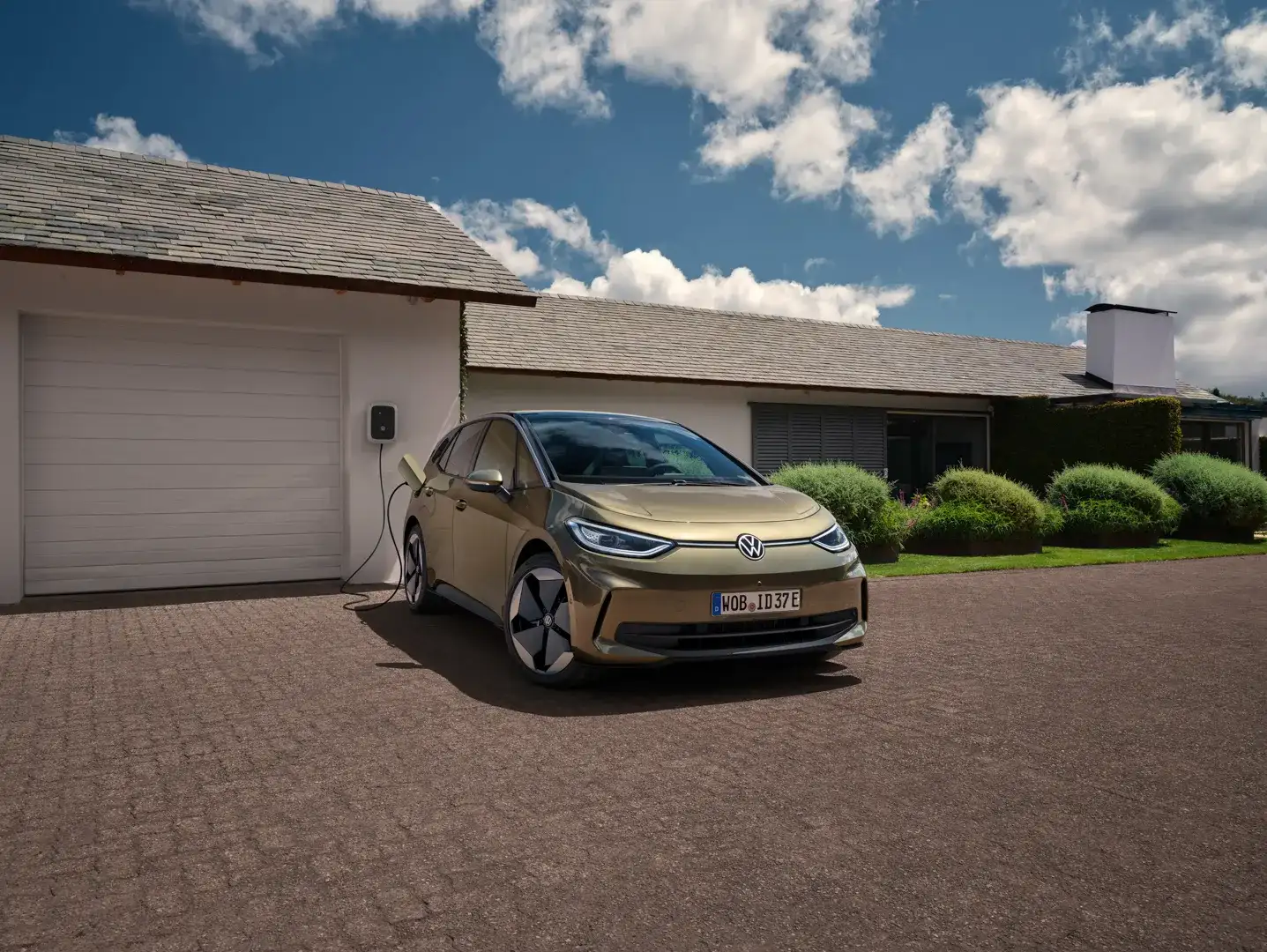
Last year, a family debating between a 2024 Tiguan and ID.4 asked us to break down real-world maintenance costs over five years. They assumed the ID.4’s higher purchase price meant higher overall costs. After calculating the actual maintenance oil changes, transmission service, spark plugs, brake wear, and all other required services—we showed them the Tiguan would cost approximately $3,800 in maintenance over 60,000 miles while the ID.4 would cost $1,400. Combined with fuel savings of $4,500 over the same period, the ID.4’s total ownership cost was $6,900 less despite the $4,000 higher purchase price. They bought the ID.4 and are now saving approximately $115 monthly in operating costs.
If you’re considering a Volkswagen around San Bernardino and debating between gas-powered models like the Tiguan, Atlas, or Taos versus the electric ID.4, understanding real-world maintenance cost differences helps you make informed decisions. The common assumption is that EVs cost more to own because of their higher purchase prices. The reality is dramatically different when you account for maintenance and fuel costs over typical ownership periods.
Gas and electric vehicles have fundamentally different maintenance needs, creating substantial cost differences that accumulate over years of ownership. Understanding these differences helps you budget appropriately regardless of which powertrain you choose and appreciate the total cost of ownership beyond just monthly payments.
This matters especially in Southern California, where our year-round driving, traffic conditions, and fuel prices make operating cost differences more significant than in areas with lower fuel costs or less driving. Proper understanding of real costs helps you choose the right vehicle for your needs and budget.
What Gas VWs Require (That Electric VWs Don’t)
Understanding what gas-powered Volkswagens need helps you appreciate both the costs involved and what electric vehicles eliminate. Starting with a typical gas VW like the Tiguan provides baseline understanding.
Engine oil changes every 10,000 miles represent the most frequent maintenance item for gas Volkswagens. Using synthetic oil meeting VW specifications, each oil change costs $120-140 including filter and labor. Over 60,000 miles, you’ll need six oil changes totaling $720-840. This is unavoidable maintenance that electric vehicles completely eliminate.
Spark plug replacement at 60,000 miles maintains proper ignition in your turbocharged engine. VW turbocharged engines need platinum or iridium plugs costing $180-240 for parts and labor. While this only occurs once during typical lease or early ownership, it’s a significant expense gas vehicles require that EVs don’t.
“The most surprised customers are those comparing actual five-year costs between gas and electric VWs,” says Carlos Mendoza, Service Advisor at our Camino Real location. “They focus on the purchase price difference but don’t realize the ID.4 saves $120 every 10,000 miles just from eliminated oil changes. Over 60,000 miles, that’s $720 in oil changes alone, plus transmission service, spark plugs, and engine air filters. The maintenance savings add up faster than most people expect.”
Transmission fluid service at 40,000-60,000 miles maintains your DSG or automatic transmission. This service costs $280-380 depending on transmission type. Electric vehicles use single-speed gear reduction requiring no routine fluid service, eliminating this expense entirely.
Engine air filter replacement every 30,000 miles costs $45-65. Over 60,000 miles, you’ll replace this twice for $90-130 total. Electric vehicles don’t have engine air filters because they don’t have engines requiring filtered air for combustion.
Exhaust system maintenance over vehicle lifetime includes potential catalytic converter, oxygen sensor, or muffler replacement. While these don’t occur during typical first 60,000 miles, extended ownership means eventual exhaust work costing $800-2,000 that electric vehicles never need.
More frequent brake service because gas vehicles rely entirely on friction brakes for stopping. Brake pads typically need replacement every 30,000-40,000 miles on gas VWs driven in Southern California traffic. Electric vehicles’ regenerative braking extends brake life to 80,000-100,000 miles, dramatically reducing brake maintenance costs.
What Electric VWs Require (That Gas VWs Don’t)
While electric vehicles eliminate most traditional maintenance, they add some EV-specific requirements. Understanding these helps you budget accurately for ID.4 ownership costs.
Battery cooling system inspection every 20,000 miles verifies thermal management maintains optimal battery temperature. This inspection is typically included in routine service visits at no additional cost beyond the service appointment itself. The cooling system uses coolant requiring eventual replacement, but not until 100,000 miles or 10 years.
High-voltage system inspection verifies electrical connections, cable conditions, and component operation. This annual inspection costs approximately $100-150 as standalone service but is typically included in comprehensive service appointments. While gas vehicles don’t have this specific inspection, they have engine-specific inspections of similar scope and cost.
12-volt battery replacement every 4-5 years costs similar to gas vehicles ($180-240) despite the large traction battery. Both gas and electric VWs use conventional 12-volt batteries for accessories and vehicle systems, creating equivalent costs in this area.
Cabin air filter replacement occurs more frequently in EVs because climate control relies entirely on electric heating and cooling without waste engine heat. Filters might need replacement every 15,000 miles versus 20,000 miles in gas vehicles, adding one extra $35-50 filter over 60,000 miles compared to gas models.
Software updates are more frequent and important for EVs but typically install at no cost during service visits or over-the-air at home. While gas VWs also receive software updates, EVs depend more heavily on software for battery management, charging optimization, and range calculation, making updates more critical.
Tire wear can be slightly higher on EVs due to instant torque and additional weight from batteries. The ID.4 weighs approximately 600 pounds more than a comparable Tiguan, potentially reducing tire life by 5,000-10,000 miles. However, this is offset by reduced brake wear from regenerative braking.
Real-World Cost Comparison: Tiguan vs. ID.4
Comparing actual maintenance costs for gas Tiguan versus electric ID.4 over 60,000 miles in Southern California conditions reveals substantial differences that affect total ownership costs.
Gas Tiguan maintenance over 60,000 miles:
- Oil changes (6): $840
- Transmission service (1): $320
- Spark plugs: $220
- Engine air filters (2): $110
- Cabin air filters (3): $105
- Tire rotations (8 at $25 each if standalone): $200
- Brake service front (1): $380
- Brake service rear (1): $320
- Brake fluid service: $165
- Miscellaneous inspections and adjustments: $340
- Total: $3,000
Electric ID.4 maintenance over 60,000 miles:
- Oil changes: $0 (none needed)
- Transmission service: $0 (single-speed, no service)
- Spark plugs: $0 (no engine)
- Engine air filters: $0 (no engine)
- Cabin air filters (4): $140
- Tire rotations (8 at $25 each if standalone): $200
- Brake service: $0 (regenerative braking, pads last 80,000+ miles)
- Brake fluid service (less frequent but still needed): $165
- Battery cooling inspection (included in routine service): $0
- High-voltage system inspection (included): $0
- 12-volt battery replacement: $220
- Miscellaneous inspections and adjustments: $275
- Total: $1,000
Maintenance cost difference: $2,000 savings for ID.4 over 60,000 miles, or approximately $33 monthly savings just from reduced maintenance. This doesn’t include the dramatically larger fuel cost savings.
Fuel Cost Comparison
Maintenance represents only part of operating cost differences. Fuel costs create even more dramatic differences between gas and electric VWs in Southern California’s expensive fuel market.
Gas Tiguan fuel costs assuming 25 MPG combined, 60,000 miles driven, and $4.50/gallon average (Southern California typical pricing):
- Total gallons consumed: 2,400
- Total fuel cost: $10,800 over 60,000 miles
- Average monthly fuel cost: $180
Electric ID.4 electricity costs assuming 3 miles/kWh efficiency, 60,000 miles driven, and $0.28/kWh average (including both home charging and occasional public charging):
- Total kWh consumed: 20,000
- Total electricity cost: $5,600 over 60,000 miles
- Average monthly electricity cost: $93
Fuel cost difference: $5,200 savings for ID.4 over 60,000 miles, or approximately $87 monthly savings. Combined with the $2,000 maintenance savings, the ID.4 saves $7,200 total over 60,000 miles despite higher purchase price. 🔌
This calculation assumes primarily home charging. Heavy reliance on public DC fast charging increases ID.4 costs but still results in substantial savings versus gas. Even at $0.45/kWh for frequent fast charging, the ID.4 would cost $9,000 for 60,000 miles—still $1,800 less than gas.
Total Cost of Ownership Analysis
Understanding purchase price premium, maintenance savings, and fuel savings together reveals true cost differences over typical ownership periods.
Purchase price difference: ID.4 Pro S ($48,000) costs approximately $4,000-5,000 more than comparable Tiguan SE ($43,000-44,000) with similar features and trim level. This initial premium is the main concern for buyers considering electric.
Federal tax credit: ID.4 qualifies for up to $7,500 federal tax credit (subject to income limits and eligibility requirements), effectively reducing the price premium to zero or making the ID.4 actually less expensive than Tiguan before considering operating costs. Check current eligibility as incentives change.
Five-year ownership cost comparison (60,000 miles):
Tiguan total:
- Purchase price: $43,500
- Maintenance: $3,000
- Fuel: $10,800
- Insurance (estimate, varies): $6,000
- Total: $63,300
ID.4 total (after federal tax credit):
- Purchase price: $48,000 – $7,500 = $40,500
- Maintenance: $1,000
- Electricity: $5,600
- Insurance (estimate, similar): $6,000
- Total: $53,100
Total ownership savings: $10,200 over five years or approximately $170 per month, even before considering additional state incentives, lower registration fees in some areas, HOV lane access, or other EV benefits.
A Tiguan owner came to us last month asking about trading to an ID.4 after calculating their actual fuel costs over two years. They were spending $185 monthly on gas for 12,000 annual miles. After showing them ID.4 electricity would cost approximately $95 monthly and maintenance would drop from $60 to $20 monthly average, they realized switching would save $130 monthly or $1,560 annually. They ordered an ID.4 the same day.
Factors That Change the Comparison
Several variables affect the cost comparison between gas and electric VWs. Understanding these helps you assess which powertrain makes more financial sense for your specific situation.
Annual mileage significantly impacts savings. Higher annual mileage amplifies the fuel and maintenance cost differences. Driving 20,000 miles annually instead of 12,000 increases the ID.4’s advantage by approximately 65%. The more you drive, the faster electric pays for itself through operating cost savings.
Conversely, very low annual mileage (under 8,000 miles) reduces the advantages because you’re spreading the purchase price premium over fewer miles. Electric still costs less to operate, but the payback period extends because you’re not driving enough to fully realize fuel savings.
Electricity rates vary dramatically by location and utility. Southern California Edison’s average residential rate is approximately $0.28/kWh, but time-of-use plans can reduce this to $0.15-0.20/kWh for overnight charging. Conversely, some areas with higher rates might see $0.35-0.40/kWh, reducing but not eliminating the cost advantage.
Charging infrastructure affects costs. Primarily home charging maximizes savings. Regular DC fast charging can double or triple per-mile electricity costs versus home charging. If you can’t install home charging and must rely primarily on public charging, calculate costs using $0.40-0.50/kWh to understand your actual operating costs.
Gas prices fluctuate dramatically affecting the comparison. At $5.50/gallon (not uncommon in California during price spikes), the Tiguan’s 60,000-mile fuel cost increases to $13,200, expanding the ID.4’s advantage by $2,400. At $3.50/gallon (rare in California but possible), the Tiguan costs $8,400, narrowing but not eliminating the ID.4’s advantage.
Driving style impacts both vehicles differently. Aggressive driving hurts EV efficiency more dramatically than gas vehicle efficiency, narrowing the cost gap. Conservative driving benefits EVs more through regenerative braking, widening the cost advantage.
Your 30-Day Decision-Making Plan
This week: Calculate your actual annual mileage and typical monthly fuel costs to understand your baseline operating expenses. Multiply your monthly gas spending by 60 to project five-year fuel costs (assuming relatively stable prices). Research current federal tax credit eligibility for ID.4 and any California state incentives you qualify for. Check your home electrical panel capacity and research home charging installation costs if considering electric. Most installations cost $500-1,500 depending on electrical service location and panel capacity. Request insurance quotes for both Tiguan and ID.4 to compare actual insurance costs rather than estimates. This research takes about two hours but provides data for informed decision-making.
Within two weeks: Schedule test drives of both gas and electric VWs to experience the driving differences beyond just costs. Drive the ID.4 in various conditions including highway, traffic, and mountain roads if applicable to understand real-world range and performance. Drive the Tiguan similarly to compare acceleration, handling, and overall experience. Pay attention to factors beyond costs: charging convenience versus gas station stops, instant electric torque versus turbocharged power delivery, and overall experience preference. Visit your preferred dealership to discuss specific pricing, available incentives, and current inventory for both vehicle types. Get detailed out-the-door pricing including all fees, taxes, and incentive applications.
By month’s end: Create detailed five-year cost projection for both vehicles using your actual driving patterns, local fuel and electricity prices, and confirmed purchase prices with incentives. Include purchase price, financing costs if applicable, insurance, fuel or electricity, maintenance, and registration fees. Compare total costs to determine which vehicle actually costs less over your typical ownership period. Consider factors beyond pure costs: environmental preferences, technology interest, charging convenience, and driving experience enjoyment. Make your decision based on complete cost picture and personal preferences rather than just purchase price sticker shock. If choosing electric, schedule home charging installation before vehicle delivery to ensure charging capability from day one.
Your decision between gas and electric VW involves more than just vehicle preference—it’s a financial calculation with clear cost differences that accumulate over ownership. Understanding real-world maintenance and fuel costs helps you make the choice that best serves your budget and needs.
If you want to discuss gas versus electric VW ownership costs specific to your driving patterns and situation, contact us today to schedule a consultation. We’ll help you calculate actual costs based on your mileage, driving conditions, and available incentives to determine which powertrain makes most financial sense.
You’ll find us at 1600 Camino Real in San Bernardino, conveniently located near the I-215 freeway and easily accessible from Highland, Redlands, and throughout the Inland Empire. We offer honest cost comparisons, test drives of both gas and electric VWs, and expert guidance helping customers understand total ownership costs.
Making informed decisions based on real costs rather than assumptions protects your budget, ensures satisfaction with your choice, and helps you choose the Volkswagen that delivers the best value over your ownership. That’s the confidence proper cost analysis delivers.
0 comment(s) so far on Comparing Gas vs. Electric VW Maintenance Costs