




Ceramic Tint & VW Interiors: How to protect your VW’s dashboard from the relentless San Bernardino sun and the benefits of high-grade UV window film.
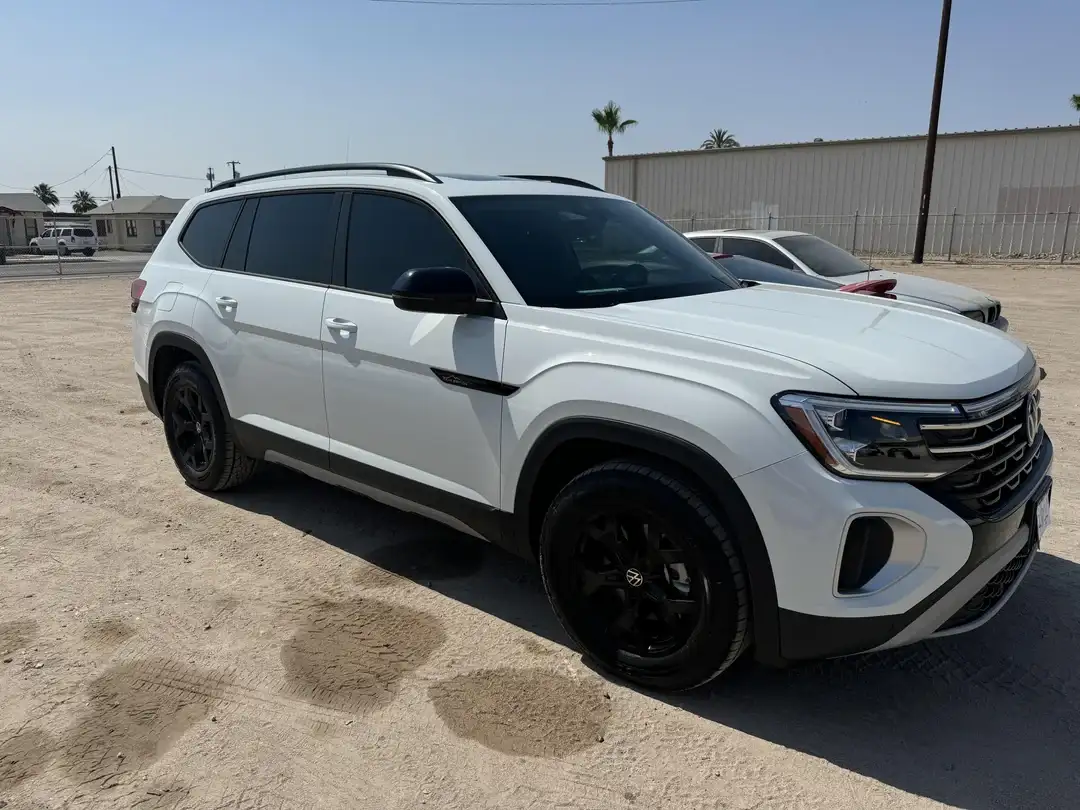
Last summer, a 2020 Volkswagen Tiguan came into our service bay on Camino Real after its owner noticed the dashboard surface had developed a network of fine cracks across the top section directly below the windshield. The vehicle had 38,000 miles, had been parked outdoors in a surface lot near the I-215 corridor daily for two years, and had no window tint of any kind. The dashboard replacement ran $1,400 including labor. A professional ceramic tint installation on the front windshield and front side windows would have cost $350 to $500. The dashboard it would have protected cost nearly three times that to replace.
San Bernardino sits in one of the highest UV index environments in the continental United States, and for Volkswagen owners who park outdoors near the I-215, on the streets around Cal State San Bernardino, or in the surface lots that dominate the commercial corridors along Hospitality Lane and Baseline Street, that distinction is not an abstract statistic. It is the explanation for why a three-year-old VW interior can look five years older than the odometer suggests, why leather seating surfaces crack and vinyl trims fade in ways that warranty coverage does not address, and why dashboard replacements on relatively low-mileage Inland Empire VWs are a more common service conversation than owners in cooler markets ever encounter.
The conventional response to Inland Empire sun exposure is a windshield sunshade, and sunshades do provide meaningful protection when the vehicle is parked. What they do not address is the cumulative UV exposure that occurs while the vehicle is being driven, which for a typical San Bernardino commuter adds up to hours of direct solar exposure per week across every interior surface visible through the glass. Ceramic window film addresses that exposure continuously, in both parked and driving conditions, in ways that a sunshade cannot replicate.
This guide covers what ceramic tint actually does to UV and infrared radiation, how it differs from standard dye-based film, what California’s tint laws mean for Volkswagen owners in San Bernardino County, and why the interior protection argument for high-grade window film in the Inland Empire is more financially compelling than most owners initially expect.
What San Bernardino UV Does to VW Interiors
The Specific Damage Mechanisms
Ultraviolet radiation breaks down the polymer chains in the plastics, vinyls, and leather compounds that make up your Volkswagen’s interior surfaces. This process is called photodegradation, and it happens continuously whenever UV light contacts these materials, whether the vehicle is parked or moving. The dashboard surface is the most vulnerable because it sits directly below the windshield at an angle that catches maximum solar exposure, and the dark colors used in most VW interiors absorb rather than reflect the solar energy that reaches them.
The damage progression is predictable. UV exposure first causes fading and color shift in dyed and pigmented surfaces. As the polymer degradation advances, the surface loses its plasticizer content, which is what keeps vinyl and leather flexible and crack-resistant. Once plasticizer loss reaches a threshold, the surface becomes brittle and the fine cracking that develops is irreversible. No conditioning product can restore plasticizer that has been destroyed by sustained UV exposure, which is why the Tiguan dashboard in the opening required replacement rather than restoration.
Infrared radiation, which is distinct from UV but equally present in San Bernardino’s solar environment, contributes to interior damage through a different mechanism. Infrared is what heats the cabin to the extreme temperatures that Inland Empire drivers return to after a day of outdoor parking. A VW interior that has reached 160 degrees in a surface lot near the Carousel Mall is experiencing thermal stress on every adhesive bond, every plastic clip, and every leather or vinyl surface simultaneously. The combination of UV photodegradation and repeated thermal cycling is more damaging than either factor alone, and San Bernardino delivers both at intensity levels that most automotive materials were not specifically engineered to withstand indefinitely.
The VW Models Most Affected in the Inland Empire
Dashboard and interior degradation severity in the Inland Empire varies across VW’s lineup based on dashboard geometry, material composition, and how much glass surface area exposes the interior to direct solar exposure. The Tiguan and Atlas, with their larger windshield areas and higher seating positions that elevate occupants closer to the glass, see more direct dashboard UV exposure than the lower-slung Jetta and Golf. The Taos, as a relatively newer model with significant plastic surface area on the upper dashboard, is worth protecting early before the UV exposure accumulates to the point where surface degradation becomes visible.
Leather seating surfaces in higher trim levels of the Jetta GLI, Golf GTI, and Atlas Cross Sport are vulnerable to a specific degradation pattern where the side bolsters, which receive the most UV exposure when the door is open and the seat faces outward, develop cracking and color fade years ahead of the seat center. This pattern is more pronounced in Inland Empire examples than in the same vehicles from cooler, lower-UV markets, and it develops faster when the vehicle lacks window tint that reduces the UV load reaching the seating surfaces through the side glass.
A Jetta GLI owner from Redlands came to us last spring after noticing the driver’s seat bolster had developed cracking and a color shift that made it look significantly older than the 41,000 miles on the odometer suggested. The vehicle had been parked outdoors on the street near downtown Redlands since purchase with no window tint on the side glass. Professional leather restoration addressed the cosmetic damage for $280, but the underlying UV vulnerability remained until he had ceramic film installed on the front and rear side windows during the same visit. The film installation was $420. The leather damage that had already occurred could not be fully reversed.
Ceramic Film vs. Standard Dye-Based Tint
Why the Technology Difference Matters in San Bernardino
Window film is not a single product category, and the distinction between ceramic film and standard dye-based tint is more significant in the Inland Empire’s environment than it is in moderate climates. Standard dye-based film achieves its tinting effect by absorbing solar energy into dye layers within the film. That absorbed energy converts to heat within the film itself, which means dye-based tint reduces visible light transmission and provides some privacy benefit but does relatively little to reduce the infrared heat load entering the cabin. In San Bernardino’s summer sun, a vehicle with dye-based tint still gets extremely hot inside because the infrared radiation that drives interior temperature is passing through largely unimpeded.
Ceramic film uses non-conductive ceramic nanoparticles that reflect and block both UV and infrared radiation rather than absorbing them. The result is a film that rejects a significantly higher percentage of solar heat than dye-based alternatives while remaining optically clear enough to maintain visibility. For a VW Tiguan or Atlas parked in an Inland Empire surface lot for eight hours, the difference between dye-based and ceramic film in cabin temperature on return is measurable, typically 20 to 30 degrees Fahrenheit in direct comparative testing under San Bernardino summer conditions.
The UV blocking performance is where the interior protection argument for ceramic film over standard tint is most direct. Quality ceramic films block 99 percent or more of UV-A and UV-B radiation, which is the portion of the solar spectrum responsible for photodegradation of dashboard plastics, vinyl trims, and leather surfaces. Dye-based films vary significantly in UV rejection performance and degrade over time as the dye breaks down, reducing their UV blocking effectiveness in exactly the high-UV environment where it is most needed. Ceramic film’s UV rejection performance does not degrade with age because the ceramic particles do not break down under solar exposure the way organic dyes do.
California Tint Law and What It Means for VW Owners
California’s window tint regulations are specific enough that San Bernardino VW owners need to understand them before selecting a film specification. The front side windows must allow more than 70 percent of light to pass through, which eliminates the darker tint percentages that provide the most visible privacy effect on those windows. The rear side windows and rear window have no restriction on darkness percentage for passenger vehicles. The windshield may have a tint strip along the top four inches only.
The practical implication for Inland Empire VW owners is that the front side window film that provides the most interior protection within California’s legal limit needs to achieve its UV and infrared rejection performance at a high visible light transmission percentage. This is precisely where ceramic film’s technology advantage over standard dye-based tint is most relevant. A high-quality ceramic film can achieve 99 percent UV rejection and significant infrared heat rejection at 70 percent or higher visible light transmission, meeting California’s front window requirement while still delivering meaningful protection. A standard dye-based film at the same visible light transmission percentage provides far less UV and infrared performance, because its rejection mechanism depends on light absorption that requires darker tinting to be effective.
What unprotected VW interior exposure costs over five Inland Empire years:
- Dashboard replacement after UV-induced cracking: $1,200 – $1,800
- Leather restoration on front seats: $250 – $400
- Trim panel replacement for faded or cracked pieces: $300 – $600
- Total interior damage over five years without protection: $1,750 – $2,800
What ceramic film installation costs:
- Full vehicle ceramic film installation: $500 – $900
- Windshield and front side windows only: $350 – $500
- Smart total for comprehensive UV protection: $500 – $900
Your potential savings from protecting your interior proactively: $1,250 – $1,900.
“The owners who wait until the dashboard is cracked are always surprised by the replacement cost, and they are always more surprised when I tell them what the film would have cost,” says Angela Winters, VW Service and Accessories Advisor at the Camino Real location. “In this market, window film is not an upgrade. It is maintenance. The sun in San Bernardino is genuinely destructive to vehicle interiors, and ceramic film is the only product that addresses both the UV damage and the heat load at the same time. We recommend it to every new VW owner who is going to park outdoors in the Inland Empire.”
What to Look for in a Professional Installation
The film itself is only part of the ceramic tint equation. Installation quality determines how long the film performs correctly and how it looks over the years following installation. Bubbling, delamination at edges, and visible contamination under the film surface are all installation quality failures that develop within the first year on a poor installation and that are more likely in the Inland Empire’s heat because high temperatures during curing are less forgiving of installation imprecision than moderate climates.
A professional ceramic film installation on a Volkswagen should include a thorough glass cleaning process before film application, edge-sealing that prevents moisture intrusion at window seams, and a curing period that accounts for the ambient temperature at the time of installation. Installations performed during peak summer heat in San Bernardino require specific attention to the curing process because the accelerated heat can cause adhesion issues if the installation environment is not managed correctly.
Warranty coverage on the film and installation is worth verifying before committing to a shop. Reputable ceramic film manufacturers offer multi-year warranties that cover delamination, color shift, and bubbling, and a shop that declines to provide that manufacturer warranty documentation at the time of installation is a signal worth paying attention to before the work is done rather than after.
Your 30-Day Interior Protection Check
This week: Inspect your VW’s dashboard and interior surfaces in direct light. Park your vehicle where morning sun comes through the windshield and look carefully at the upper dashboard surface for any early-stage fine cracking, surface dulling, or color shift that was not present when the vehicle was newer. Check the driver’s seat bolster and the top surfaces of the door panels for early UV fading. Catching these indicators before they progress to the replacement threshold gives you the option of restoration rather than replacement, and it establishes the urgency of the UV protection decision relative to your vehicle’s current condition.
Within two weeks: Research California-compliant ceramic film options for your specific VW model. Different VW models have different glass curvatures and surface areas that affect both installation complexity and film material requirements. A Tiguan’s rear quarter glass has different installation considerations than a Jetta’s, and a shop experienced with VW models specifically will account for those differences in their film selection and installation approach. Confirm that any shop you are evaluating is familiar with California’s 70 percent visible light transmission requirement for front side windows and can document that their recommended film meets that specification.
By month’s end: Schedule a ceramic film consultation at Volkswagen San Bernardino. Bring your VW in for an interior condition assessment and a ceramic film recommendation specific to your model, trim level, and parking situation. Our accessories team will evaluate your current interior condition, recommend the film specification that provides the best UV and infrared protection within California’s legal requirements, and give you a clear picture of what a professional installation involves and what it protects against going forward.
These three steps take less than two hours of your time and represent the most cost-effective interior protection decision available to a San Bernardino VW owner before the Inland Empire sun makes the more expensive decisions for you.
Protecting What You Paid For
The Tiguan owner from the opening had ceramic film installed on his replacement vehicle immediately after purchase. Two years into his second Inland Empire Tiguan, his dashboard surface is unmarked, his leather shows no UV-related color shift, and his cabin temperature on return from outdoor parking, while still warm, is noticeably lower than what he experienced in the unprotected vehicle. The film installation cost him $480. His first Tiguan’s dashboard cost $1,400 to replace, and that was before accounting for the leather and trim damage that had also accumulated over the same period.
San Bernardino’s UV index is not going to moderate, and the Inland Empire’s surface parking reality is not changing. For Volkswagen owners in San Bernardino, Redlands, Fontana, and the surrounding communities, ceramic window film is the one protective investment that addresses the most damaging environmental factor their vehicle faces every single day.
When you are ready to protect your VW’s interior from the Inland Empire sun, the service and accessories team at Volkswagen San Bernardino, located at 1600 Camino Real, San Bernardino, CA 92408, can recommend and install the right ceramic film specification for your model and usage. Scheduling is available online or through the service department. An interior that stays in the condition you paid for is worth protecting before the San Bernardino sun decides otherwise. ☀️
0 comment(s) so far on Ceramic Tint & VW Interiors: How to protect your VW’s dashboard from the relentless San Bernardino sun and the benefits of high-grade UV window film.