




Alignment Checks After Winter Rain & Potholes
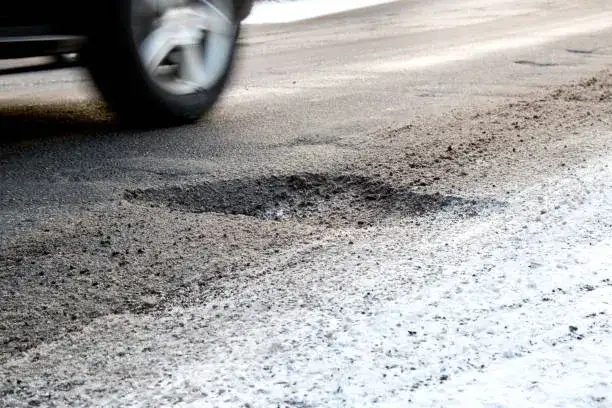
Last March, a 2022 Volkswagen Jetta arrived at our Camino Real service center with severe uneven tire wear after the owner ignored alignment problems following winter storm damage. They’d hit multiple potholes during February’s heavy rains but assumed no damage occurred since the car drove normally. Four months later, both front tires were worn dangerously thin on the inside edges while the outside edges had plenty of tread remaining. The premature tire replacement cost $680, and the alignment service that could have prevented it all cost $165. The post-storm alignment check that would have identified the problem immediately? $95.
Southern California’s winter rainy season creates road conditions that many San Bernardino area drivers don’t anticipate. While the region sees relatively mild winters compared to snow-belt states, the concentrated rainfall from December through March creates specific hazards: water-filled potholes that hide their depth, degraded pavement that collapses under traffic, and road damage that emerges suddenly during storms. Your Volkswagen encounters these hazards while navigating I-10, I-215, local surface streets through San Bernardino and Riverside counties, and mountain routes toward Big Bear or Lake Arrowhead.
Wheel alignment affects far more than just steering feel. Proper alignment ensures even tire wear, optimal fuel economy, predictable handling, and maximum tire life. Even minor misalignment from a single pothole impact can reduce tire life by 30-50% through accelerated uneven wear. The alignment looks fine—the car drives straight, doesn’t pull to one side—but underneath, the tires are wearing at drastically different rates across their tread surface.
Many San Bernardino area VW owners only discover alignment problems when replacing tires prematurely, by which point they’ve already lost thousands of miles of tire life. Understanding when alignment checks are needed, what symptoms indicate problems, and how alignment affects your vehicle protects both your tire investment and your safety.
If you’ve driven your VW through Southern California’s winter rainy season, hitting potholes on I-10 or local roads, navigating construction zones with degraded pavement, or dealing with the aftermath of winter storms, understanding alignment needs prevents the expensive tire replacement we see every spring and summer.
Understanding Wheel Alignment
Wheel alignment (also called tracking or front-end alignment) describes the angles of your wheels relative to the vehicle and to each other. Proper alignment ensures all four wheels point in the correct direction and work together efficiently.
The Three Alignment Angles
Camber measures the inward or outward tilt of the tire when viewed from the front. Negative camber means the top of the tire tilts inward. Positive camber means the top tilts outward. Zero camber means the tire is perfectly vertical.
Proper camber ensures the tire’s entire tread surface contacts the road during straight-line driving. Incorrect camber causes wear on one edge of the tire (inside edge with excessive negative camber, outside edge with excessive positive camber).
Toe measures whether the tires point inward or outward when viewed from above. Toe-in means the front edges of the tires point toward each other. Toe-out means they point away from each other.
Even small toe misalignment causes rapid tire wear. Tires scrub sideways across the pavement with every revolution when toe is incorrect, creating feathered wear patterns and dramatically reducing tire life.
Caster measures the steering axis angle when viewed from the side. Caster affects steering feel, returnability, and high-speed stability. While caster doesn’t typically cause tire wear, incorrect caster creates steering problems and handling issues.
Factory Specifications
Every VW model has specific alignment specifications established by the manufacturer. These specifications account for the vehicle’s weight distribution, suspension design, and intended driving characteristics. Specifications include acceptable ranges (typically measured in fractions of a degree) for each angle.
Alignment within specifications ensures optimal tire wear, handling, and fuel economy. Alignment outside specifications causes problems even if the deviation seems minor.
How Alignment Changes
Pothole impacts are the most common cause of sudden alignment changes. The force of a tire dropping into a pothole and striking the edge violently can bend suspension components or shift the relationship between parts, changing alignment angles instantly.
Normal wear over time gradually changes alignment as suspension bushings compress, springs settle, and components age. This is why alignment checks are recommended periodically even without specific impacts.
Curb strikes when parking too aggressively against curbs can shift alignment, particularly on the struck wheel.
Accident damage even from seemingly minor fender-benders can affect alignment by shifting suspension mounting points or bending components.
“Winter storm season in Southern California creates perfect conditions for alignment damage,” says David Martinez, Service Manager at our Camino Real location. “The heavy rains fill potholes with water, hiding their depth. Drivers hit them at speed without realizing how severe they are. We see dozens of vehicles every spring with alignment problems from winter pothole impacts. The owners had no idea anything was wrong until we show them the tire wear patterns. One pothole hit in February can cost you $600-800 in premature tire replacement by summer if you don’t get alignment checked and corrected.”
Southern California Winter Road Hazards
While San Bernardino doesn’t face snow and ice, winter rains create specific road damage that affects wheel alignment.
Water-Filled Potholes
Rainwater accumulates in potholes, creating puddles that hide the hole’s depth. What appears to be a shallow puddle might conceal a pothole 3-6 inches deep. Hitting these water-filled potholes at speed transmits tremendous force through the suspension to the wheel, often sufficient to knock alignment out of specification.
I-10 through San Bernardino and Riverside, I-215, and surface streets throughout the Inland Empire all develop these hazards during winter storms. The potholes emerge rapidly as water infiltrates pavement cracks, undermines the base, and causes collapse under traffic.
Pavement Deterioration
Concentrated winter rainfall accelerates pavement deterioration. Roads that seemed fine in fall develop cracks, depressions, and rough surfaces during winter. These degraded surfaces create repeated minor impacts that cumulatively shift alignment.
Construction zones become particularly hazardous as temporary pavement transitions create rough transitions and uneven surfaces.
Flash Flooding Damage
Sudden intense rainfall during winter storms creates flash flooding that washes out road shoulders, undermines pavement edges, and creates road damage that appears suddenly. Driving through flooded areas exposes your VW to hidden hazards beneath the water.
Mountain Route Hazards
Routes toward Big Bear or mountain areas (Route 18, Route 330) experience more severe winter weather including occasional snow and ice at higher elevations. These routes develop more significant road damage, and the winding nature means impacts can occur during turns, potentially causing more severe alignment changes.
Symptoms Indicating Alignment Problems
Many alignment problems don’t create obvious symptoms during normal driving, but certain signs indicate the need for immediate alignment check.
Visible Tire Wear Patterns
Uneven tire wear is the most reliable indicator of alignment problems:
Inside or outside edge wear indicates camber misalignment. One edge of the tread wears significantly faster than the other. The tire might have 8/32″ tread depth on the outside edge but only 3/32″ on the inside edge.
Feathering describes a wear pattern where tread blocks are worn more on one side than the other, creating a feathered or sawtooth appearance when you run your hand across the tread. This indicates toe misalignment.
Center wear or edge wear across both edges indicates inflation problems (overinflation or underinflation) rather than alignment issues.
Cupping or scalloping creates high and low spots around the tire circumference, indicating worn suspension components (shocks, struts) rather than alignment problems.
Vehicle Pull or Drift
Pulling to one side means the vehicle consistently steers toward the left or right when driving on level, straight roads with hands lightly on the wheel. This can indicate alignment problems, though it can also result from tire problems, brake drag, or road crown.
Drift describes more subtle movement than pulling. The vehicle gradually moves to one side rather than aggressively pulling. Drift often indicates minor alignment issues.
Off-Center Steering Wheel
Steering wheel positioned off-center when driving straight indicates that the wheels aren’t aligned with each other even if they’re aligned with the road direction. The steering wheel might be rotated 15-45 degrees to one side during straight-line driving.
This symptom often develops gradually as drivers unconsciously compensate for alignment drift, not noticing the steering wheel position until it becomes obvious.
Steering Feel Changes
Loose or vague steering can indicate alignment problems affecting caster angles. The steering might feel less responsive or require more correction during straight-line driving.
Hard steering or resistance can develop from severe toe misalignment creating excessive tire scrub.
Vibration through steering wheel at highway speeds sometimes correlates with alignment problems, though it more commonly indicates wheel balance issues or tire problems.
No Obvious Symptoms
Many alignment problems create no obvious driving symptoms until tire wear becomes severe. This is why periodic alignment checks are important even when the vehicle seems to drive normally. The tires silently wear unevenly, reducing their life by thousands of miles before the owner notices.
A professor from Redlands hit a large pothole on I-10 during February storms but noticed no immediate problems. The car drove straight, didn’t pull, and steering felt normal. At their routine oil change in June, tire inspection revealed severe inside edge wear on both front tires from camber misalignment. The tires had only 3/32″ tread remaining on inside edges while outside edges had 7/32″. Four months of driving with misalignment had reduced tire life by approximately 15,000-20,000 miles. Had they scheduled alignment check immediately after the pothole impact, the $165 service would have prevented $680 in premature tire replacement.
When Alignment Checks Are Needed
Certain situations require alignment inspection even without obvious symptoms.
After Pothole Impacts
Any significant pothole impact warrants alignment check, particularly if the impact was severe enough to cause tire damage, wheel damage, or if you felt a strong jolt through the steering wheel.
“Significant” means potholes deep enough to bottom out the suspension, potholes hit at speed (above 25-30 MPH), or multiple pothole impacts during a single trip.
After Winter Storm Season
Spring alignment check after winter rainy season ends (typically March-April in Southern California) catches cumulative damage from multiple small impacts during winter driving. Even if no single pothole seemed severe, the cumulative effect of dozens of minor impacts can shift alignment.
Every 12 Months or 12,000 Miles
Annual alignment checks catch gradual alignment drift from normal suspension component wear. This is preventive maintenance that identifies problems before tire wear becomes severe.
When Installing New Tires
Alignment before or immediately after installing new tires ensures the new tires wear evenly from the first mile. Installing new tires on a vehicle with alignment problems wastes the tire investment immediately.
After Suspension Work
Any suspension repair or replacement requires alignment afterward. Replacing struts, control arms, tie rod ends, or other suspension components changes the relationship between parts, necessitating realignment.
When Symptoms Appear
Obvious symptoms (pulling, off-center steering wheel, visible tire wear) require immediate alignment check and correction.
The Alignment Service Process
Professional wheel alignment involves precise measurement and adjustment to bring all angles within manufacturer specifications.
Pre-Alignment Inspection
Suspension component inspection identifies worn parts that would prevent proper alignment or cause alignment to shift after service. Technicians check:
- Ball joints for excessive play
- Tie rod ends for wear or looseness
- Control arm bushings for deterioration
- Struts and shocks for leakage or failure
- Steering rack for looseness or leaks
Worn components must be replaced before alignment can be performed effectively. Alignment on a vehicle with worn suspension components won’t hold and provides false sense of correction.
Tire Pressure Verification
Correct tire pressure is essential for accurate alignment measurement. All four tires are inflated to specified pressure before the vehicle goes on the alignment rack.
Vehicle Positioning
The vehicle is positioned on the alignment rack with wheels resting on slip plates or turntables that allow free movement during measurement. Sensors are attached to each wheel.
Initial Measurement
Computer-controlled equipment measures current alignment angles on all wheels with precision to 0.1 degrees or finer. The system compares measurements to manufacturer specifications and displays deviations.
Adjustment
Technicians adjust alignment angles by loosening adjustment points and repositioning components to bring angles within specification. Adjustment methods vary by vehicle and which angles need correction:
Toe adjustment is possible on all wheels through tie rod length changes.
Camber adjustment on most VWs requires specialized tools or aftermarket adjustment kits, as many VW suspensions don’t include built-in camber adjustment.
Caster adjustment is typically not adjustable on VW front suspensions and requires component replacement if out of specification from damage.
Final Measurement and Verification
After adjustments, the system remeasures all angles to verify they’re within specification. The technician test drives the vehicle to verify straight-line tracking and proper steering wheel position.
Alignment Report
A printed alignment report shows before and after measurements, specification ranges, and which adjustments were made. This documentation is valuable for warranty purposes and demonstrates the service was completed.
The complete alignment service costs $140-180 for most VW models and takes 45-90 minutes including inspection, adjustment, and verification.
Alignment and Tire Life
Proper alignment dramatically affects tire longevity, making alignment service one of the best investments in tire life.
Alignment Impact on Tire Wear
Tires in proper alignment wear evenly across the tread surface, achieving their full design life of 50,000-70,000 miles depending on tire model and driving conditions.
Tires with moderate misalignment lose 30-40% of their life to accelerated uneven wear. Tires rated for 60,000 miles might only deliver 35,000-40,000 miles before tread depth becomes uneven enough to require replacement.
Tires with severe misalignment can lose 50-70% of their life. Tires rated for 60,000 miles might only last 18,000-30,000 miles before edge wear makes them unsafe.
The Math of Alignment Investment
Tire set cost: $600-900 for quality tires on most VWs Alignment service cost: $165 Potential tire life extension: 15,000-25,000 additional miles
Cost per mile without alignment: $0.012-0.030 per mile (if tires only last 30,000-40,000 miles) Cost per mile with proper alignment: $0.009-0.015 per mile (if tires achieve 60,000 miles)
Savings per tire set: $200-500 in extended tire life, making the $165 alignment service extremely cost-effective.
Fuel Economy Impact
Proper alignment improves fuel economy by reducing rolling resistance. Misaligned wheels create drag as tires scrub sideways rather than rolling efficiently.
Moderate misalignment can reduce fuel economy by 0.5-1.0 MPG. Over 15,000 annual miles at $4.50 per gallon, this costs approximately $100-200 annually in wasted fuel.
Severe misalignment can reduce economy by 1.5-2.0 MPG, costing $200-400 annually in additional fuel expense.
DIY Alignment Checks vs Professional Service
Some owners attempt DIY alignment assessment, but professional service provides critical advantages.
What Owners Can Check
Tire wear inspection by running hands across tread blocks to feel for feathering or by measuring tread depth at multiple points across the tread width identifies uneven wear indicating alignment problems.
Steering wheel position during straight-line driving on level roads identifies off-center issues.
Pull or drift testing on level roads with light steering wheel grip identifies directional pull.
What Requires Professional Equipment
Precise angle measurement requires alignment rack equipment. Specifications are measured in fractions of degrees; visual estimation is completely inadequate.
Suspension component condition assessment requires professional experience and proper inspection procedures.
Actual alignment adjustment requires specialized tools, proper lift equipment, and precise measurement capability.
Cost-Benefit of Professional Service
Professional alignment check: $95-125 Professional alignment service: $140-180 Value received: Precise measurement to 0.1 degrees, suspension inspection, proper adjustment, verified results, documented service
The modest cost provides verification that DIY methods cannot achieve and prevents the $600-900 cost of premature tire replacement from uncorrected alignment problems.
Real Cost-Benefit Analysis
Alignment maintenance over 60,000 miles:
- Annual alignment checks (3): $285
- One alignment correction after pothole: $165
- Total alignment investment: $450
Tire savings from proper alignment:
- Tire set without alignment: 35,000 miles (premature replacement)
- Additional tire set needed: $750
- Tire set with proper alignment: 60,000 miles (full life)
- Savings: $750 in avoided premature tire replacement
Fuel economy savings:
- Improved fuel economy: 1.0 MPG average
- Annual fuel savings: $150
- Over 60,000 miles: $300
- Total fuel savings: $300
Your total savings: $1,050 minus $450 alignment investment = $600 net savings plus better handling and safety.
Your 30-Day Post-Winter Action Plan
This week: Inspect your tires for uneven wear patterns by running your hands across the tread surface and checking tread depth at inside, center, and outside positions on each tire. If you remember hitting significant potholes during winter storms, note the approximate date and severity. Review your maintenance records to identify when alignment was last checked.
Within two weeks: If tire inspection revealed uneven wear, feathering, or significant depth differences across the tread, schedule alignment service immediately rather than waiting. The longer you drive with misalignment, the more tire life you lose. If tires show even wear but you hit potholes during winter, schedule alignment check to verify everything is still within specification. Clean your wheels and tires to make inspection easier for technicians.
By month’s end: Complete alignment check and any needed correction. If alignment revealed worn suspension components, schedule repairs and follow-up alignment after component replacement. Create calendar reminder for next alignment check (one year or 12,000 miles). Update maintenance records with alignment documentation. If new tires were needed due to uneven wear from misalignment, ensure alignment is performed before or immediately after tire installation.
Warning Signs Requiring Immediate Attention
Certain symptoms indicate urgent alignment problems requiring immediate professional service rather than waiting for scheduled maintenance.
Severe pulling that requires constant steering correction to maintain straight-line driving suggests significant alignment problems or possible suspension damage.
Rapid tire wear progression where tread depth changes noticeably over just 1,000-2,000 miles indicates severe alignment problems requiring immediate correction.
Steering wheel vibration combined with uneven tire wear suggests both alignment and tire problems requiring prompt attention.
Handling changes after hitting a particularly severe pothole, especially if accompanied by strange noises, indicate possible suspension damage requiring immediate inspection.
The Long-Term Alignment Strategy
Protect your tire investment through proactive alignment maintenance:
Annual spring alignment checks after winter storm season catch cumulative winter damage.
Post-impact alignment checks after any significant pothole strike prevent the progressive tire wear that develops over months.
Pre-tire-installation alignment ensures new tires start life with proper setup for maximum longevity.
Suspension maintenance including timely replacement of worn components maintains alignment and prevents accelerated tire wear.
Proper tire pressure maintenance through monthly checks ensures accurate alignment measurements and prevents wear patterns that mimic alignment problems.
Schedule Your Alignment Check Today
That Jetta owner who ignored post-storm alignment needs learned an expensive lesson about the hidden cost of neglecting alignment service. After spending $680 on premature tire replacement that proper alignment would have prevented, they now schedule alignment checks every spring after rainy season and immediately after any significant pothole impact. They’re at 48,000 miles now with tires wearing evenly and showing 6/32″ tread depth across all positions rather than the uneven wear that destroyed their previous set.
Southern California’s winter rainy season creates road conditions that affect wheel alignment through pothole impacts and pavement damage. Your Volkswagen deserves post-winter alignment verification to protect your tire investment and ensure safe, efficient operation.
Our certified Volkswagen technicians at 1600 Camino Real use state-of-the-art alignment equipment providing precision measurement and adjustment to exact manufacturer specifications. We’ll inspect suspension components, verify alignment angles, make necessary corrections, and provide documentation of the service.
Schedule your post-winter alignment check today by calling our service department or booking online at Volkswagen San Bernardino, 1600 Camino Real, San Bernardino, CA 92408. Whether you need verification that alignment is still correct or correction of problems from winter road damage, we’ll ensure your VW tracks properly and your tires wear evenly.
Proper alignment service protects your tire investment, improves fuel economy, ensures safe handling, and provides the peace of mind that your VW is set up correctly for thousands of miles of efficient operation. That’s the value professional alignment delivers.
0 comment(s) so far on Alignment Checks After Winter Rain & Potholes