




Adaptive Cruise Calibration: Dealing with the “Dust Film” on the I-215
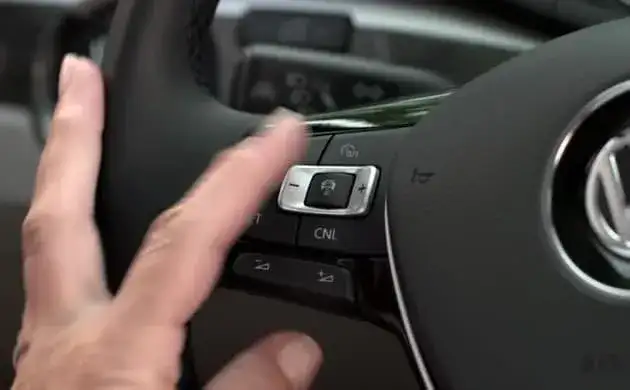
A Volkswagen Tiguan owner came into our service bay last month after his adaptive cruise control had begun behaving erratically on his daily commute on the I-215 northbound toward Devore. The system was dropping out at inconsistent intervals and had triggered a forward collision warning on a clear stretch of freeway with no vehicle ahead. He had taken it to a general repair shop near Hospitality Lane that cleared the warning codes without identifying the root cause. That visit cost $185 and the problem returned within a week. The correct diagnosis, a sensor lens contamination issue compounded by a calibration drift, was resolved at our facility for $260.
San Bernardino sits in a geography that is uniquely hard on optical and radar-based driver assistance systems. The I-215 corridor through the Inland Empire runs through some of the most particulate-heavy air in California, and the combination of construction dust from ongoing development between San Bernardino and Murrieta, agricultural particulate from the surrounding region, and the fine silica-rich soil that the Santa Ana winds push across the valley floor creates a film on vehicle surfaces that standard rain and car washes don’t fully address. For Volkswagen owners who rely on adaptive cruise control and the connected driver assistance features during their daily freeway commutes, that film is not just a cosmetic issue. It is a sensor issue.
At Volkswagen San Bernardino, we have seen a meaningful increase in adaptive cruise and forward collision system complaints that trace directly to sensor lens contamination rather than system failure. The good news is that this is a manageable problem when you understand what causes it, what it looks like when it’s affecting your system, and what proper correction involves. The less good news is that it is frequently misdiagnosed by shops without access to Volkswagen’s calibration equipment, which turns a straightforward fix into an expensive runaround.
How Volkswagen’s Adaptive Cruise System Works and Why Cleanliness Matters
The adaptive cruise control system in modern Volkswagen vehicles uses a combination of a forward-facing radar unit, typically mounted behind the front grille or lower fascia, and a forward-facing camera mounted at the top of the windshield to monitor the road ahead. The radar handles distance measurement and relative speed calculation to the vehicle in front. The camera handles lane recognition, object classification, and the image processing that distinguishes a stopped vehicle from a roadside barrier or a shadow on the pavement.
Both sensors depend on an unobstructed view of the road ahead. The radar unit is less sensitive to surface contamination than the camera because radar waves penetrate many materials, but a sufficiently dense film of fine particulate can attenuate the signal enough to affect detection range and accuracy. The camera is considerably more sensitive. A film of silica dust, the kind that settles on every surface after a dry Santa Ana event in the San Bernardino area, scatters the light entering the camera lens in a way that reduces image contrast and makes object classification less reliable. The system responds to that unreliability by dropping out, issuing false warnings, or defaulting to a reduced-function mode.
What the I-215 Corridor Does to Sensor Surfaces 🌫️
The stretch of I-215 between San Bernardino and the I-15 interchange near Murrieta passes through some of the most active construction and development corridors in Southern California. The Inland Empire’s ongoing warehouse and logistics development, the grading activity visible from the freeway between Perris and Menifee, and the exposed soil from hillside development east of the freeway near the Cajalco Road interchange all contribute to the particulate load in the air that vehicles traveling this corridor pick up on their front surfaces.
The Santa Ana winds concentrate this effect. When the winds push through the Cajon Pass and down into the San Bernardino Valley, they carry fine particulate from the Mojave Desert floor across the entire Inland Empire. Vehicles parked overnight or driven during a wind event pick up a layer of material that is finer than typical road dust and more adherent to smooth surfaces like sensor lenses, camera housings, and radar covers. Standard car washes that use soft-cloth or touchless systems often move this material around rather than removing it fully, leaving a residual haze on optical surfaces that reduces sensor performance without being obvious to the eye.
On high-particulate days along Camino Real and the I-215 on-ramps near Waterman Avenue, drivers may notice their adaptive cruise dropping out or their forward collision system becoming more sensitive shortly after the event. That timing is not coincidental.
What Proper Sensor Maintenance Costs vs. Misdiagnosis Costs 💰
The cost structure of adaptive cruise sensor service breaks down clearly when you understand what each step actually addresses:
- Sensor lens inspection and cleaning: $65 to $95
- Radar unit alignment check: $85 to $130
- Forward camera recalibration (static): $175 to $250
- Full adaptive cruise system diagnostic: $110 to $160
- Combined cleaning and recalibration service: $225 to $320
Proactive annual sensor maintenance: $225 to $320
Reactive corrections after misdiagnosis:
- Generic code clearing without root cause resolution: $150 to $200 per visit
- Unnecessary sensor replacement based on incorrect diagnosis: $400 to $900
- Subsequent correct diagnosis and calibration: $225 to $320
- Combined cost of getting it wrong first: $775 to $1,420
Camera recalibration after cleaning is not optional when contamination has been significant. The camera’s field of view and alignment parameters are set during calibration and can drift when the unit has been subject to extended contamination or when the lens has been cleaned and reinstalled. Cleaning without recalibrating leaves a system that sees clearly but may be measuring distances and angles from a slightly incorrect baseline.
When a Santa Ana Event Triggered a Service Visit
A customer from Fontana came in last October, shortly after a significant Santa Ana wind event had pushed through the Cajon Pass and across the San Bernardino Valley. His Volkswagen Atlas had begun issuing forward collision warnings on clear stretches of the I-215 near the Baseline Street interchange and his adaptive cruise was disengaging without apparent cause. He had washed the vehicle the day before and assumed it was clean. When our technician inspected the forward camera housing, the lens surface showed a fine haze consistent with silica particulate that a standard wash had not removed. The radar cover had similar contamination. A targeted cleaning of both sensor surfaces followed by a camera recalibration resolved all symptoms for $255. The system has performed correctly through his daily Fontana to San Bernardino commute since.
Warning Signs Your Adaptive Cruise System Needs Attention ⚠️
The I-215’s dust environment produces a recognizable pattern of adaptive cruise symptoms that differ from typical system failures. These are the indicators worth acting on:
Adaptive cruise that disengages without an obvious trigger: If the system drops out on a clear stretch of the I-215 with consistent traffic ahead and no sudden changes in road conditions, sensor contamination affecting detection reliability is the most likely cause before any hardware failure.
Forward collision warnings on open road: A false positive collision warning, particularly on the I-215 between the Baseline Street and University Parkway interchanges where sight lines are long and clear, points to the camera misclassifying a shadow, overpass structure, or road marking as a vehicle due to reduced image contrast from lens contamination.
Adaptive cruise that follows too closely or too distantly: If the system maintains a different following distance than your setting without your input, the radar’s distance measurement may be affected by signal attenuation from particulate on the radar cover, causing it to under or overestimate the gap to the vehicle ahead.
Warning light that clears and returns on a regular cycle: A driver assistance warning that appears after dry or windy periods and clears after rain or a car wash is telling you exactly what the cause is. The pattern itself is the diagnosis.
System that works normally in the morning but degrades by afternoon: San Bernardino’s afternoon winds increase particulate levels as the day progresses. A system that performs correctly on the morning I-215 commute toward Devore but shows issues on the return trip is responding to the particulate accumulation that occurs during the day.
Camera warning that appears after parking outside during a wind event: If you park on Camino Real or near the I-215 interchange overnight during a Santa Ana event and find a driver assistance warning on startup the next morning, the camera lens should be inspected before the warning is simply cleared.
Reduced automatic emergency braking sensitivity: This one is harder to detect without a diagnostic system, but our technicians can test the system’s detection threshold and compare it against the calibrated baseline to identify whether contamination has reduced its effective range.
What Our Service Team Says
“What we see on the I-215 corridor is different from what shops in coastal California deal with. The particulate here is finer, it adheres differently, and it does not come off with a standard wash the way road grime does. The mistake we see most often from other shops is clearing the codes without looking at the lens surfaces first. Once you clean those surfaces correctly and recalibrate the camera, most of these adaptive cruise complaints resolve completely. Skipping the recalibration after the cleaning is the second most common mistake, and it’s why some customers come to us after a repair that didn’t hold.” — Miguel Reyes, Senior Service Technician, Volkswagen San Bernardino
When Regular Cleaning Kept a System Reliable
Rosa commutes daily from San Bernardino to her workplace near the I-215 and Baseline Street interchange and had her adaptive cruise drop out twice in the same month during a stretch of dry, windy weather last fall. After the second event, she came in and we walked her through what the I-215’s particulate environment was doing to her sensor surfaces. We cleaned both the radar cover and forward camera lens, recalibrated the camera, and documented the baseline system performance. We also advised her on a targeted cleaning approach for the front of the vehicle after wind events that takes less than ten minutes and keeps the sensor surfaces in better condition between service visits. She has not had an adaptive cruise dropout since, through two subsequent Santa Ana seasons.
Your 30-Day Sensor Health Check
This week, pay attention to your adaptive cruise system’s behavior on your next two or three I-215 commutes. Note whether it engages and holds consistently, whether any warnings appear on clear stretches of freeway, and whether the following distance it maintains matches your setting. Also look at the front of your vehicle after your commute, specifically the area around the lower grille where the radar unit is located and the area at the top of the windshield where the camera housing sits. A visible haze or film on those surfaces after a dry or windy day is worth addressing before it accumulates further.
Within two weeks, if you’ve experienced any adaptive cruise irregularities in the past month, check the timing relative to weather events. A pattern that correlates with dry or windy periods, particularly after Santa Ana events through the Cajon Pass, is strong evidence of contamination-related performance degradation rather than a system failure requiring parts replacement. That distinction matters when you’re deciding where to take the vehicle and what to ask for.
By month’s end, schedule a sensor inspection and cleaning at Volkswagen San Bernardino if you’ve noticed any of the warning signs described above or if your last camera recalibration was more than a year ago. Our technicians can assess the current condition of both sensor surfaces, clean them with the correct materials for optical lens surfaces, and recalibrate the forward camera against Volkswagen’s current baseline for your model. These steps take less than two hours and restore the system reliability that makes the I-215 commute meaningfully safer.
Schedule Your Adaptive Cruise Service at Volkswagen San Bernardino
The Tiguan owner who came in after two failed visits to a general shop now comes in each fall before Santa Ana season peaks for a proactive sensor cleaning and calibration check. His adaptive cruise has been reliable through every commute on the I-215 since that first correct diagnosis, and he has not had a single false warning on the stretch between Waterman Avenue and Devore. The I-215 dust environment is not going away. Managing what it does to your driver assistance systems is a matter of knowing what to look for and knowing where to take it when it needs attention.
Our team at Volkswagen San Bernardino has the calibration equipment, the correct cleaning materials for optical sensor surfaces, and the diagnostic access to Volkswagen’s system baselines that this work requires. A general shop with a code reader is not the right tool for this job.
Visit us at Volkswagen San Bernardino, located at 1600 Camino Real, San Bernardino, CA 92408. Our service department is open Monday through Saturday. Schedule your sensor inspection online through our website or speak with one of our service advisors directly. We serve drivers throughout San Bernardino, Fontana, Rialto, Colton, Ontario, and across the Inland Empire. The I-215 will keep putting dust on your sensors. We’ll keep making sure your systems can see through it. 🛣️
0 comment(s) so far on Adaptive Cruise Calibration: Dealing with the “Dust Film” on the I-215